Private Spaces
Some people arrive here by invitation, others by referral or conversation. Start with one short paragraph, and I’ll respond with what’s realistic, what matters most, and what the next step should be.
If you already have my phone number or email, that’s fine — the same starting point applies.
Your first step will be calm, private, and practical. No pressure. No projects. Just clarity.
These are “good-problem” moments — you want to do it right, in the right order.
- RV / coach and specialty vehicle shelters
- Wine cellars & climate-stable storage
- Home business / quiet office conversions
- Guest houses & long-term family zones
- Phased privacy fencing / pet-safe zones
- A small guest studio or office zone
- Private safe rooms & security spaces
- Detached studios, workshops, and structures
Not panic. Just practical: stabilize first, then decide what comes next.
- Water where it doesn’t belong (inside, under, or around the house)
- Drainage confusion, washouts, mud flow, or runoff from above
- Mold, persistent dampness, or a “musty” zone that won’t resolve
- Doors sticking, cracking, or signs of movement you want interpreted
- Roof leaks, flashing questions, or “multiple bids and no confidence”
- A prior contractor situation that went sideways and needs triage
- Multiple bids or proposals stacking up — expensive, unclear, or “iffy” in scope — and you don’t feel confident what the end result would actually be
If you prefer to start quietly, send a short note with your situation in one short paragraph. If you’d prefer faster clarity, request a $295 on-site stewardship review (an on-site clarity review).
A brief first note — call, text, or email — is always free. Many neighbors assume planning help must be a “big-ticket thing.” It doesn’t work that way here.
- Verify what truly needs attention vs. what can wait
- Identify hidden risks, shortcuts, and cost traps
- Clarify the safest and most economical order of work
- Spot opportunities that are often missed or mispriced
- Answer practical “what would you do here?” questions on the spot
Why being physically present matters +
An on-site stewardship review is not a sales visit — it is a working session. Being physically present allows real conditions to be seen accurately: slope and drainage behavior, material realities, access limitations, code constraints, and sequencing logic — not guessed from photos or descriptions.
When it helps, I capture key measurements and documentation (photos/video, and sometimes drone context) so the conversation is anchored to what is actually there — not memory, assumptions, or “I heard…”
If you want support beyond the first visit, that’s available in practical ways — without turning it into a “project.” Examples include:
- Post-visit bid evaluation (scope comparison, exclusions, and “apples-to-apples” questions)
- Remote oversight using job-site cameras (job cams to the cloud + live/recorded streaming)
- A trusted pair of local eyes for a site visit or walkabout while you’re traveling
- A short follow-up memo on the specific items you care about (X / Y / Z) so decisions stay grounded
- Adjoining neighbor issue review (runoff, access, boundary friction) and practical recommendations
- Coordination of a phased plan over time, if you want a calmer path forward
It can be one-time clarity — or the beginning of a relationship, if you want ongoing help.
The fee simply covers the time, presence, preparation, and working analysis that turns uncertainty into clarity — often preventing unnecessary work or reshaping priorities before money gets spent.
Stewardship means caring wisely for what’s already been entrusted to you — your land, your home, your privacy, your future. I have learned that stewardship is about faithfulness — doing the right things, in the right order, at the right time, with what you’ve been entrusted.
K
About Keith — why this feels calm
+
Clarity before spending — protect your home, your safety, and the people within it.
Then improve comfort and beauty.
Sequence Thinking is how long-term homeowners quietly protect their future — by choosing the right first step before all others.
Those with long-term perspective understand the wisdom of proper order.

I spent most of my life designing, engineering, and managing hillside properties across places like La Habra Heights, Pasadena, South Pasadena, San Marino, Hollywood Hills, Brentwood, Bel Air, Beverly Hills, Calabasas, Hidden Hills, Encino, Studio City, Malibu, Palos Verdes, Laguna Beach, Silverado Canyon, Yorba Linda, and Corona del Mar.
With the exception of level ground roughly 20 feet above sea level — my personal weakness and long affection for the culture of Corona del Mar — my signature work has little to do with cookie-cutter, flat-subdivision projects.
These have been slope and view homes, fire-zone and estate properties, compound-style home/business operations, privacy-sensitive residences, and legacy holdings — the kinds of properties where small mistakes echo for decades, and clear sequencing saves families real money, time, and regret.
I’m retired from the building world now — but I still help neighbors think clearly when proposals stack up, when something feels off, or when life shifts and the property must shift with it.
Quick self-sort (A / B / C)
You don’t need a deep read to begin. Pick the lane that sounds most like your situation.
You want to reduce risk first — without launching a major project.
- Drainage priorities and “first fixes”
- Movement concerns and documentation
- Perimeter, gates, lighting, safe zones
- Stop-gap steps that prevent regret
- One clean next step, not ten projects
You’re preparing for a meaningful change, and you want the first steps correct.
- Remodel / addition / ADU early trade-offs
- Sequencing so work doesn’t get re-done
- Proposals clarified before you commit
- Comfort upgrades (HVAC / heat pump reality)
- Planning before you call the trades
Sale prep, inheritance, aging-in-place, or re-use — where clarity matters most.
- Sale prep: what’s worth doing (and what isn’t)
- Inherited property: “what now?” planning
- Safer, simpler living over time
- Reduce overwhelm: one clean next step
- Coordination when action becomes necessary
Optional tool: drone clarity
If your situation would benefit from a “top-down” view, I can use drone footage as a practical planning tool — especially for slopes, drainage paths, access, and layout.
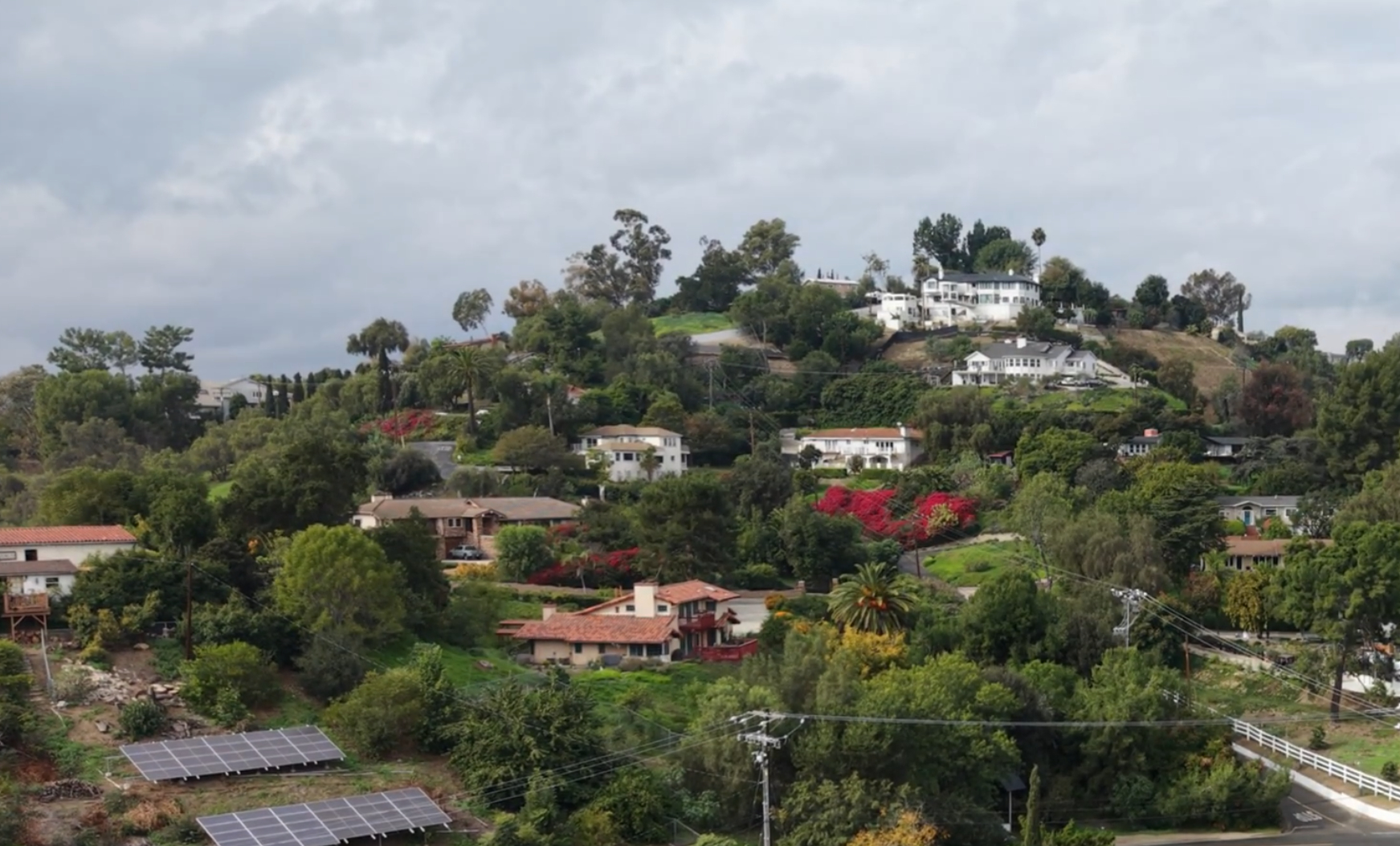
Neighborhood context for slope and runoff thinking.
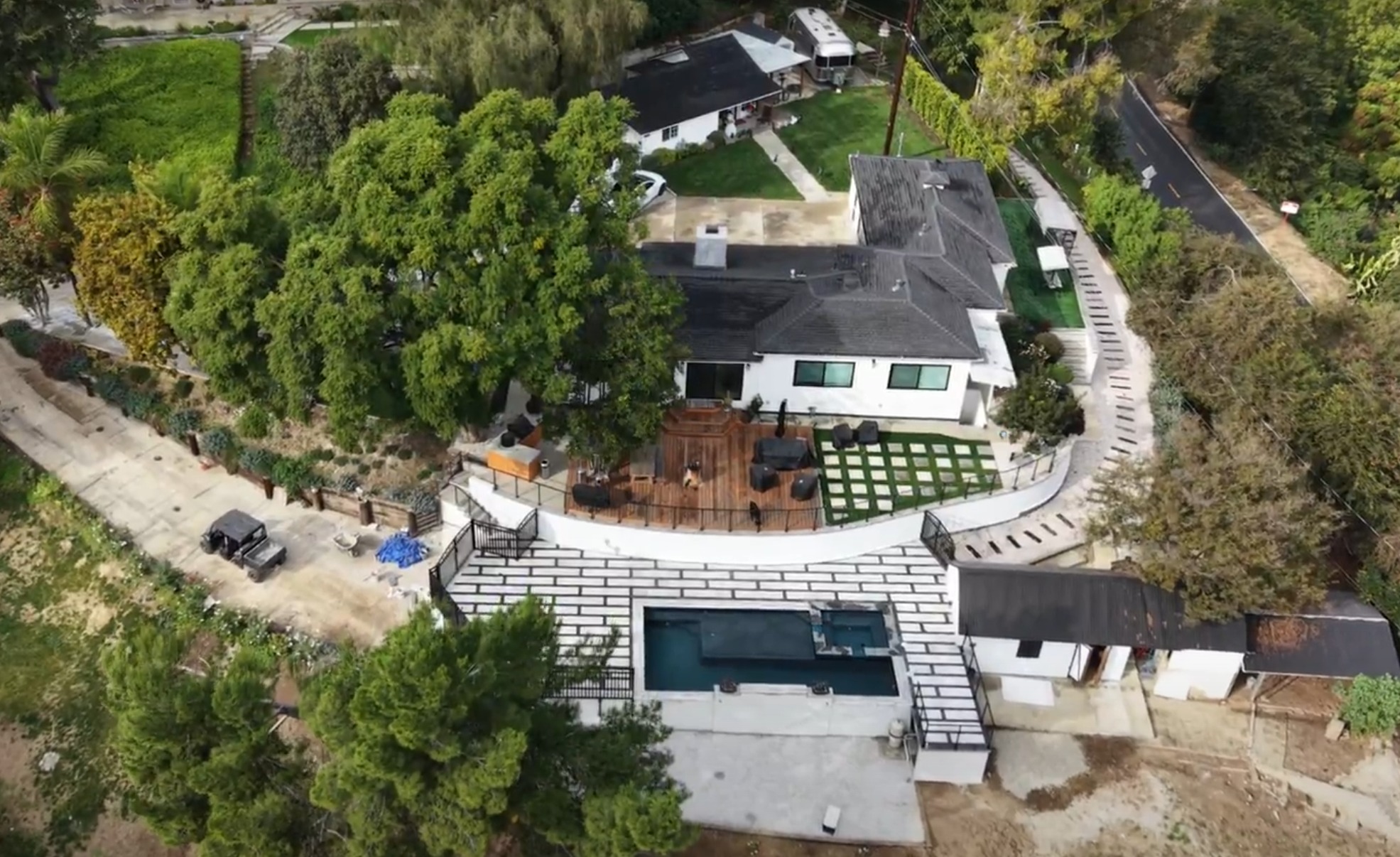
Layout clarity: access, edges, and “what connects to what.”
The 6 common property issues (quick self-sort)
You don’t have to read everything. Just find the box that sounds most like your situation.
Hillside risk & water
- Drainage, runoff paths, and downspouts
- Swales, catch basins, and slope washouts
- “Movement” concerns — doors sticking, cracks showing up, things shifting
- First steps that help prevent bigger problems later
- Troublesome runoff from adjoining neighbor properties
Security & privacy
- Perimeter strategy (not “one device”)
- Pets, safe zones, access points
- Close-in & perimeter fences / gates (sequence)
- Lighting placement & glare control
- Security cameras / sensors / trusted local eyes when you’re away
Comfort systems
- HVAC / heat pumps / mini-splits
- Stop heating & cooling unused spaces
- Ducting vs ductless trade-offs
- Noise, placement, line-sets, condensate
- Planning before you buy equipment
Property change
- Sequencing — what typically comes first (and why)
- Additions / ADU early trade-offs
- Home office → full professional HQ transitions (lawyers & professionals)
- Outdoor zones & re-use planning
- How to plan before calling contractors
Transition moments
- Sale prep — what’s worth doing (and what isn’t)
- Inherited or trust-held property realities
- Making the home safer and easier to live in over time
- “We need clarity, not chaos” planning
- One clean next step when everything feels unsettled
Wildfire awareness
- Practical hardening priorities (what truly matters first)
- Access routes, defensible space, and exterior protection
- Exterior fire sprinklers using pool or tank water sources
- Separating real protection from marketing hype
- Sequence thinking — not panic spending