Hillside Counsel · La Habra Heights
Private Spaces
La Habra Heights
Hillside counsel for owners who want to understand what their property can become — before they call another contractor.
By referral and invitation
45
Years on hillside properties
Forty of them lived right here on La Habra Heights. The working radius is what’s walkable in a morning — La Habra Heights, the Puente Hills, Whittier Hills, Hacienda Heights, Rowland Heights, Brea Hills. Beyond that, only by old friendship.
$0
To start the conversation
One paragraph. Tell me what’s on your mind. I’ll read it and write you back. Strategic Digital Agency pays the bills — forty-five years of law-firm work in parallel. This side of the practice is for the love of dirt, hillsides, and buildings that outlast the people who build on them.
1
Person, one call away
Not an agency. Not a service company. Not a contractor looking for the next bid. One retired contractor who lives on this hill, knows what your property could become, and can help you get there at your pace, on your budget, toward your vision.
Where I come in
Most homeowners up here are highly competent people in their own world — and completely vulnerable in mine.
They don’t know what their property can become. They don’t know which patch of their hillside acre — the one out front, the one behind the house, the wild stretch up the canyon — wants to be the destination. They don’t know how much could be done for how little, and in what order. That’s where I come in — not to take over, but to sit with the question for the time it deserves.
Why hillsides
Many of us have walked the hills along the Mediterranean — Israel, Greece, southern Italy. Same weather as ours, same dirt under your feet. The villages there have been standing for a thousand years and longer. La Habra Heights is one hundred eighty years deep, and the houses we build now could still be standing when America is old enough to have ancient places of its own.— Keith Bennett
Where do you fit on the hill?
Seven situations I see up here.
If one of these reads like your property — that’s probably where we start.
The new arrival
“I just bought up here. Million-dollar view, and I’m finding out what a hillside actually asks of an owner.”
The inheritor
“I took this place over from my parents. I can afford it. I’m using maybe 10% of the property and don’t know where to start on the rest.”
The long-time owner
“The house is paid. Property tax is the line item. I love this place and want to keep it that way without spending what I don’t have.”
The reluctant lister
“We’re selling in two or three years. I have six bids on the kitchen and I don’t know which one to take or what to do first.”
The contractor pressure
“I have three bids within twenty thousand dollars of each other. The pressure to sign is now. I’d like a second pair of eyes before I write the check.”
The ignored acreage
“We use about 15% of our property. The rest is brush, slope, and someday. I’d like to walk it with someone who has done this for forty years.”
The reassigned
“I have to leave the hill for six months to a year — a job, a parent, a grandchild. I’m not ready to give this place up. I want it cared for the way I’d care for it.”
Start here
Forty-three things that go wrong up here — and who I would call for each one.
Roofs, water, drains, soil, fire, power. The Hillside Network is the long version: what actually fails on these properties, what it costs when you catch it early, and what it costs when you don’t.
No vendor names are published here. Introductions happen in conversation.
You decide. I help.
If the worry is money — keeping the place up without draining it, or getting it ready before you ever list — that is its own conversation: Repairs at Your Pace, and Always Ready to Sell.
Forty-five years working these hillsides — almost forty of them lived right here on this one. I know which contractors do honest work, which permits are worth pulling, and which improvements should be planned carefully before they become a property-record conversation.
I know where to place an outbuilding so the trench that powers it also runs your security spine.
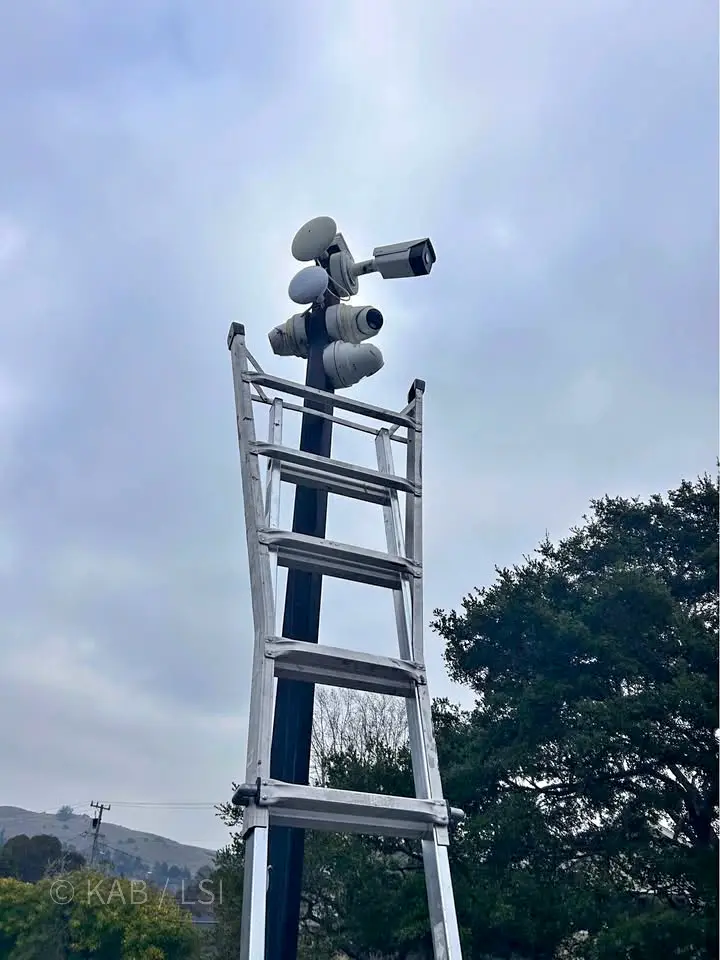
Cameras that are sensors now. Watching for the coyote, the stranger, the car that doesn’t belong on your road.
Your property stays yours. Your decisions stay yours. I’m the counsel where needed — when needed.
Local alertThe brush inspector covers two thousand parcels. The May 1 cycle just restarted.

The vehicle every La Habra Heights homeowner learns to recognize — the inspector who covers two thousand parcels.
The May 1 cycle just restarted
Brush inspection season is now a year, not a season.
The 2026 La Habra Heights brush clearance cycle began May 1 — May 1, 2026 through April 30, 2027. Twenty-six hundred parcels. One silver SUV (sometimes an engine with two firefighters instead). And inspections happen year-round — not just in the dry months.
Most homeowners up here learned the inspector’s timing the hard way. That’s why, as the cycle opens, you’re hearing chainsaws on every road in the Heights. The first compliance check sets the tone for the year. Pass it, and the city stays at the perimeter. Fail it, and you start a cycle that doesn’t stop.
The standard is plain enough: grass to three inches, brush to three inches, within two hundred feet of any structure. Trees over eighteen feet trimmed up so no foliage hangs within six feet of the ground. Ten feet of clearance from any chimney outlet. Three feet around every fire hydrant. Native shrubs spaced eighteen feet apart count as compliant if dead wood is cleared.
I don’t run chainsaws anymore. But after forty-five years on this hill, I know what enough looks like to keep the city at the perimeter, and I know the crews who do this work well and price it fairly. If you’re hearing the chainsaws and wondering if your property is ready — the conversation is free.
Some projects are worth a second pair of eyes
On the projects that warrant it, the cameras are how I keep an honest eye on the work — and an honest eye on my referral list.
Not every project needs a camera. A small repair, a long-trusted crew, a project I’m walking through on foot — no cameras needed.
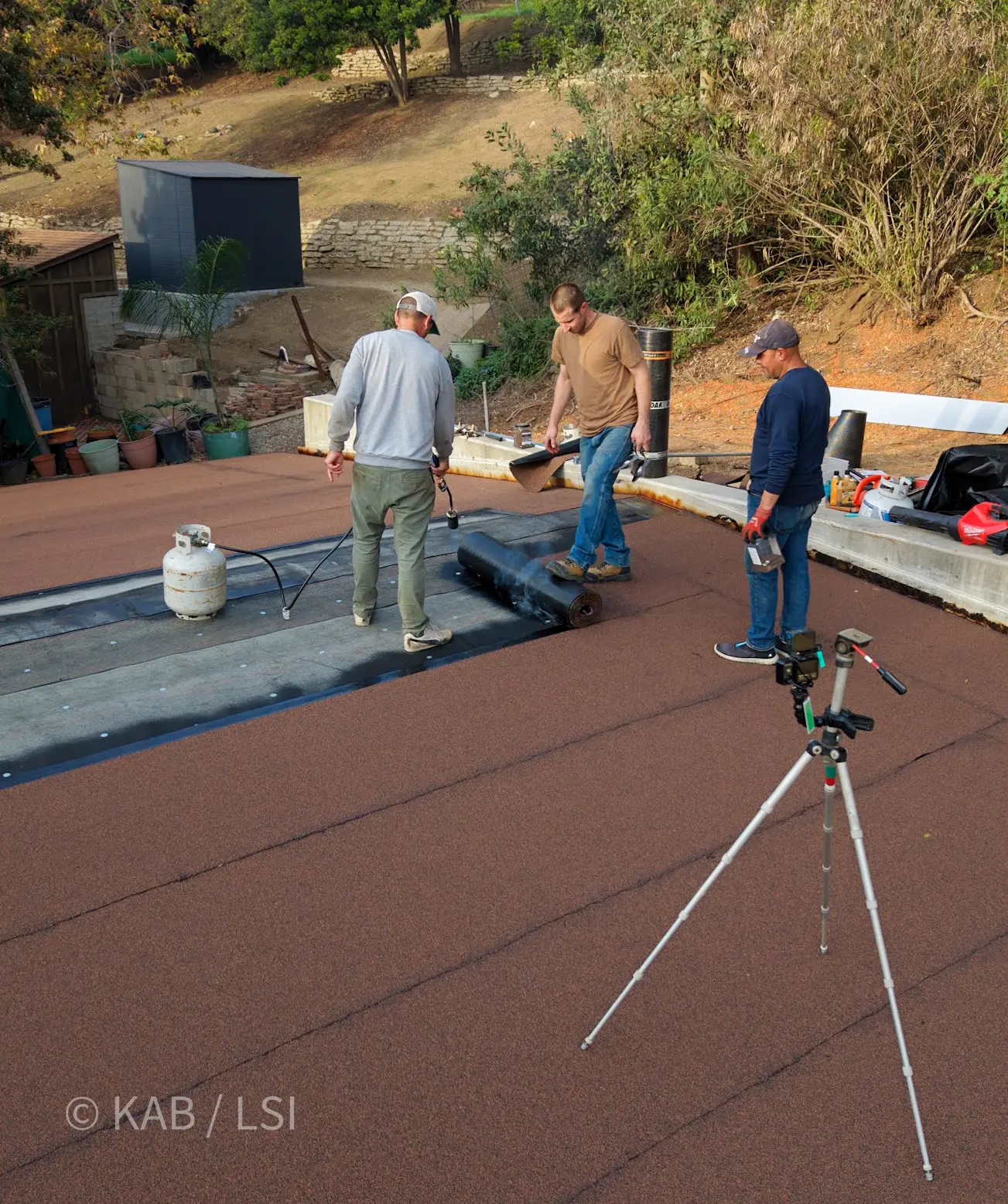
But on a $150,000 hardscape build, a year-long remodel, a big concrete pour with a new tradesman, a paver driveway, a powered entrance gate — someone with forty-five years of construction judgment ought to be looking at the work. So we set up a Wi-Fi camera or two on the property. The feed goes to the cloud. The homeowner watches from their medical office, their law office, their phone at lunch. I watch the live feed from a thirteen-screen office I happen to have on the agency side of the practice.
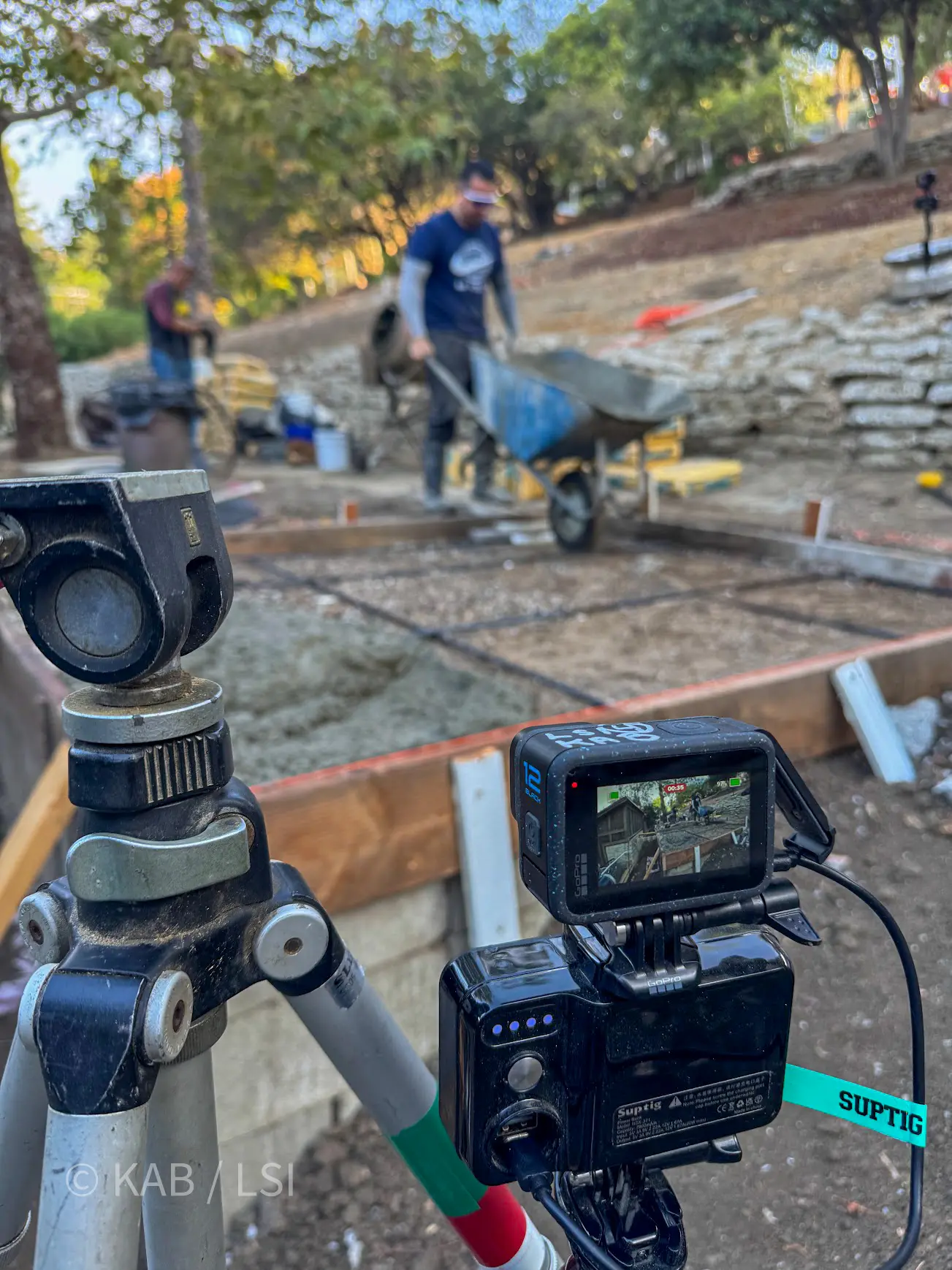
The same cameras and GoPros are how I protect the referral list. When a new concrete finisher or framer wants to be on it, I bring GoPros to my own property — battery packs, time-lapse, three or four angles. I watch the footage. Either the tradesman earns a spot, or quietly doesn’t.
Cameras are an option, not a checkbox. They show up when the project actually calls for them.
Four-hour GoPros — I personally set them up, drop them off, and expect them to be left alone.
Your host
Keith Bennett.
You’re the steward of your hillside. I’m the counsel who’s worked hillsides since 1975 and lived on this one since 1988.
Forty-five years on these hills. Almost forty of them lived right here on this one. I have watched a thousand hillside properties become what they were trying to be — and built or rebuilt many of them, alongside the families that own them.
Now I sit with owners. We walk the property. We talk about what it could be, in what order, on whose budget and whose timeline. The walk is just the first hour. What it becomes is determined by what the property is trying to say — and whether the owner is listening yet.
No agency. No sales pitch. No contractor waiting at the end of the conversation. If your property has been trying to tell you what it wants to be, let’s talk.
By referral and invitation only.
Examples, not a menu
A few things neighbors have built. Click any to look closer.
The studio at the end of the path.
See the studio on Vision →Where the conversation actually happens.
See the office on Vision →The destination right outside the bedroom door.
See the swim spa on Vision →The thing about private spaces
People are more at home in their detached private spaces than in their own home, some part of every day or every night. Plural, because once you have one you build another. The property becomes a place you walk through, not a house you sit in — a small adult Disneyland for the family that finally has the acre or more to spread out on.
— Keith Bennett
A hillside home, with time and intention, becomes what it was always capable of being. The wife’s space, when she wants her girlfriends over and the husband is somewhere else on the property. The husband’s space, when his buddies come up and the wife is somewhere else on the property. The teletherapist’s she-shed, far enough from the house to be HIPAA-quiet for a forty-minute session. The lawyer’s home office with its own gate and its own driveway, where a retained client can arrive without ever seeing the inside of the house. The pergola at the back of the property where a woman who lives alone can walk her little dog at three in the morning to finish a chapter of her novel — coyote-resistant fence, sensor-lit path, cameras she doesn’t have to think about. Somewhere for a son or a daughter to come home for thirty days when life turns sideways. Somewhere for the friend from church whose roof is being torn off. Somewhere for the cousin you haven’t seen in five years. A standard house cannot hold all of that. A hillside home, designed for the life you actually live, can.
The same arithmetic works for the daughter whose role was just automated away, the son moving back from the apartment back east, the parent in decline, the sister whose lease ran out. They need somewhere to land for a season. Most houses cannot hold a season. An acre with private spaces on it can. And when it’s empty — it’s your private space, your favorite places to lounge at different times of the day.
Some families call the result a family compound. Some don’t name it at all. Either way — the property quietly becomes the place a family gathers around, because the property earned it.
The kids called it the family compound first.
The outbuilding conversation does not have to begin with the most expensive contractor-driven version of the idea. Sometimes it starts with a practical, movable structure — something that looks like a shed but can be finished as a serious private workspace: mini-splits, real lighting, ethernet, the office your profession asks you to build.
The right question is sequence: what can be done simply, what should be engineered, and what needs a formal permit path before anyone pours concrete or starts opening walls. Wineries in Temecula, Santa Barbara, Paso Robles, and Napa often solve these questions in practical, staged ways. Less friction where appropriate. Clearer choices before anyone turns a private-space idea into a full construction project.
What this is — and isn't
What Private Spaces is — and isn't.
Private Spaces is not a contractor. Not an architect. Not a sales call.
Private spaces are private spaces — the ones a family already has. The rooms that hold a life. The bedroom, the kitchen, the bath, the favorite chair. And the doors that open from any of them onto the rest of the acre — the far corners most owners walked exactly once, the morning escrow closed, and never went back to. The corner with the surveyor stake in the brush. The rise where, at dusk, you can see city lights you can't see from the kitchen window. Whether the home is being survived, fixed, expanded, enjoyed for what it is, or quietly prepared for whatever comes next — perfecting those private spaces is the work.
Forty-five years on these hills, much of it spent finishing what others started or hadn't yet imagined, has left me with one simple practice: help the owner do the next right thing — on their property, on their budget, in the order that protects what they already love.
For some neighbors, the next right thing is small. A mini-split — a super-efficient heat pump that heats and cools effortlessly — added to the master bedroom, so on a Tuesday in February when one or two people are home, a four-thousand-square-foot house isn't running the old central system through five empty rooms. In California, where electricity is the most expensive in the country, a single mini-split in the right room can save hundreds of dollars a month. The central heating and air stays. It's still the right tool when Thanksgiving rolls in and twelve kids and grandkids are sleeping over. A mini-split that saves you hundreds of dollars a month is a layer, not a replacement — and once you have one in the bedroom, you start to see the other natural spots: the upstairs office, the garage that never had heat or cool, the new outbuilding.
French doors leading from the master bedroom out into a newly secured space outdoors — spreading your private spaces a little at a time, the way the California lifestyle was meant to be lived. Coyote-resistant fence, gentle lighting, cameras that have been recognizing the space all day — the regulars, the strangers, the coyotes that come around at dusk. The puppy steps out. The grandkids step out. You don't have to think about it.
A first ten-by-ten of fenced ground for a kitty cat or a puppy. A twelve-by-fifteen for a chaise lounge, behind a fence the neighbor walking by would never recognize as one.
For others, the next right thing is bigger. A path from the back door to a quiet corner of the lot the owner has never walked to. A studio at the end of that path. A reason to go outside again.
Either way, it is the same practice — recognizing which one is right for this season of the home, and pacing the work so the property gets a little better every year, not all at once.
Quality of life is daily. Living means breathing — yesterday is gone, and tomorrow is not promised. The reasonable thing is to invest, here and there, in the private spaces where the hours of life are actually spent. More comfortable. More private. More rightly used — for you, for the people who live with you, and for the ones who visit.
Where this usually starts
Send a note
No charge. A few honest thoughts in return.
Tell me what you’re thinking. A paragraph or two is plenty — the property, what you’re trying to figure out, what’s on your mind. I’ll write back the same week with a few honest thoughts and a sense of whether we’re a fit.
On-site walk
Two hours on the ground. Aerials, laser, cameras.
Only if you want me physically on the property. We walk the lot together, I document what I see, you receive a written walk-back and photographs within the week. Priced in conversation, not on the page.
Beyond the walk — if it makes sense — ongoing counsel by the hour, or a longer arrangement. Priced in conversation, not on the page.