The Work · 45 Years in the Field
What I bring to the table
People often arrive here uncertain about what kind of help they actually need. What follows is an honest account of where this knowledge comes from — and what it means for you.
Where it started — wine cellars and restaurant build-outs
My first contractor’s license came in 1975, out of necessity. I had a manufacturing company in South El Monte called Vintage Guardian, producing a branded wine cellar unit — 220 bottles, polyurethane construction, finished to look like fine furniture. We sold through wine and lifestyle magazines and built custom wine rooms in restaurants across Southern California, where a well-designed cellar could anchor an entire dining experience and move serious inventory for the owner.
That work led naturally into full commercial build-outs — meeting rooms, private dining spaces, specialty interiors. It’s where I learned that a client who trusts your judgment will give you more work than a contract that spells out every nail.
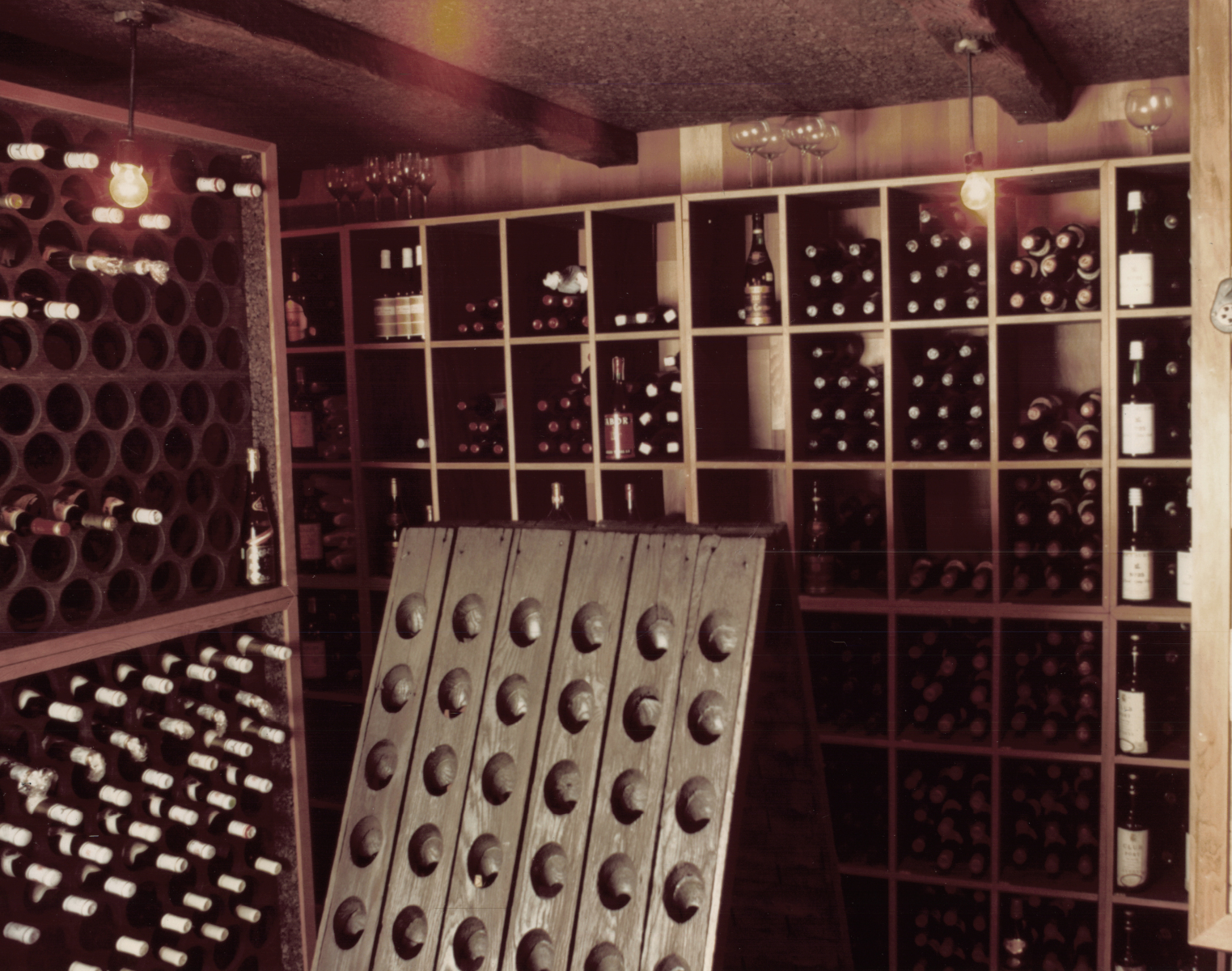
A wine cellar built beneath a Hollywood Hills estate — floor-to-ceiling custom racks, diamond bins, temperature control. This is where the Vintage Guardian concept led when it met serious collectors. © KAB/LSI
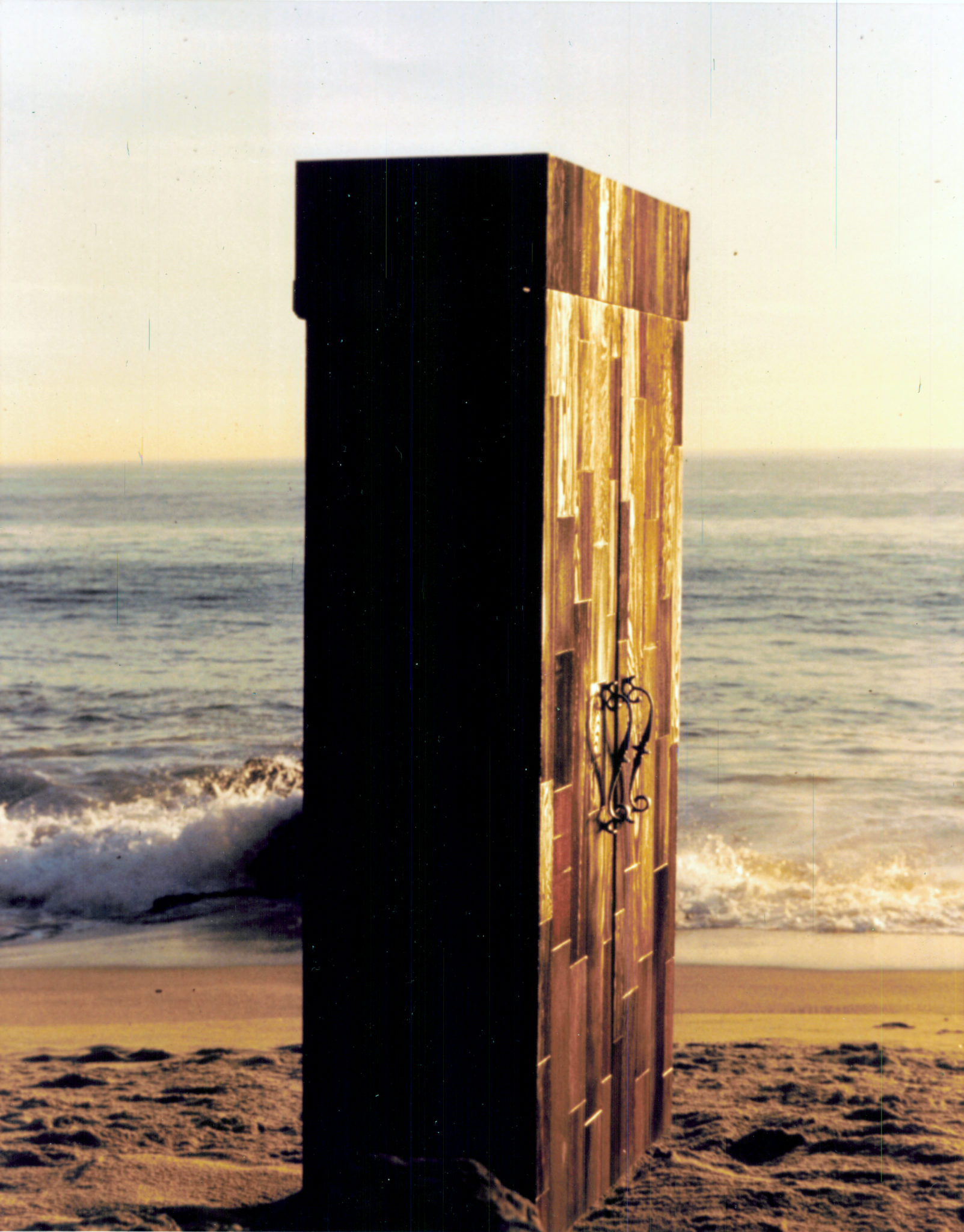
The original wood prototype — built by hand before the polyurethane molds were ever cast. © KAB/LSI

The original Vintage Guardian brochure — sold through Los Angeles Magazine, Orange County Magazine, and wine publications statewide.
Commercial construction — the years that sharpened everything
The commercial years were consequential. We remodeled an 80,000-square-foot building for a defense contractor in Orange, and spent three years transforming a 100,000-plus square foot industrial warehouse in Fullerton for Coca-Cola Foods — a project that included a 1,200-horsepower ammonia deep-freeze system and three-story flash-freeze carousels. That kind of work teaches you to navigate engineers, building officials, specialty manufacturers, and construction timelines simultaneously, without losing the client’s confidence.
We also ran a commercial tile company and a cabinet shop. The breadth wasn’t accidental — each trade made us more useful to the clients who came after.
Hardscape, roofing, and the hillside specialty
We ran a concrete, block, and hardscape company through the build-out years of Irvine, Turtle Rock, Laguna Hills, and Laguna Beach — the kind of high-pressure work where buyers were barely qualifying for the house and already committed to finishing the yard. Heavy equipment, ten-wheel trucks, legal filings with the DMV. It was grueling, and we were good at it.
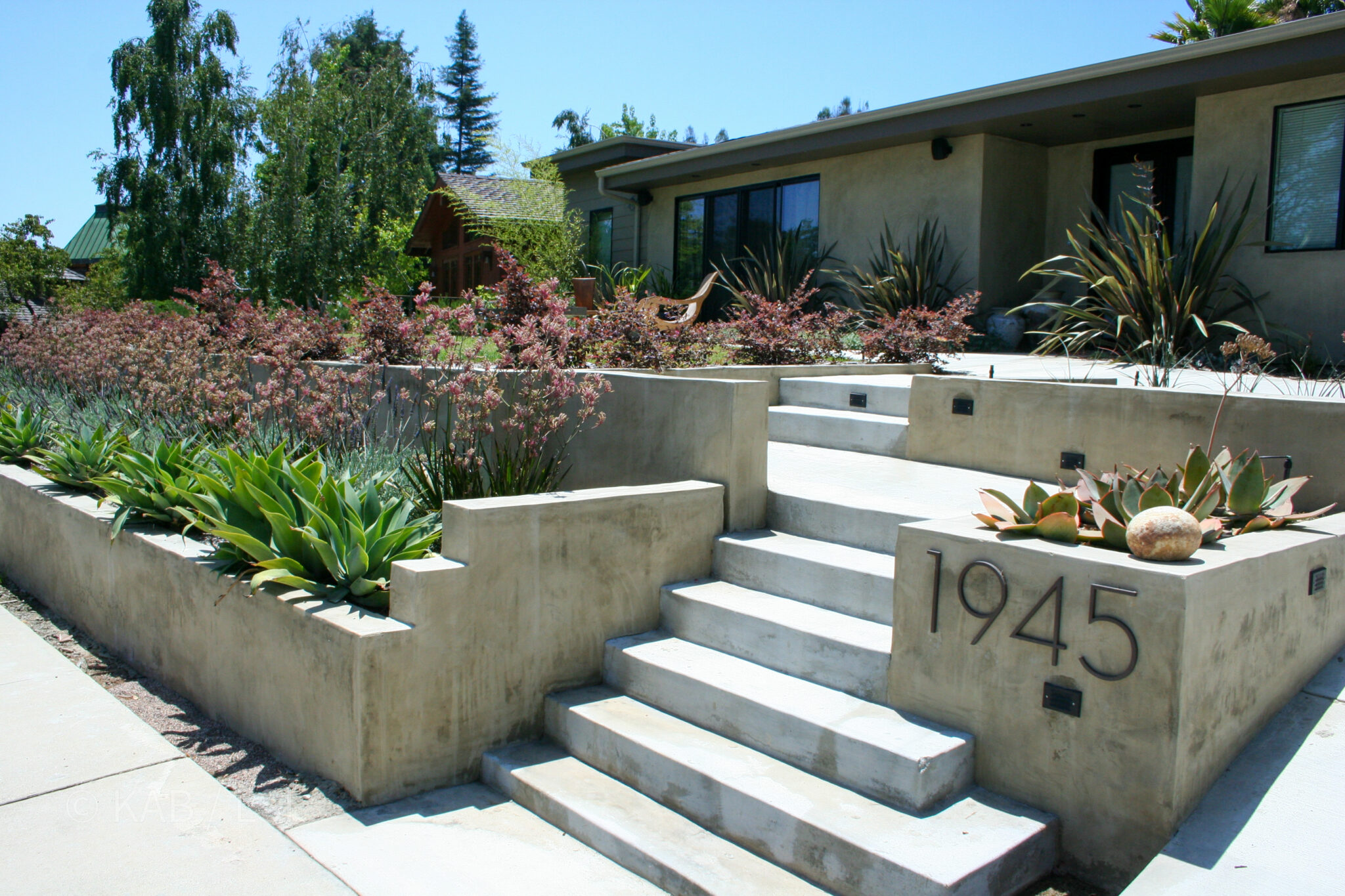
Terraced concrete planters, stepped walkways, and integrated address markers — grade control and arrival experience solved together. © KAB/LSI
The roofing company was where we found our niche. Southern California’s hillside fire risk — La Habra Heights is a Class 4 fire area, same as Malibu — meant that wood shake roofs needed to come off, and someone had to know how to replace them correctly. We did thousands of fire-resistant tile and clay roofs on hillside homes throughout Los Angeles and Orange County. That work put us in relationship with some of the most distinctive residential properties in the region, including estates in Beverly Hills and Hidden Hills.
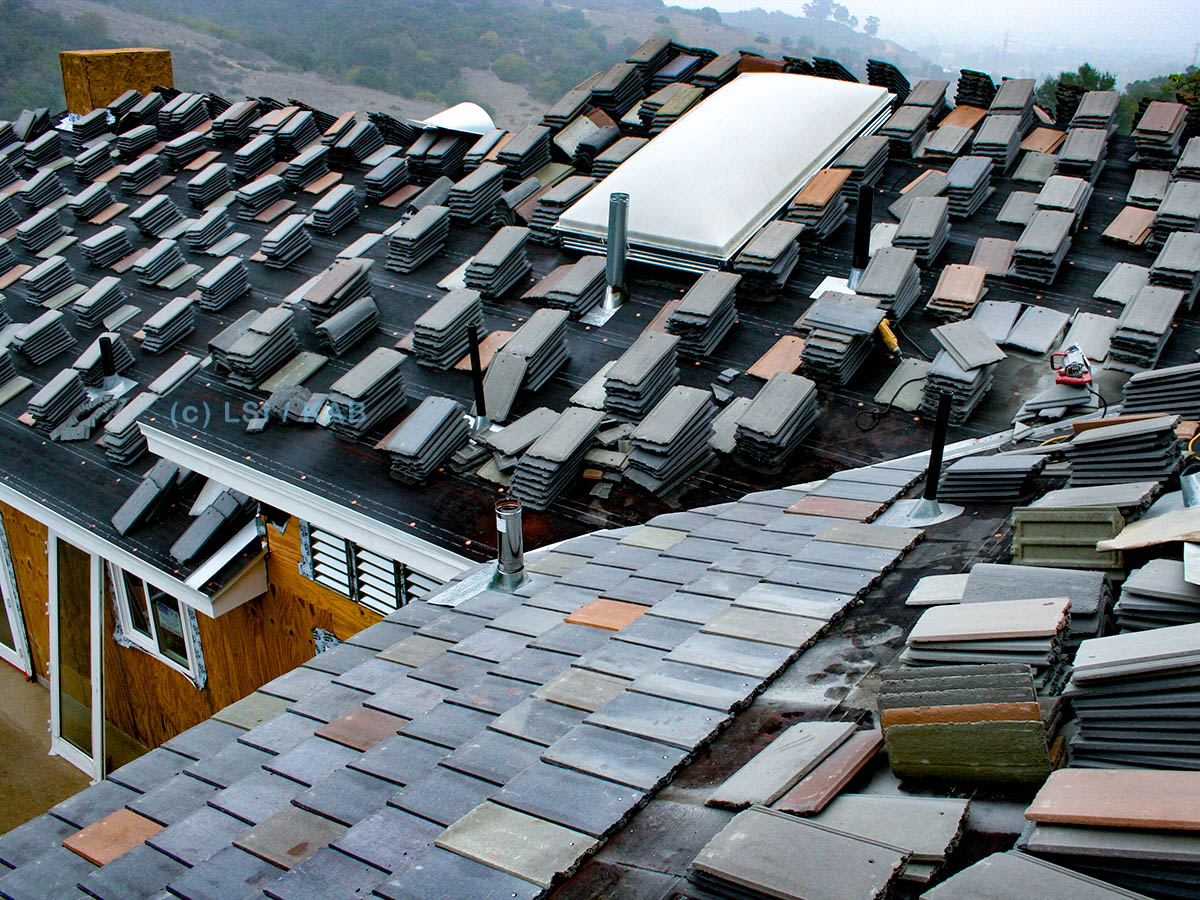
A 6-color Auburn concrete tile roof on a La Habra Heights hillside home — fire-resistant, engineered for the grade, built to last 50+ years. © KAB/LSI
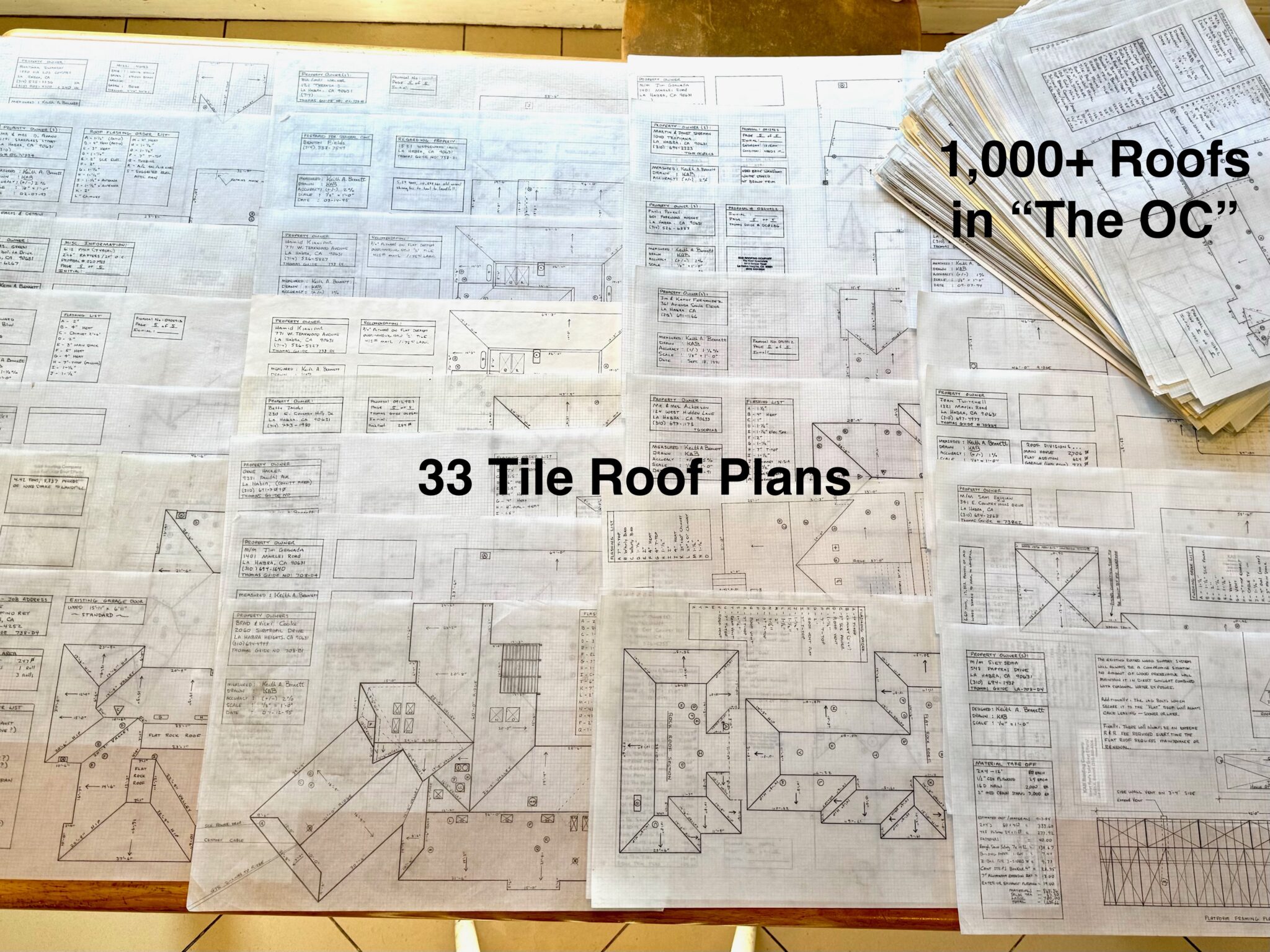
Over 1,000 hand-drawn tile roof plans — each to ¼-inch accuracy with a full bill of materials, before a single tile was ordered. © KAB/LSI
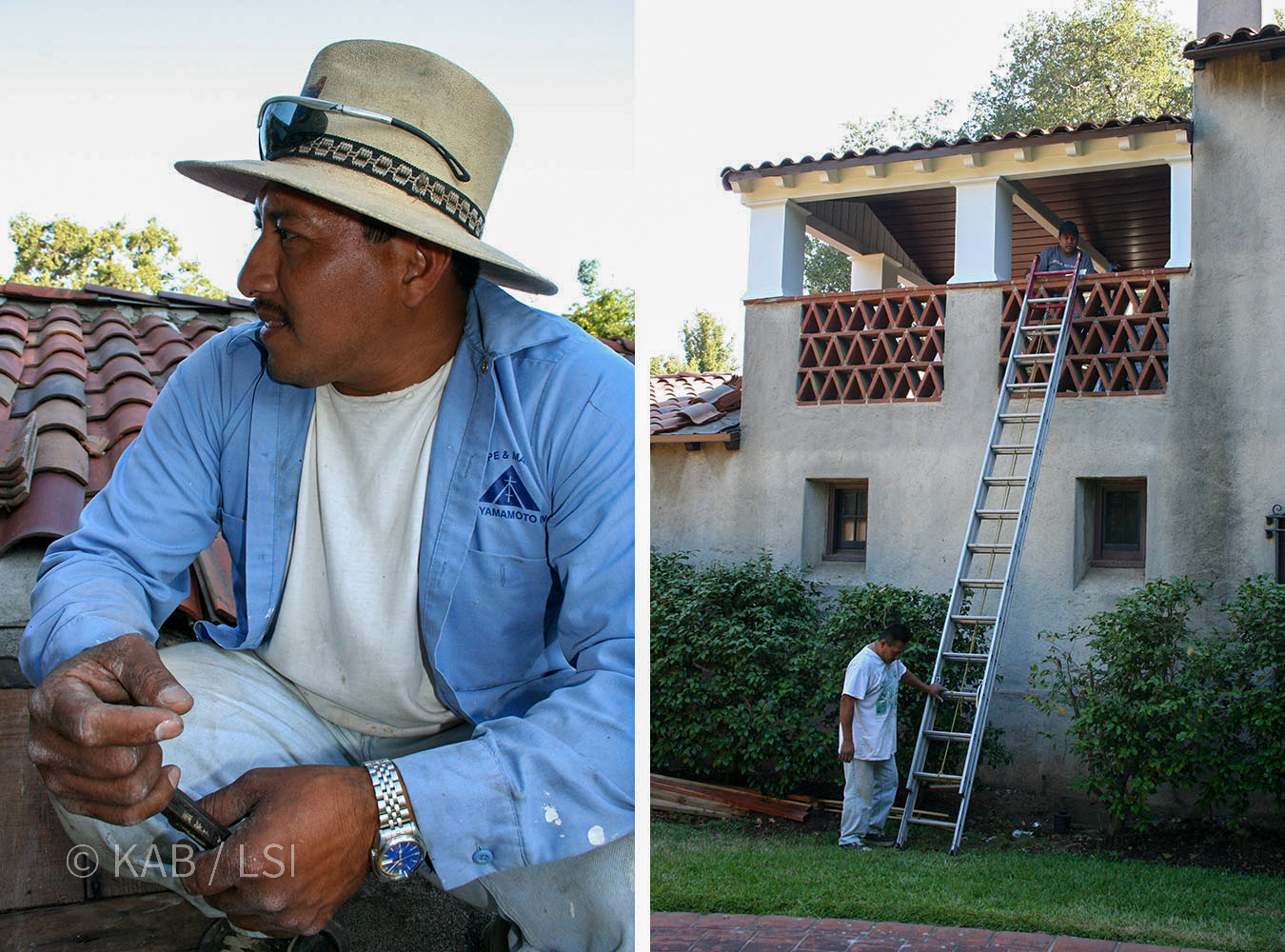
Our foreman on the 1920s estate — and the estate itself, with its original handmade clay tiles matched from historic demolition yards. Every tile pulled, every tile accounted for. © KAB/LSI
Property inspections and the Cert-A-Roof franchise
We operated a full property inspection company for years — the kind hired by buyers or their realtors to examine a property from foundation to attic before escrow closes. Electrical, plumbing, sewage, structural integrity. We saw the inside of hundreds of Southern California homes at their most honest moment, when nothing is staged and everything is visible.
We also held a Cert-A-Roof franchise covering Orange County — a roof certification operation that expanded significantly during the reverse mortgage boom. Lenders required documentation that a roof would remain sound for two years. That meant going up on thousands of roofs, making an honest assessment, and standing behind it. When you certify a roof, you’re accountable for your call. That accountability sharpened our eye for what matters and what doesn’t.
I’ll say plainly: home inspection has become an industry that sometimes serves itself more than the transaction. I know how to read an inspection report — what’s serious, what’s ordinary wear, and what’s been inflated to justify a fee. That perspective is useful to a homeowner trying to make sense of one.
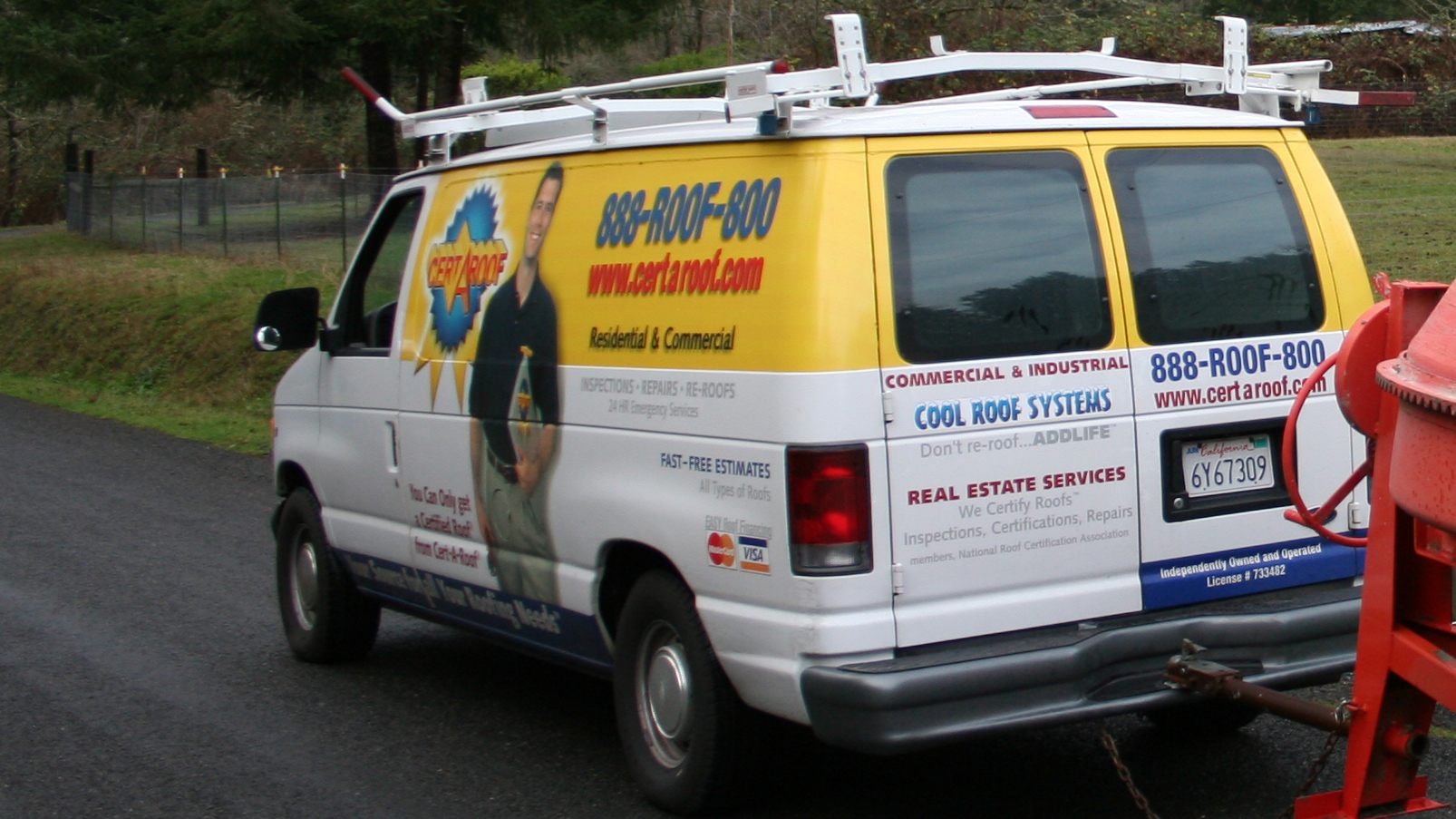
One of our Cert-A-Roof vans operating in Seattle, WA. The Orange County franchise completed thousands of roof certifications for reverse mortgage lenders and real estate transactions. © KAB/LSI
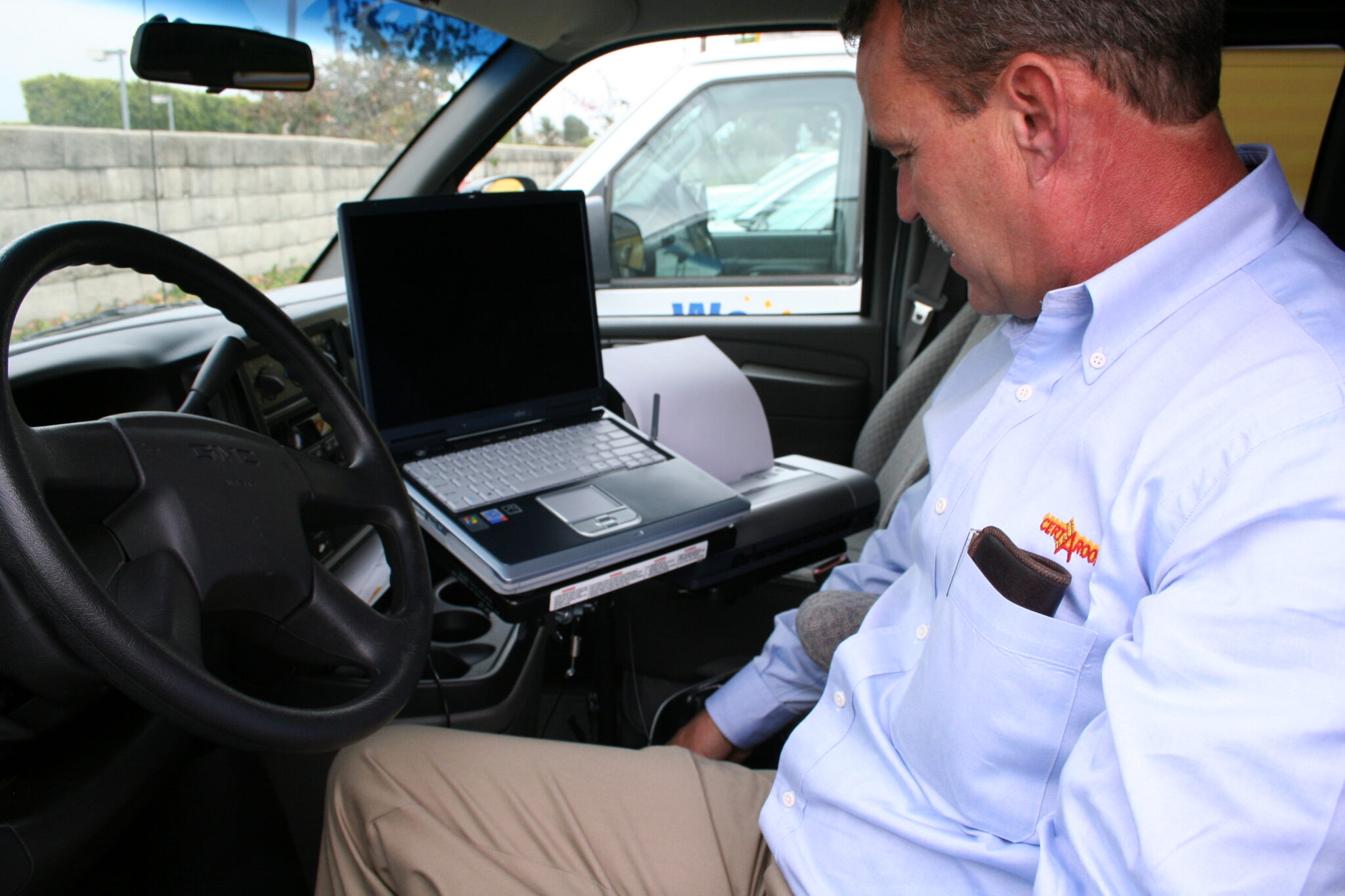
Our property inspector in the field — laptop mounted at the wheel, reports written on-site and filed immediately. Technology that made same-day certification possible. © KAB/LSI
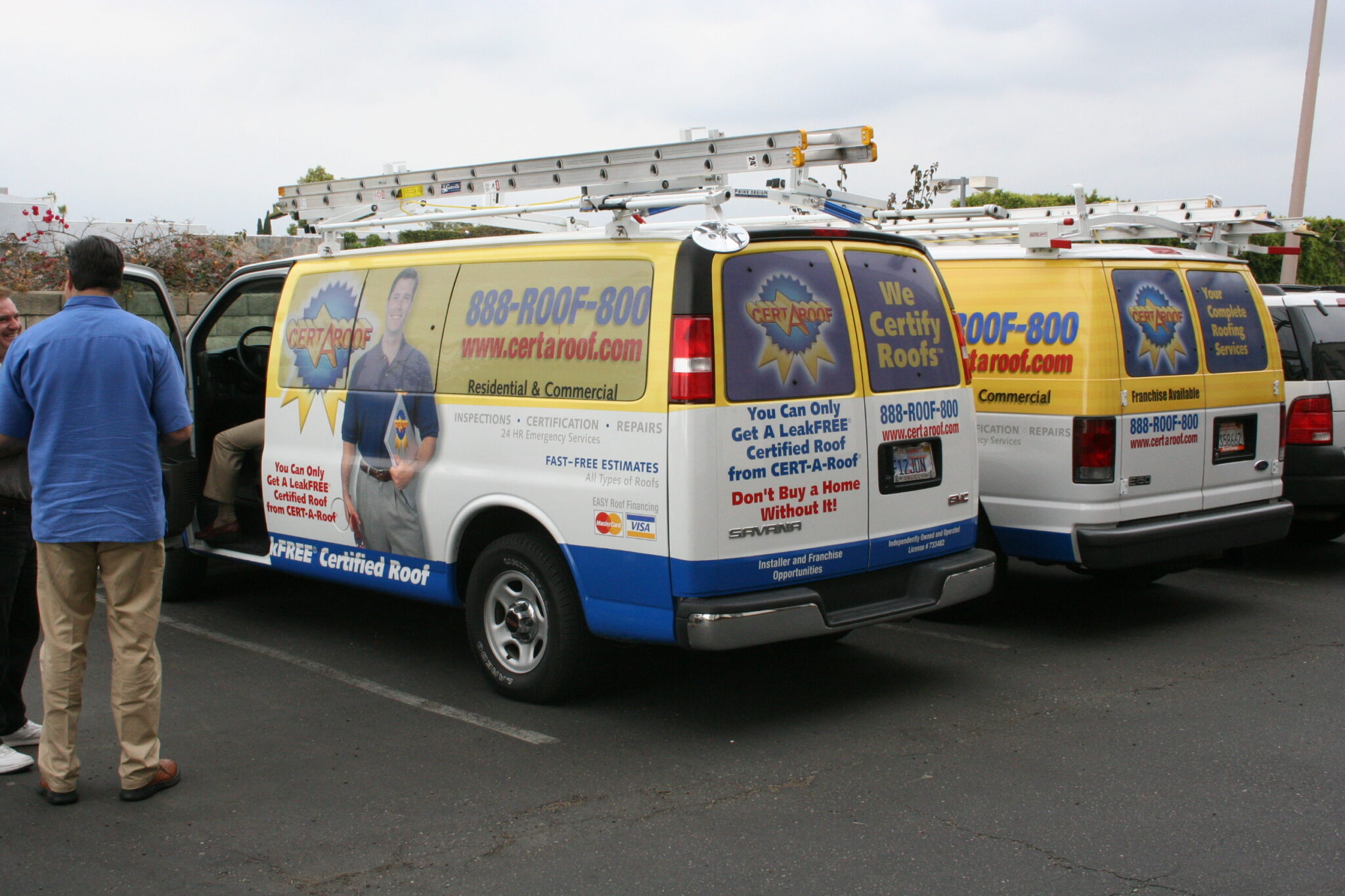
The Cert-A-Roof fleet — a franchise operation that expanded across Southern California and beyond. © KAB/LSI
The RV garage decade — anticipating what homeowners would want next
By the mid-2000s, buildable land in core Southern California was essentially gone. New construction had pushed out to Riverside and San Bernardino — too far for most working families. I became convinced that the answer wasn’t moving farther out, but making better use of what people already owned.
We purchased corner lots with clients and spent a year remodeling existing homes to include proper RV garages — full electrical hookup, gray water and black water integration tied to the local sewer or septic. What we discovered confirmed the theory: people will specifically seek out a property because it has an RV garage. A million-dollar coach doesn’t have to sit in a storage yard. It can serve as a guesthouse, a private retreat, or a place for a grown child to land softly when they need to start over. Those are real solutions for real La Habra Heights lots.
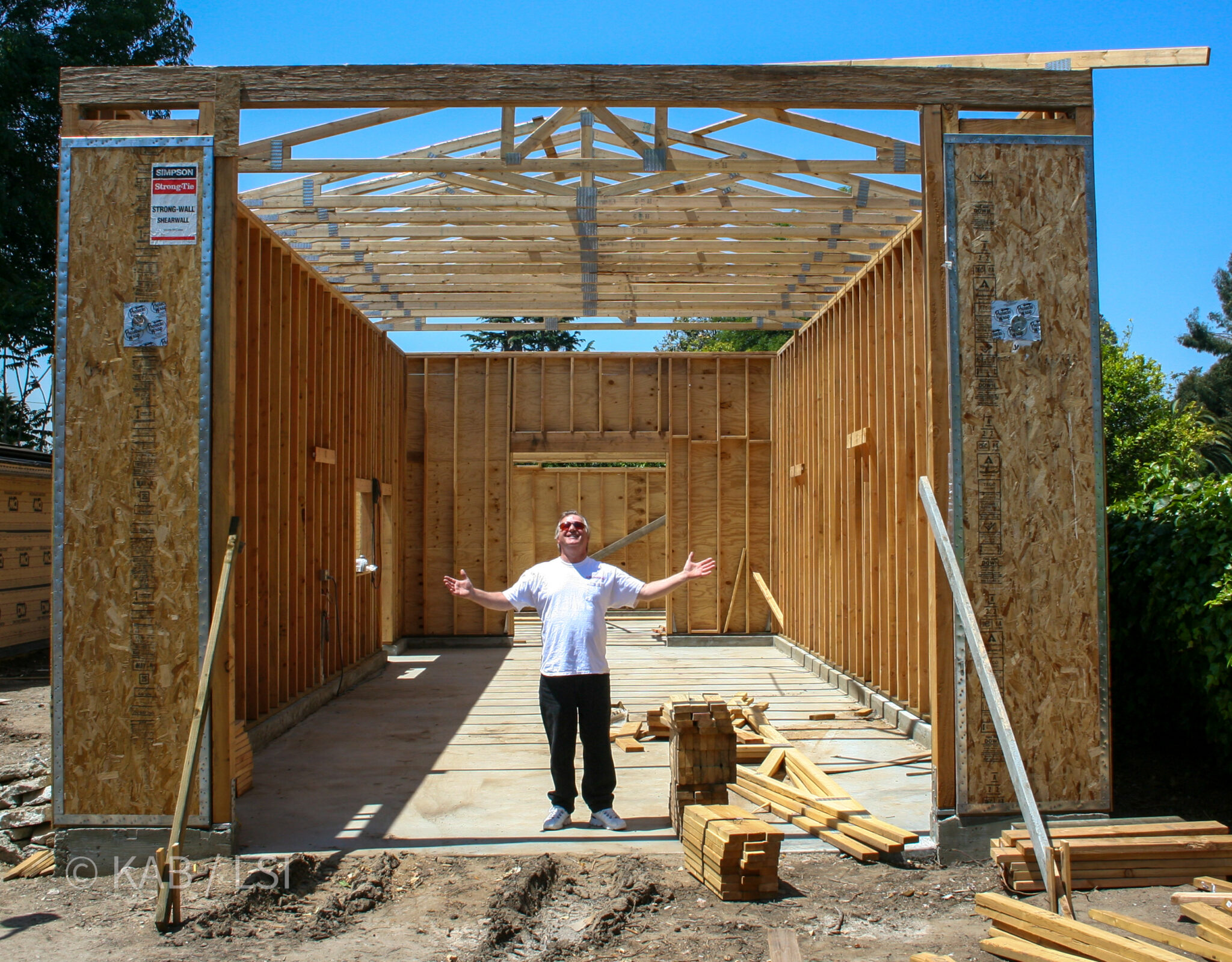
Kenny taking in the vast opening of this new RV Garage ‘Signature Project’ — 20′ wide, 60′ deep, engineered shearwalls, roof trusses spanning the full depth. Built to house a coach and serve as a guesthouse. © KAB/LSI
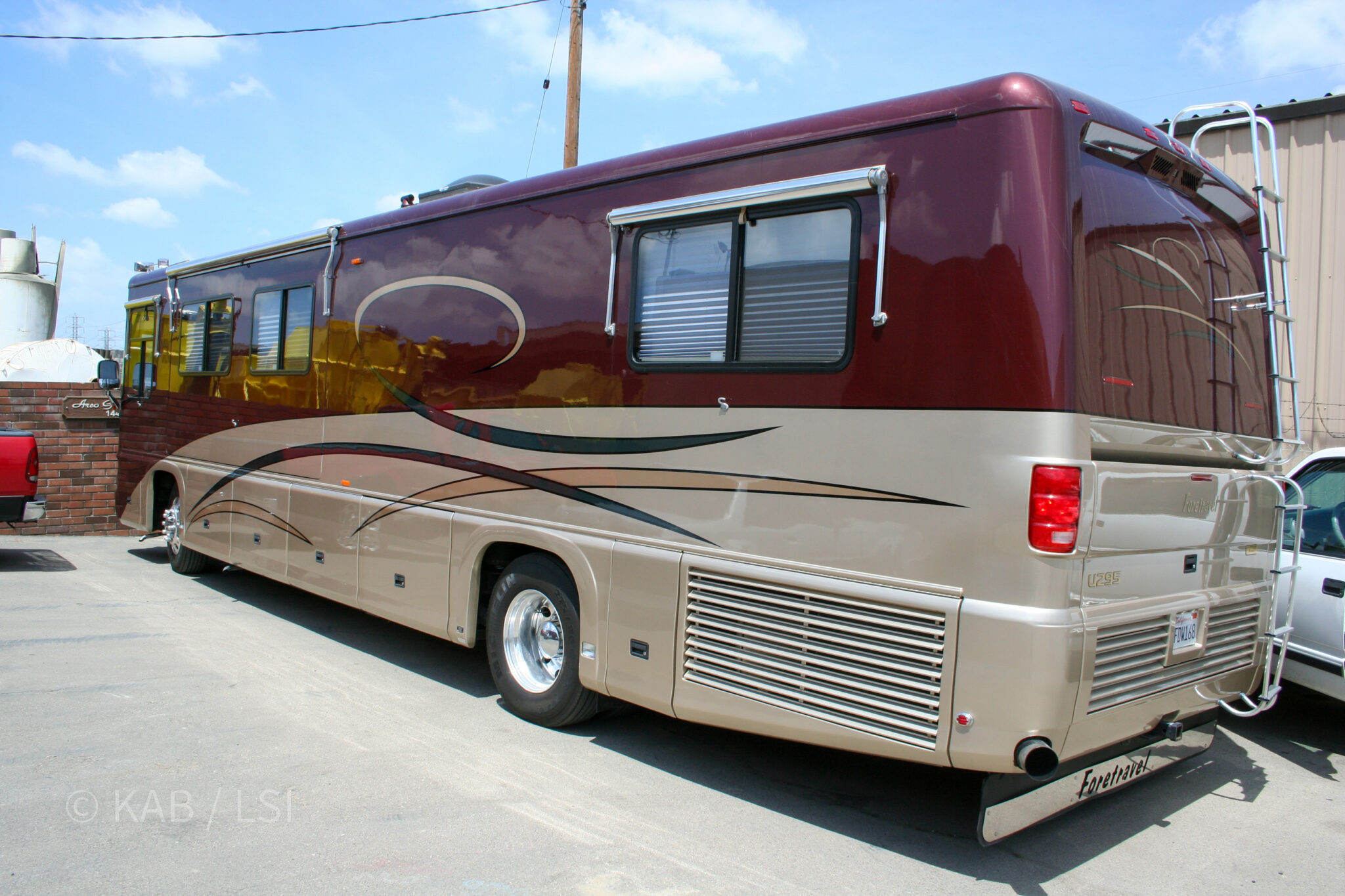
The Foretravel coach this garage was designed for — protected, connected, available as a guesthouse or private retreat year-round. © KAB/LSI
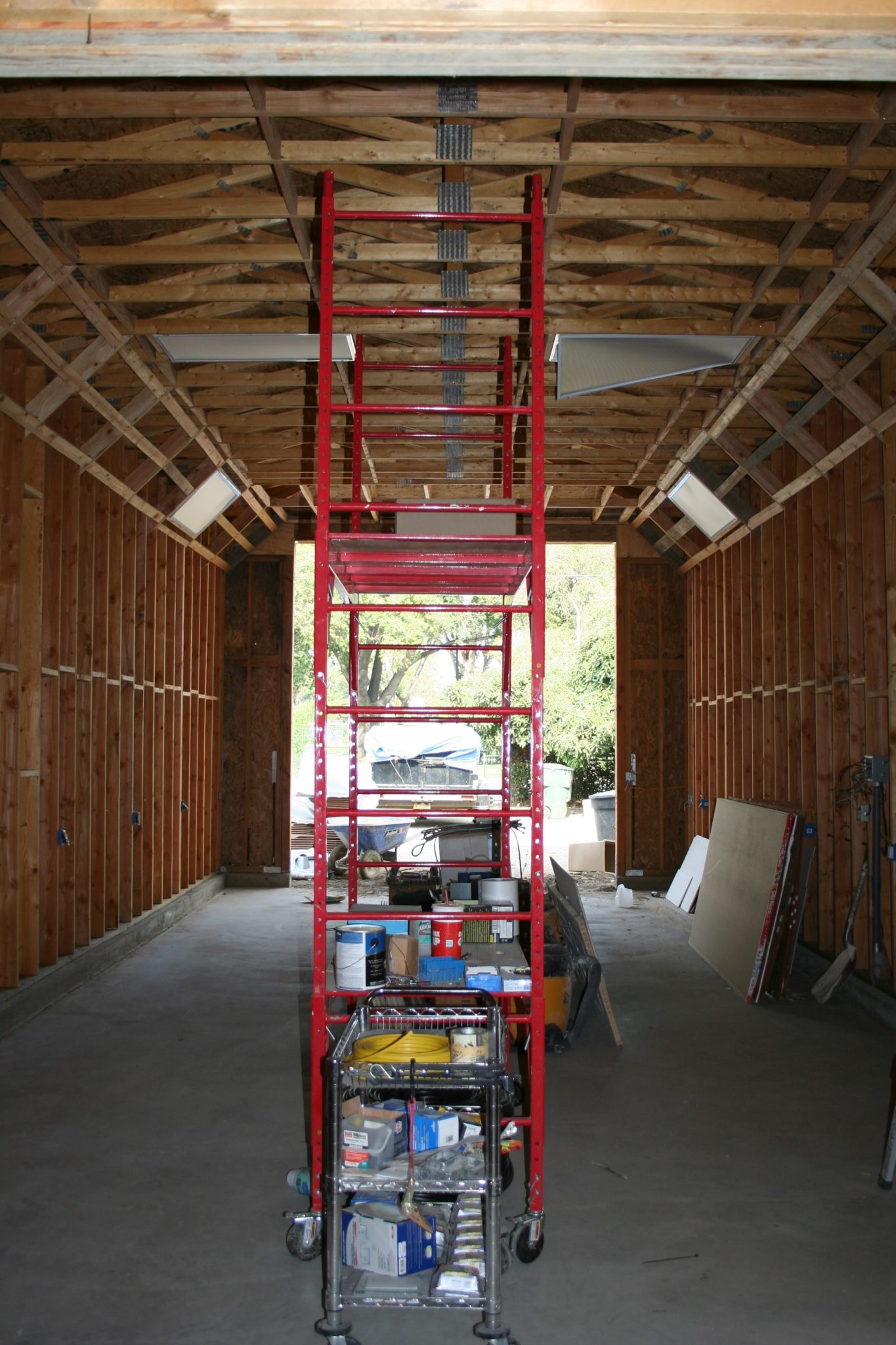
Rolling scaffold for electrical and lighting installation — full hookups, panel service, LED lighting throughout. The coach plugs in; the garage becomes a room. © KAB/LSI
Outbuildings, ADUs, and what a one-acre lot can actually become
I retired from contracting. I have no interest in the legal liability, and the work itself belongs to people younger than me. What I retained is the judgment — and the network of engineers, specialists, and tradespeople who I can vouch for or investigate on a client’s behalf.
One acre or more means room to build. A she-shed with power and air conditioning. A quiet professional office in the far corner of the property — for a therapist, an author, a telehealth provider, a lawyer who needs distance from the house. An RV garage that doubles as a guesthouse. A studio. An outbuilding set on a concrete pad that falls within the building code’s definition of a temporary structure and doesn’t require a full permit process.
Most hillside homeowners have never had someone walk their lot and tell them honestly what’s possible. That’s the conversation I’m offering.
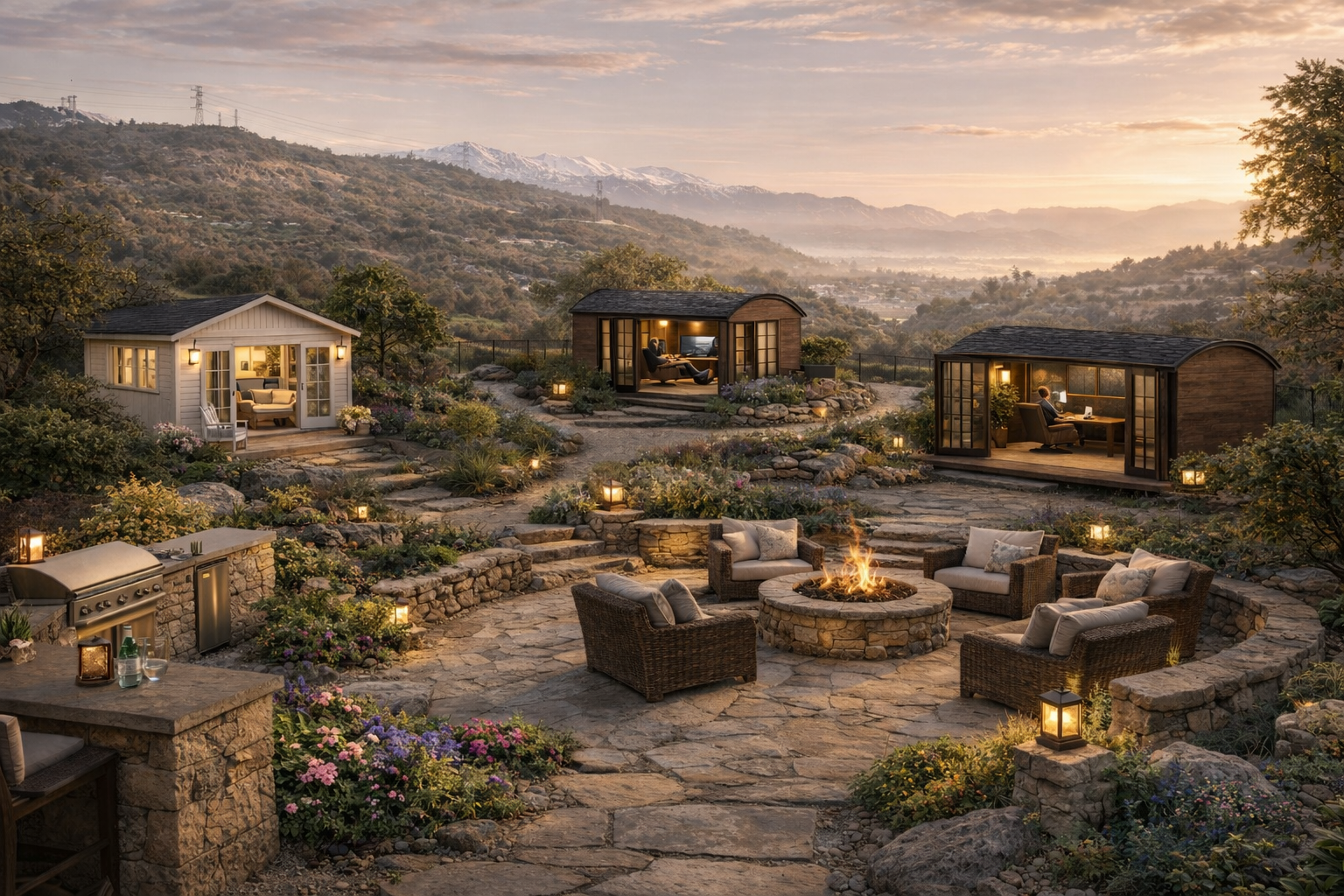
What a one-acre hillside lot can become — a guesthouse, a home office, a studio, all connected by stone terracing and outdoor living space. The mountain views come with the property. The vision takes someone who knows what’s possible. AI illustration.
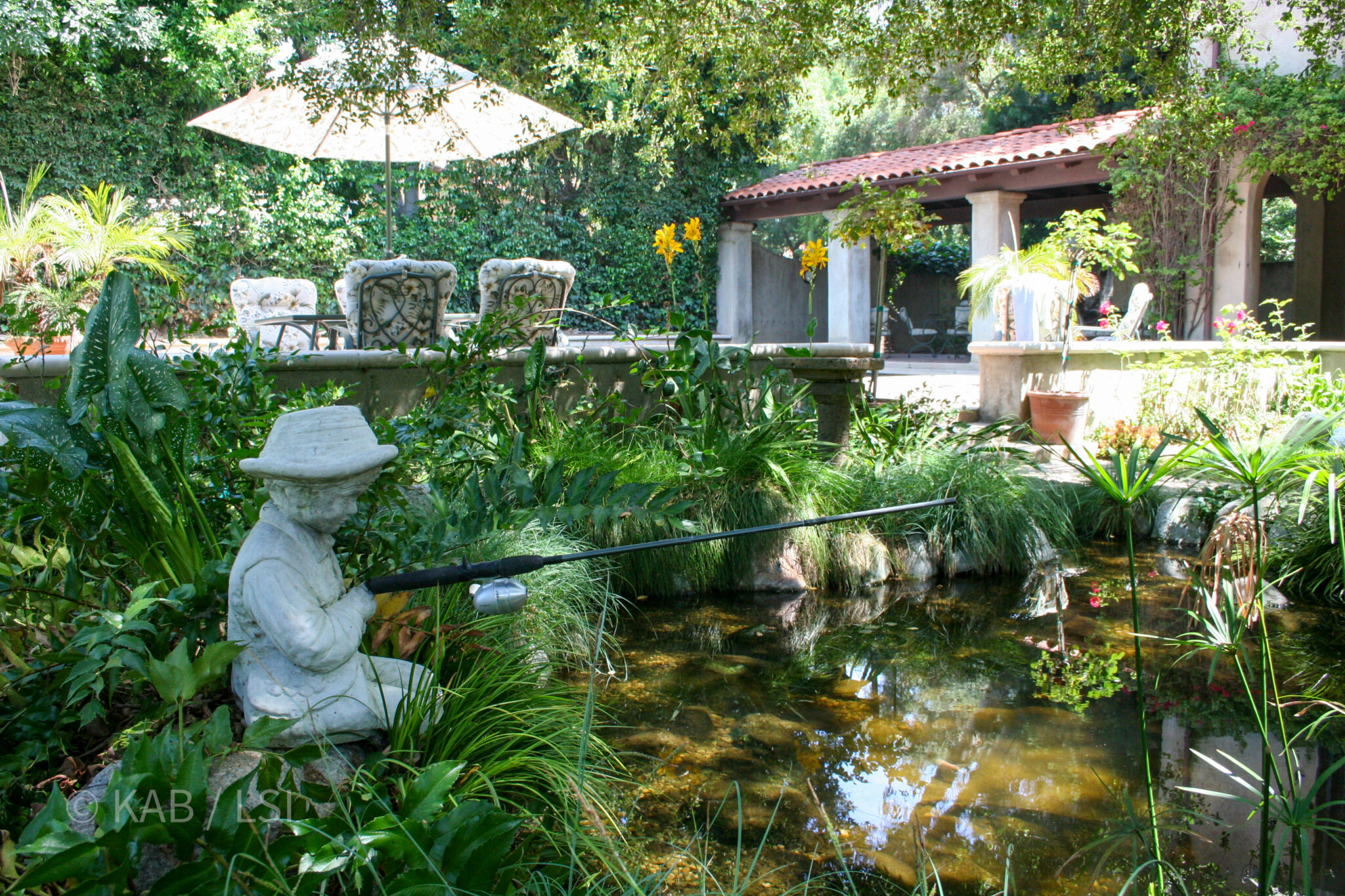
A 1920s estate pond, restored. When structure comes first — grade control, edge definition, flow paths — beauty returns naturally and sustains itself. © KAB/LSI
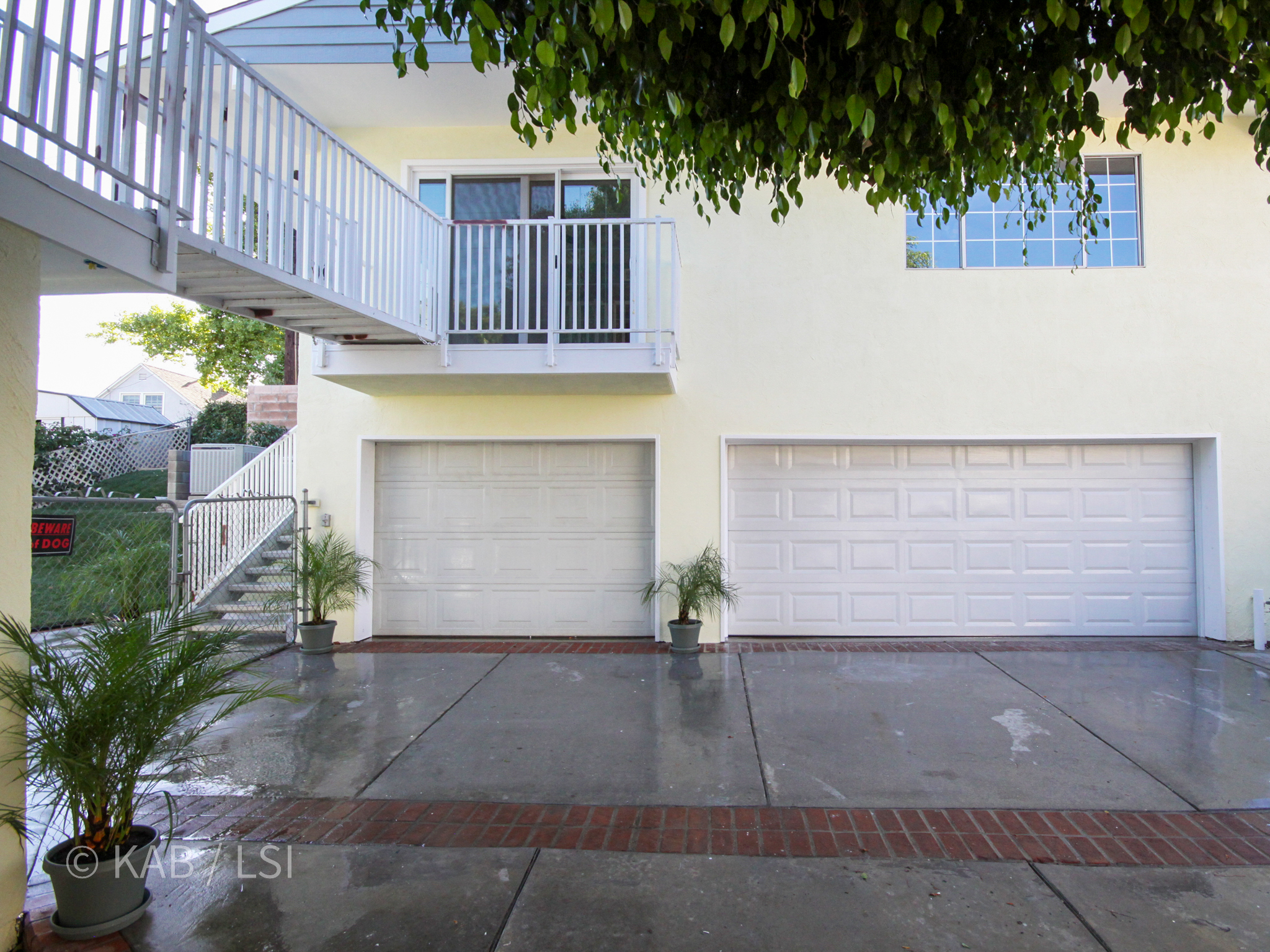
New ADU cut into the hillside at the rear — built above a new 3-car garage and laundry. Connected to the main house via a steel and aluminum bridge welded in our shop. No stairs required. © KAB/LSI
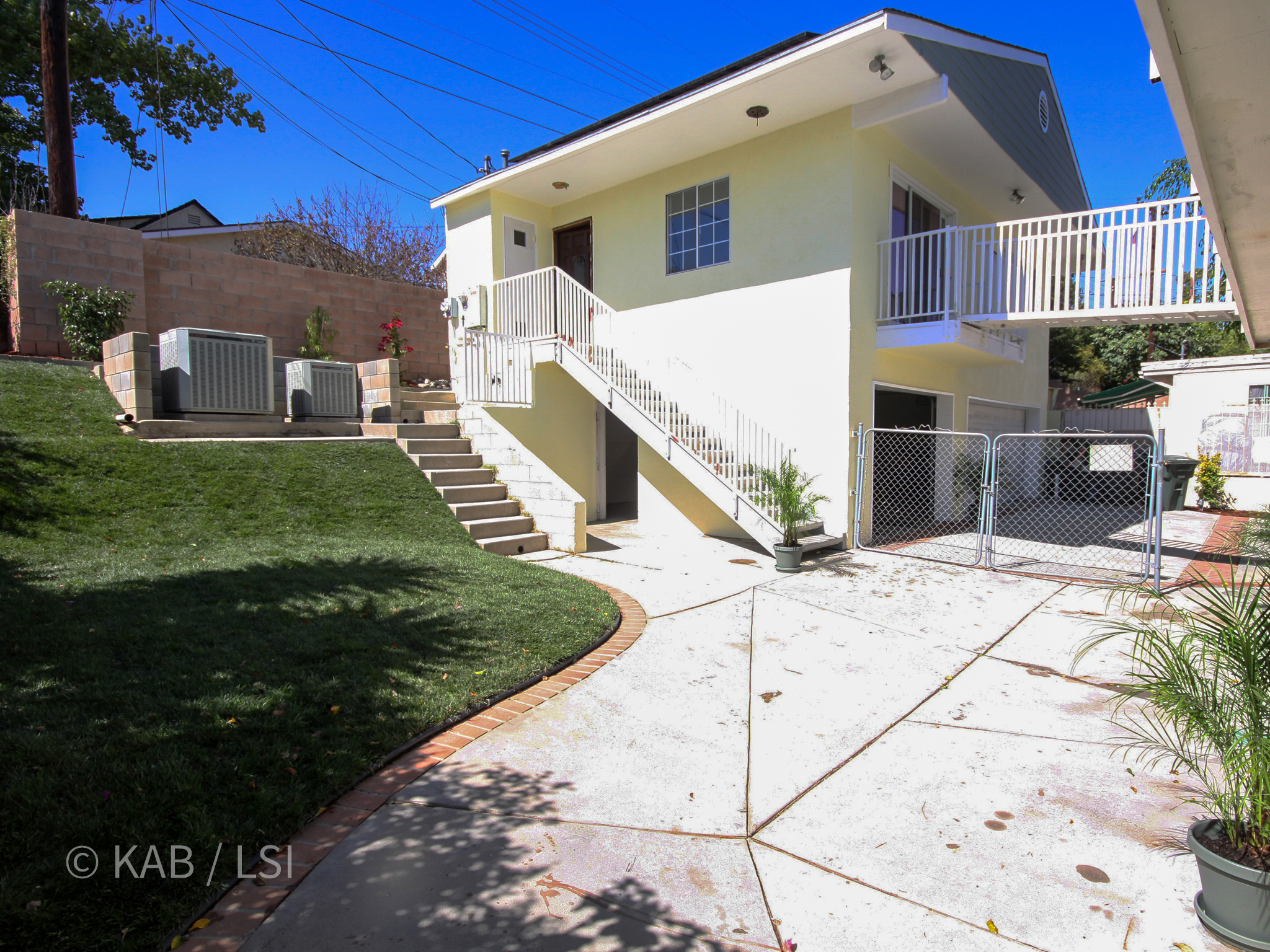
Side view of the completed ADU. As a certified Trane dealer we installed a new HVAC condenser for both the main house and the ADU — line sets run underground to both structures. © KAB/LSI
Wildfire defense — the proactive system most hillside homes don’t have
La Habra Heights is a Class 4 fire area. Every homeowner here faces the same question eventually: what happens if the fire comes while you’re not home? Or while you are?
Over the years I’ve helped homeowners design and install active fire suppression systems that draw from existing swimming pools or dedicated storage tanks, pressurized by pumps that can run on grid power, battery backup, solar — with a gasoline engine as the final fallback. Copper plumbing throughout, because copper survives what plastic doesn’t. The lines run on the roof, routed so they won’t interfere with a future reroof — unlike solar panels, you don’t want a system you’ll have to dismantle in fifteen years.
The engineering principle is simple: wet surfaces don’t ignite. The goal is to saturate the roof, the exterior walls, and the first thirty feet surrounding the structure with mist or directed stream depending on available water volume and pressure. The system can be smart — zoned to recognize which side of the house is facing radiant heat and direct water accordingly.
What I find elegant is the delivery infrastructure. Wrought iron fence posts and decorative steel screens positioned at the thirty-foot defensible space perimeter can house the directed sprinkler heads that face inward toward the house. The steel is fire-resistant. The heads are concealed. From the street, it looks like a property fence. In a firestorm, it’s what’s keeping the house wet.
This is advisory work. I don’t sell product. I help you think through the design, connect you with the right engineers and installers, and oversee the execution.
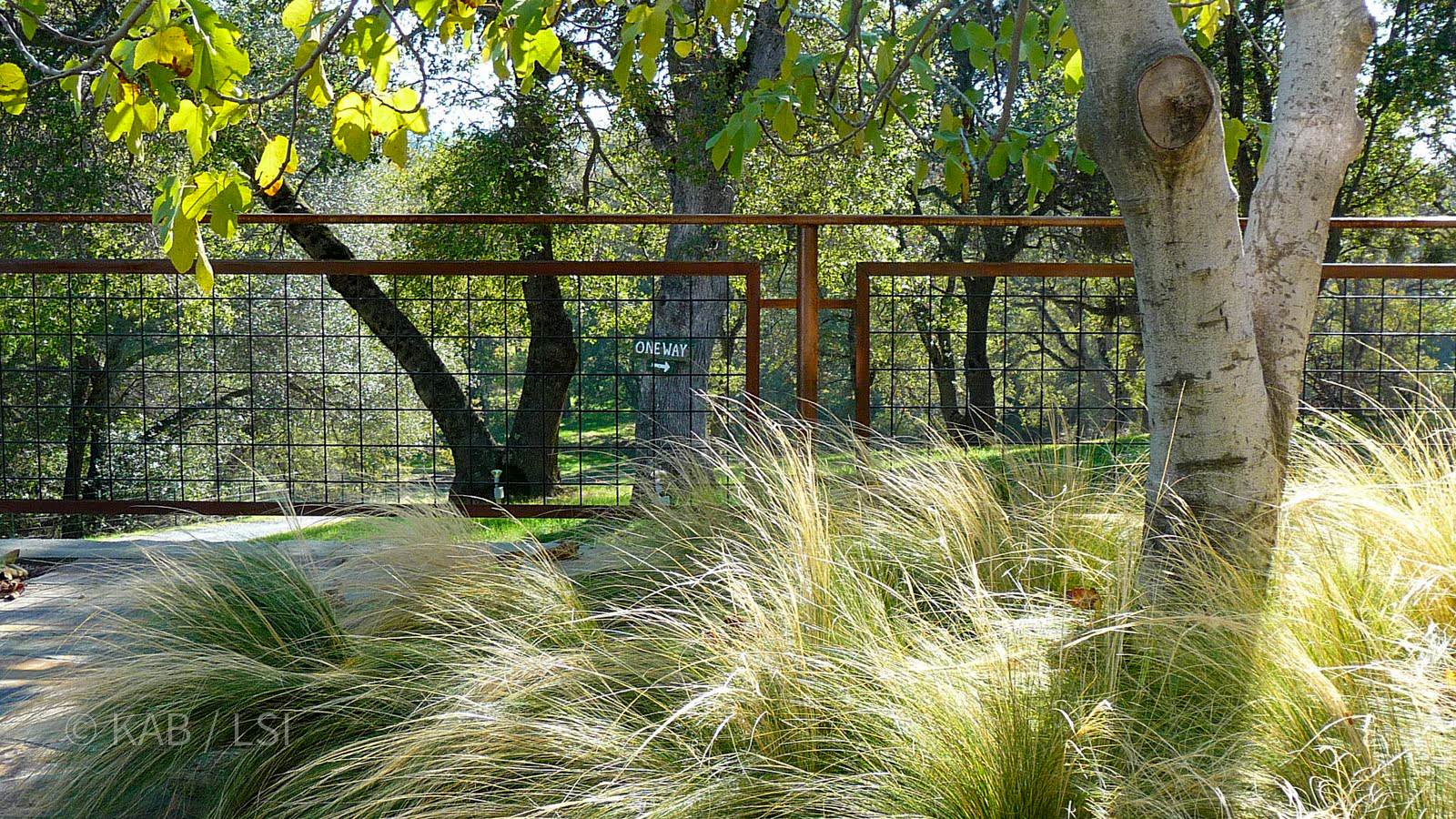
A Cor-Ten steel welded wire fence on a La Habra Heights property. From the road, it’s a fence. Positioned at the 30-foot defensible space perimeter with directed sprinkler heads, it’s infrastructure. © KAB/LSI
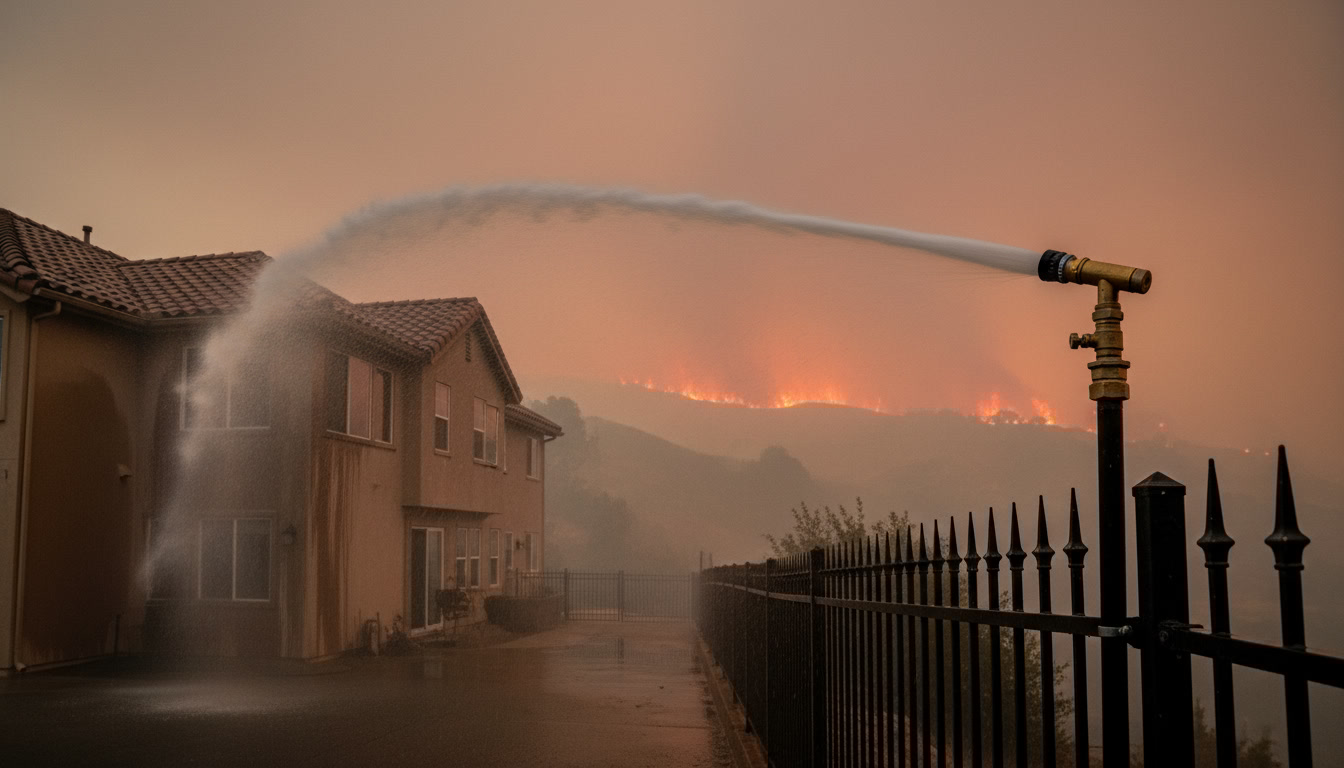
A brass nozzle on the iron fence post — water arc hitting the house, flames on the hillside behind. The system working as designed. AI illustration.
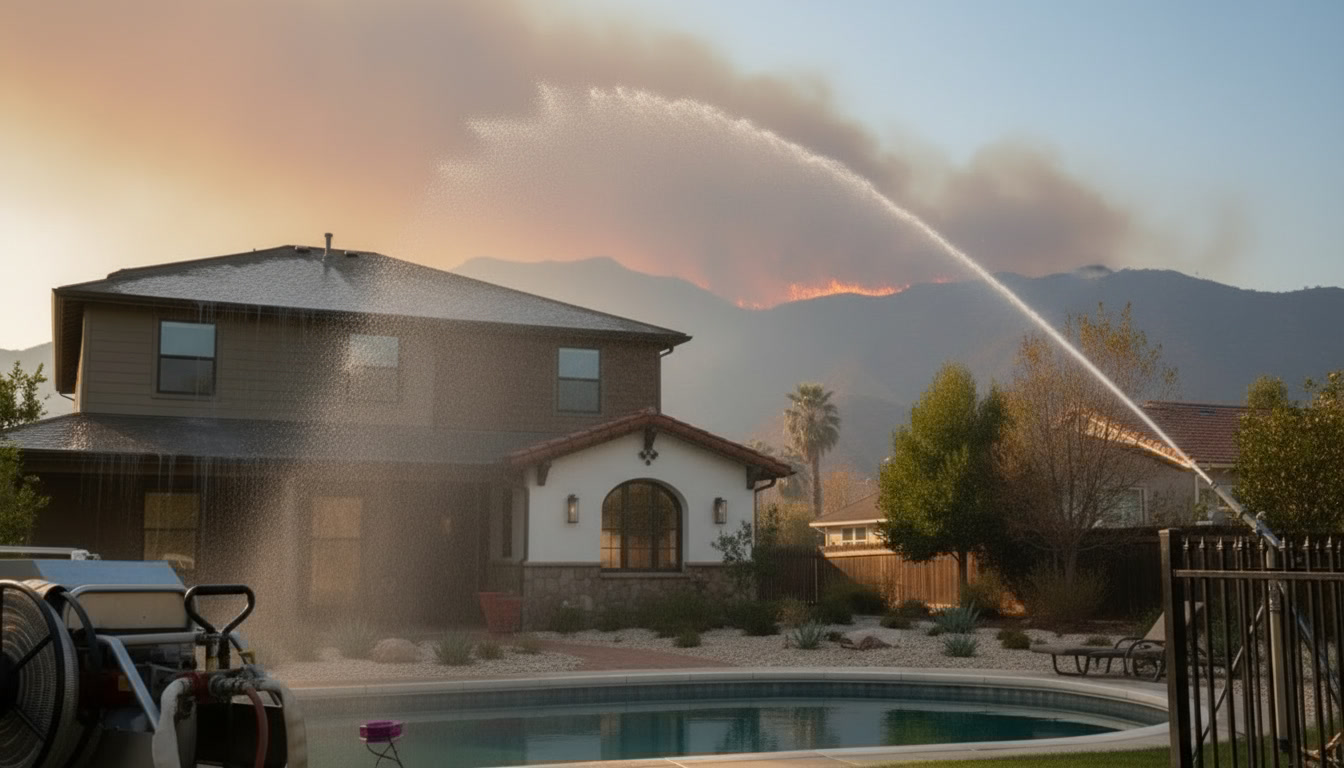
Pool-fed pump unit drawing from the pool, distributing through fence-line nozzles — fire on the mountains, house already being soaked. AI illustration.
Safe rooms and fire-resistant vaults — the conversation nobody has until it’s too late
People don’t think about this until they’ve lost something irreplaceable. Then they call.
We have built concrete safe rooms in La Habra Heights — some dug into hillsides under existing houses, some freestanding structures on the property disguised as planters, storage areas, or front porch landings. The construction is straightforward: concrete masonry unit walls, solid-filled with concrete and rebar, topped with a cast-in-place reinforced concrete lid and fitted with a fire-rated steel door. Twelve-inch walls in some cases. These are not gun safes — they are rooms.
The uses vary. Some are purely for valuables — jewelry, photo albums, firearms, gold and silver, family records, irreplaceable documents. Some are designed to shelter people: a genuinely safe room in the event of a wildfire or a home invasion. La Habra Heights has no city police force. That reality shapes decisions here differently than it does in a gated suburb with a three-minute response time.
The best ones are invisible. We have built safe rooms later camouflaged as front porch landings — poured concrete lid finished to match the surrounding hardscape. Nobody knows it’s there. That’s the point.
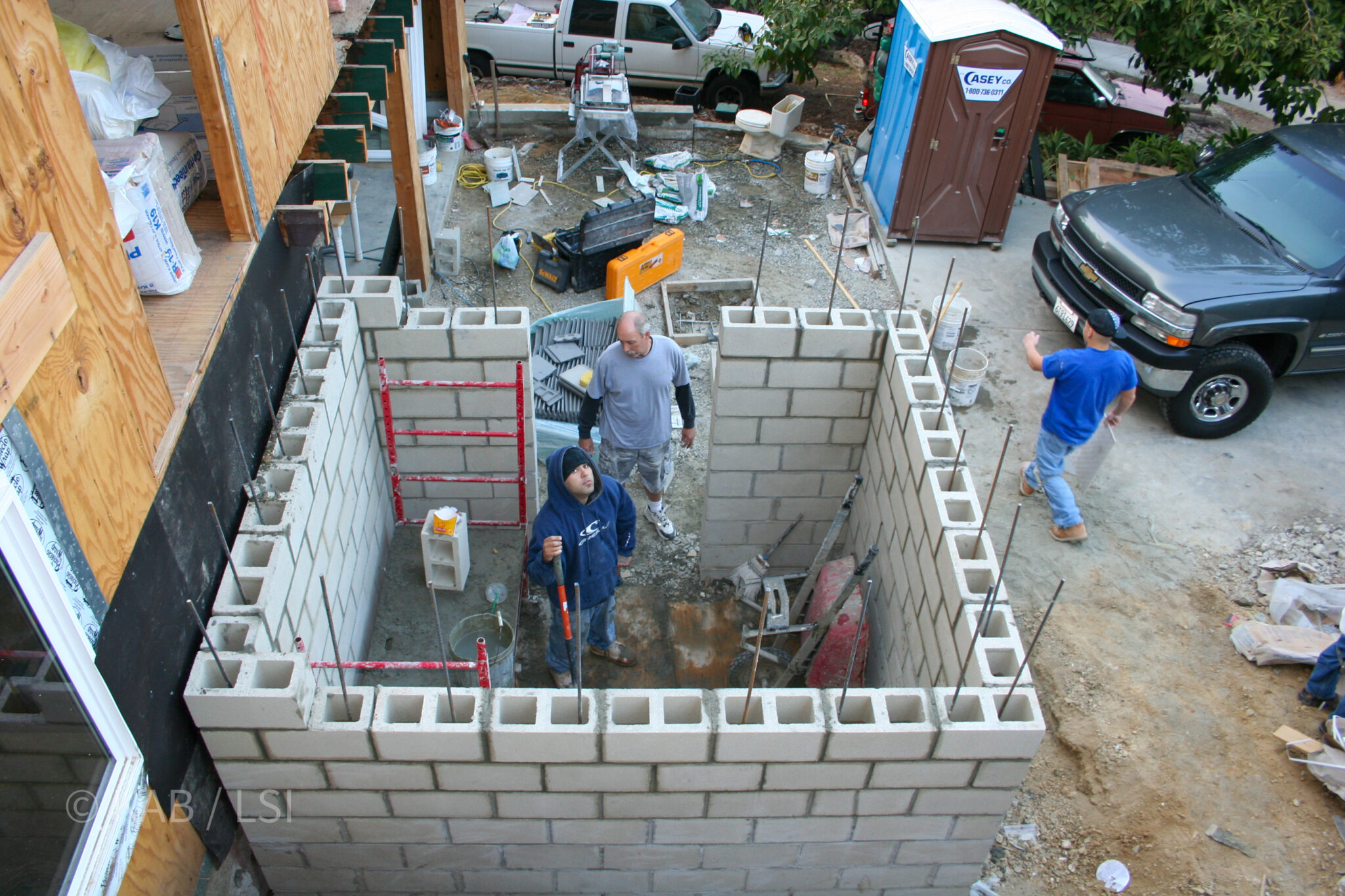
Mason and foreman inside a half-built safe room — La Habra Heights. CMU block, solid-filled, rebar throughout. © KAB/LSI
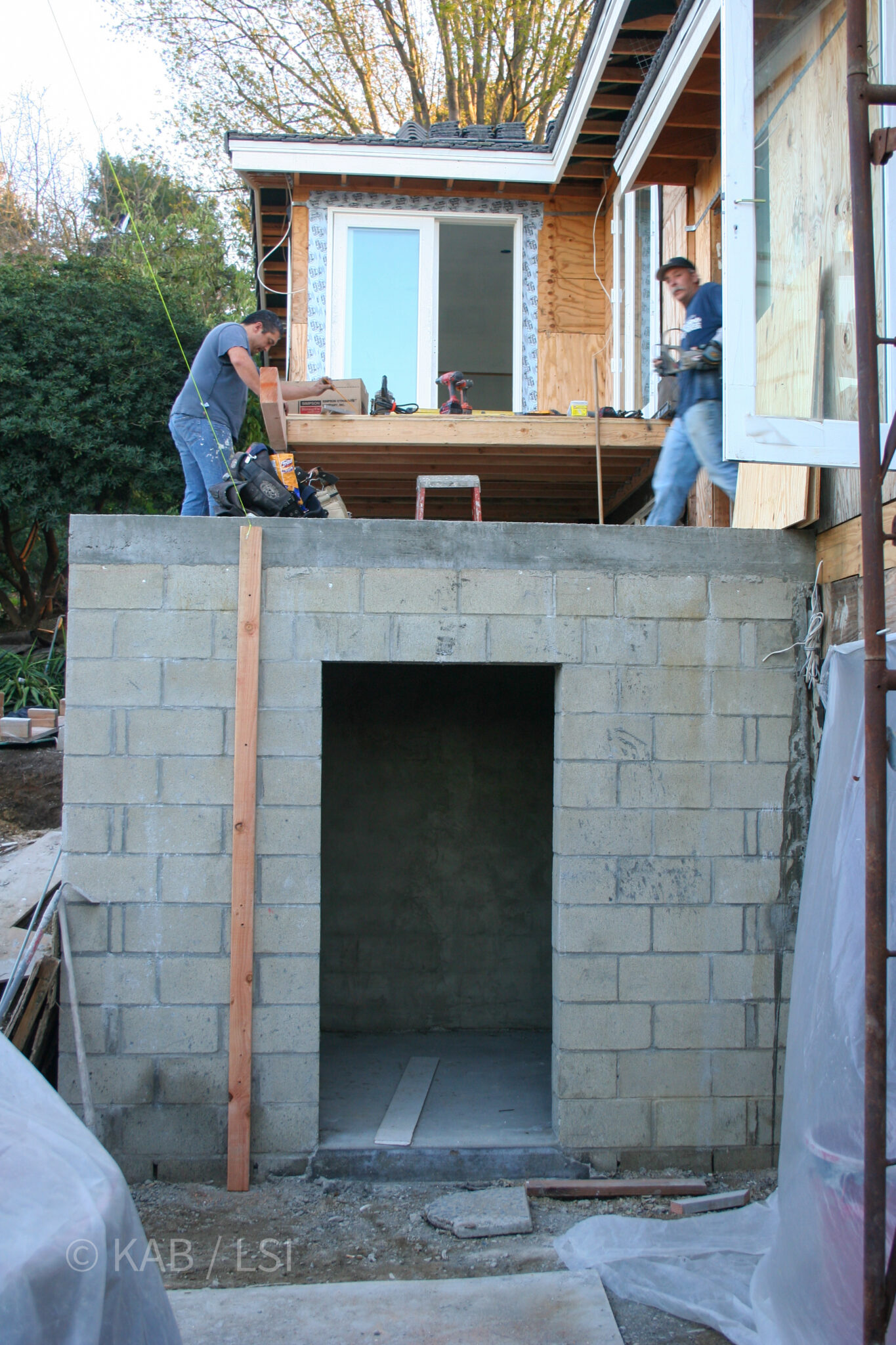
Reinforced concrete lid poured in place. This room was later camouflaged as a front porch landing. It is invisible from the outside. © KAB/LSI
The hidden one — dug under an existing hillside house
Not every safe room announces itself. This one is under the house — carved out of the hillside itself. Twelve-inch cast concrete walls, a safe set directly into the concrete, Italian smooth plaster throughout, Saltillo tile laid by hand. It doubles as a temperature-controlled wine cellar. Nobody who visits knows it’s there. That’s the point.
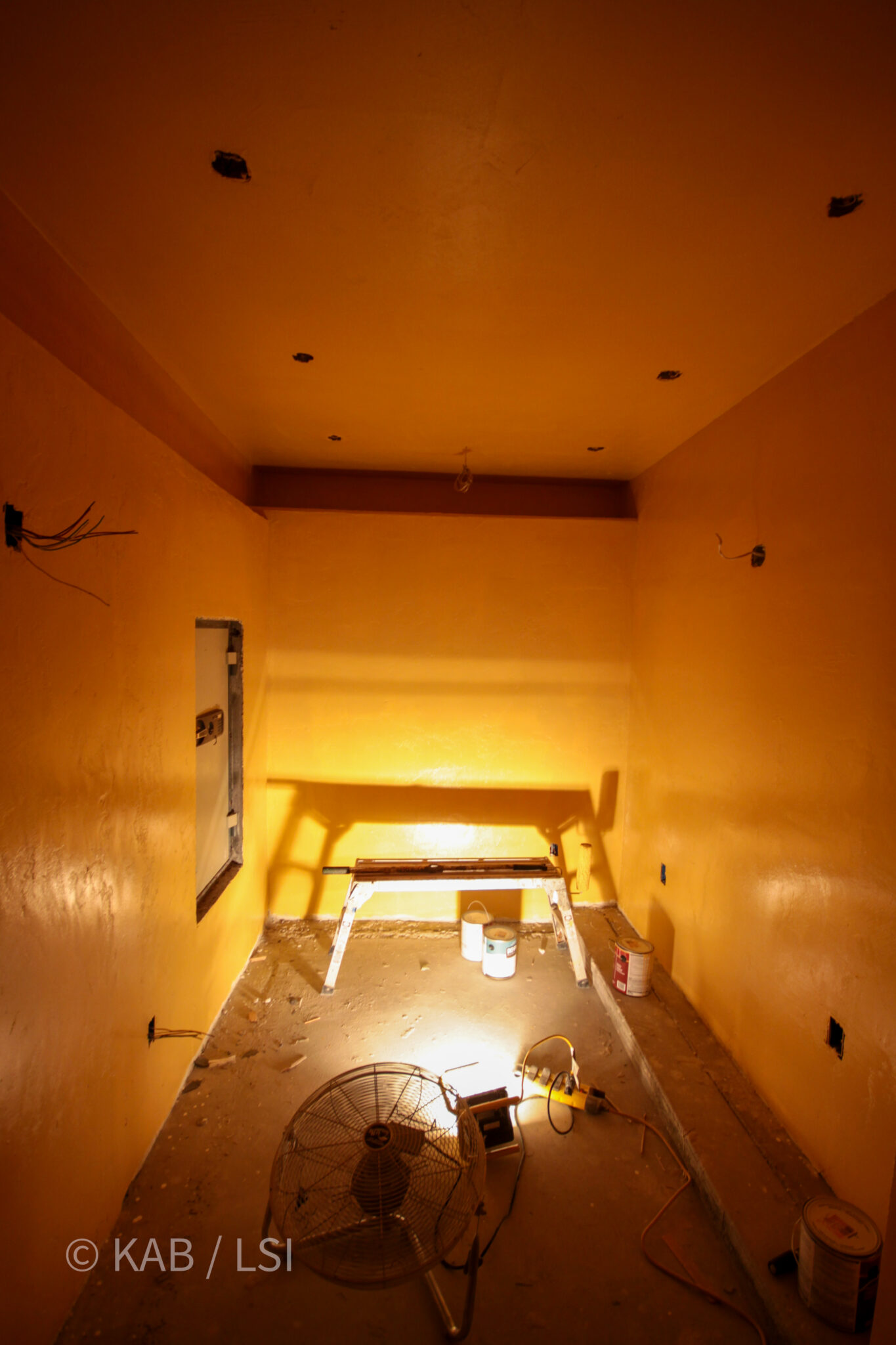
Italian smooth plaster complete throughout — walls, ceiling, beam. Warm terracotta finish, recessed lighting roughed in. A room built to disappear into the hillside. © KAB/LSI
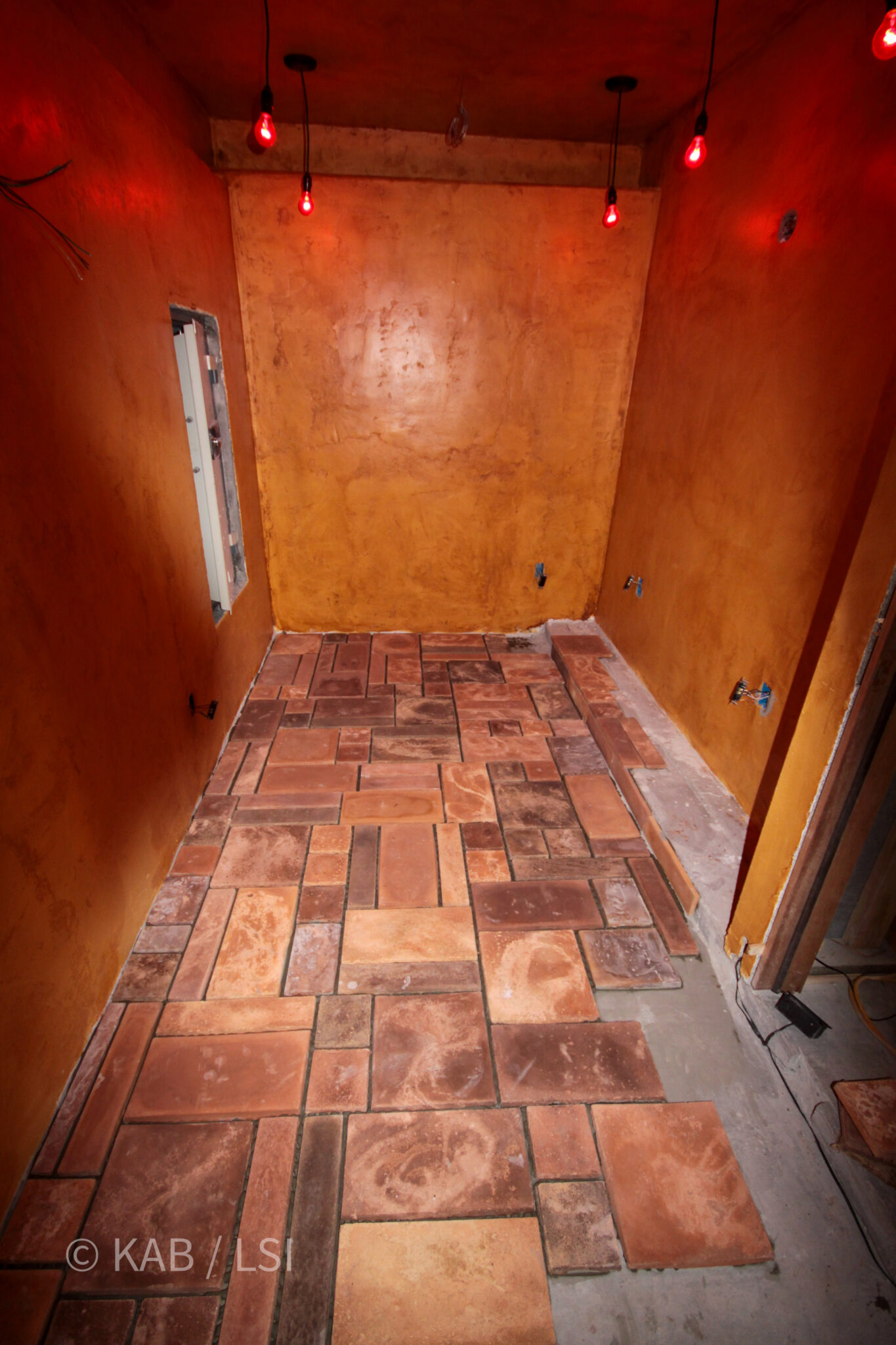
Handmade Saltillo tile dry-laid on cast concrete. Italian stucco complete, red work lighting. A safe is cast into one concrete wall — keyed separately, known only to the owner. © KAB/LSI
View decks — the upgrade most hillside homeowners wish they’d done sooner
La Habra Heights sits at an elevation that few communities in Southern California can match. Depending on which side of the hill your house is on, you may have unobstructed views across Orange County from Brea to Huntington Beach, or canyon views east toward Chino Hills, or mountain views north to Big Bear, or on a clear winter day, the island of Catalina twenty-six miles off the coast. These views exist. Most people who own them are not looking at them.
We have designed and built wrap-around exterior decks on existing two-story homes throughout the Heights — added to the exterior structure, cantilevered or post-supported depending on grade, engineered for hillside loads. Fire-resistant decking materials. Cable rail to preserve the sightlines. A deck that responds to the site the way a good building should: like it was always supposed to be there.
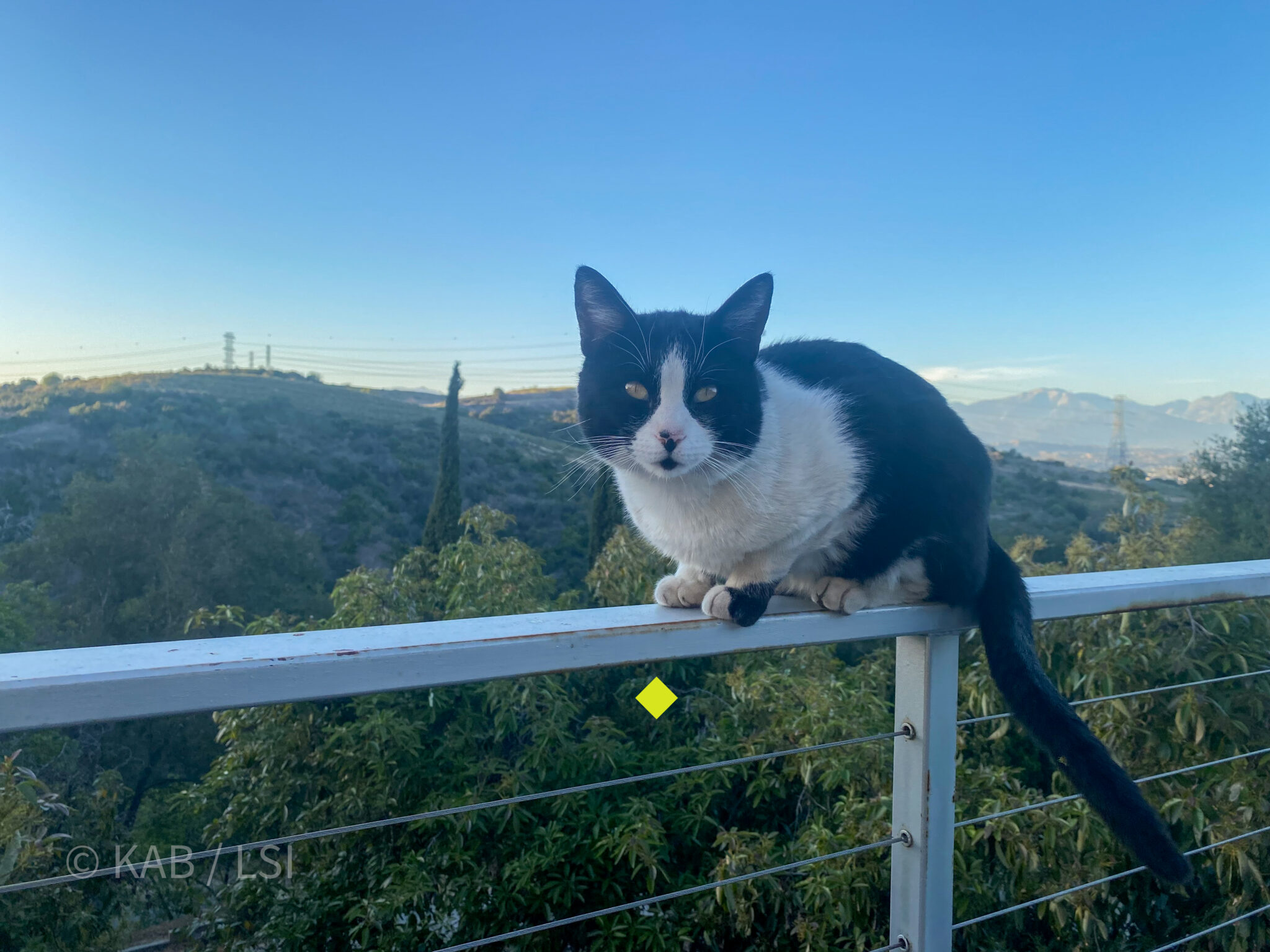
Fifteen years later — the homeowner’s thank-you photo. Their cat, 22 feet above the avocado trees, watching the wildlife below. © KAB/LSI
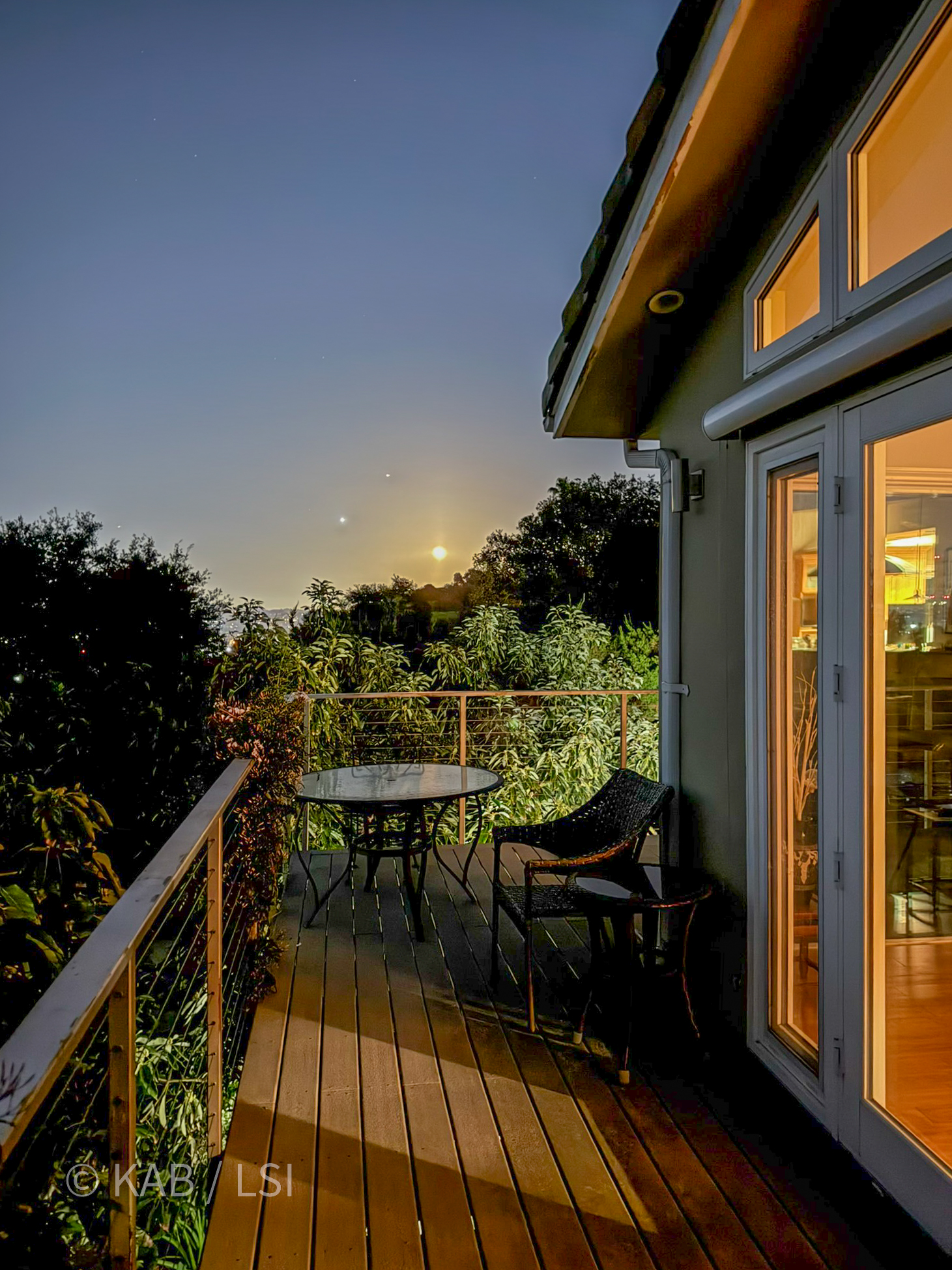
The same deck, same evening — moonrise over the hills, French doors open behind. The life the deck made possible. © KAB/LSI
Planning departments require steel posts and 6×6 or larger wood timbers for structural members. That’s not bureaucracy — it’s fire safety. A firefighter protecting a structure doesn’t want a deck that fails underfoot. The permitting is straightforward. The result changes how you live in the house. This particular deck is 18 feet above grade at its highest point — above the avocado canopy, above the first floor entirely. The view from the second floor was always there. The deck finally reaches it.
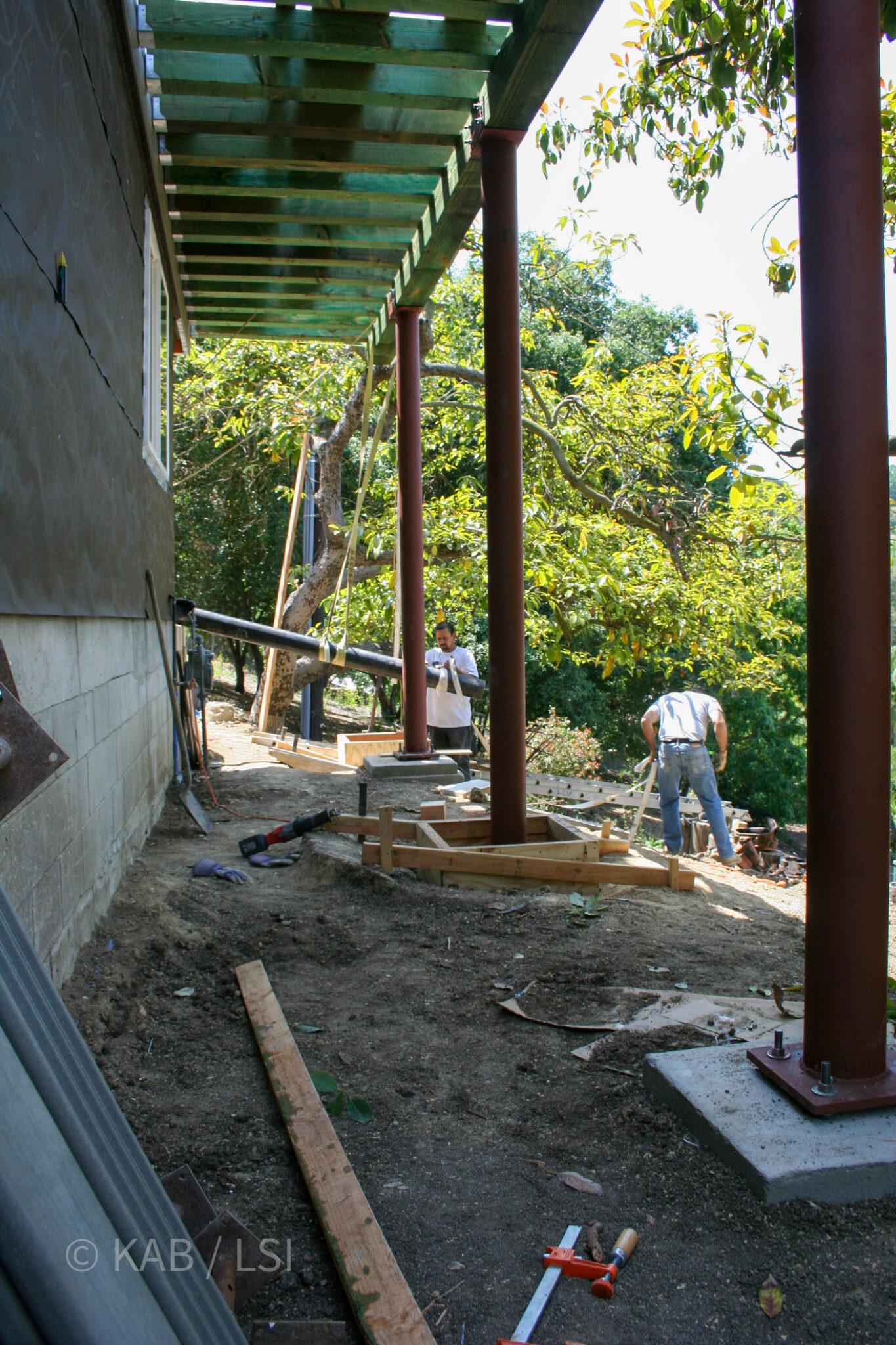
Six-inch steel posts, engineered for hillside loads, rising through the avocado canopy. The deck is 18 feet above grade here — workers below give the scale. © KAB/LSI
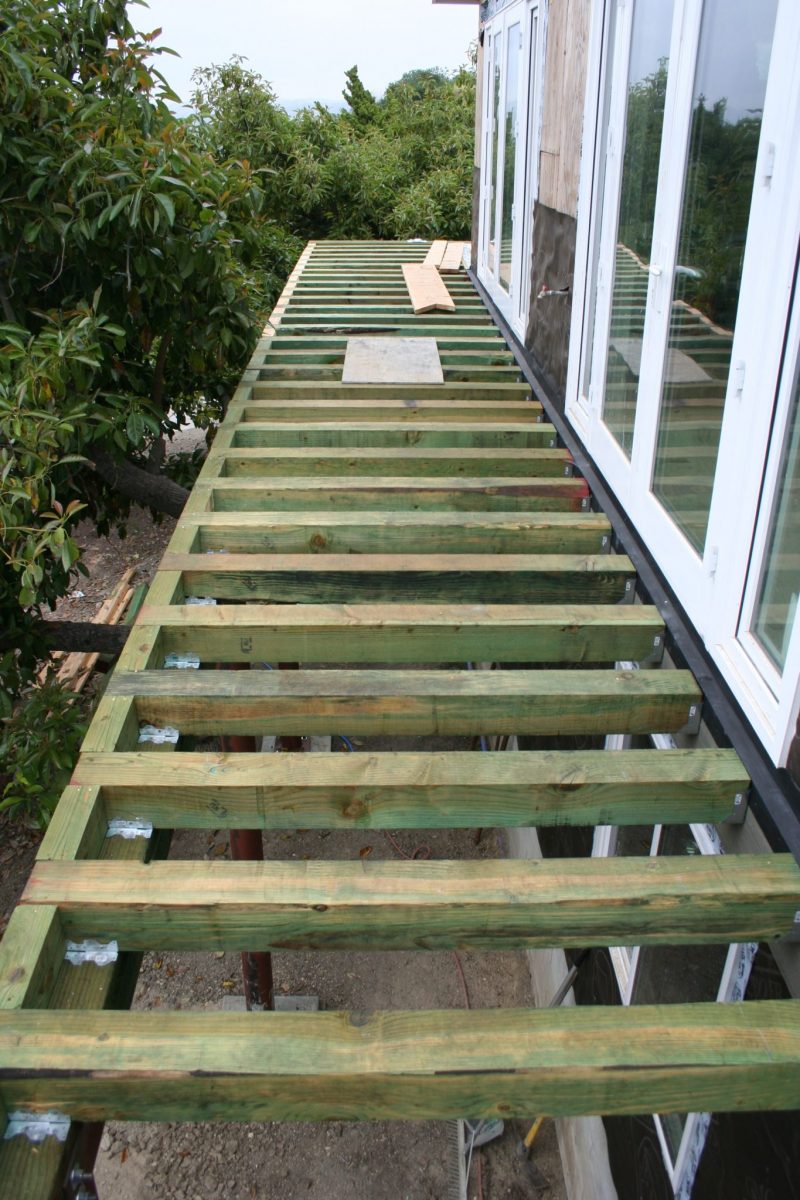
Three-sided wrap-around complete — above the vegetation line, 100+ mile views on a clear day. © KAB/LSI

The view the deck unlocks — snow on the San Gabriels, the La Habra and Whittier valleys below. This is what was always there. A deck makes it yours to live in. © KAB/LSI
What this means in practice
Specific ways I can help you right now
Contractor vetting
A proposal in hand and a gut feeling something’s off. I’ll look at the contract, research the company, and tell you what I think — honestly.
Unpermitted work
If someone in the family did work without a permit, I can help you understand the exposure and what options exist before you sell.
Inspection report review
Inspection reports are written to protect the inspector. I can translate one for you — what’s real, what’s routine, what to push back on.
Outbuildings & ADUs
Home offices, studios, guesthouses, RV garages. I know what’s possible on a hillside lot and how to get it done properly.
Wildfire defense systems
Pool-sourced or tank-fed suppression systems, copper plumbing, directed sprinkler infrastructure disguised as property fencing. Advisory only.
Safe rooms & vaults
Cast concrete and CMU construction, fire-rated doors, hillside installation. For valuables, records, or people. Built to disappear into the property.
View decks
Wrap-around decks added to existing homes. Engineered for hillside loads, fire-resistant materials, cable rail. Catalina on a clear day.
Fire-resistant roofing
In a Class 4 fire area, your roof matters. I know the materials, the contractors worth hiring, and what a certification actually tells you.
Priority planning
You have a list. Some things you need to do, some you want to do. I can help you figure out the order — and whether some can happen together.
“Every homeowner has a list. My job is to help them figure out the order — and whether some of it can happen together.”
The first conversation costs nothing.
One paragraph describing your situation is enough to get started. I’ll respond with what’s realistic, what matters most, and what the next step should be.
Start the conversation