The gazebo is what you want.
The pad is the foundation that builds equity.
A walk through Costco, Lowe’s, and Sam’s Club — followed by the hand-mixed 13′ × 28′ slab with trench, drains, and utilities buried underneath. The version that shows up in the future Zillow photo.
“The 10′ × 20′ carport that will sit on top of this is the least important line item.”
Keith Bennett · La Habra HeightsBefore the gazebo. Before the pergola. Before the cart.
Every La Habra Heights homeowner has walked past this aisle.
Most La Habra Heights homeowners I’ve met in the last year have stood next to one of these gazebos in a warehouse at least once. Most almost bought one. Most didn’t. The reason is usually the same: they got home, looked at the corner of their property they meant to put it in, and realized the shelf product was sold as if the ground underneath it is flat and finished. On a hillside acre, it almost never is.
So let’s walk the aisle honestly first. Because for the right homeowner with the right corner, the shelf is a real answer. These are good products. They ship on a pallet. They assemble in a weekend. And at $1,599—$2,000, they save you a custom-build cycle that would have run five to ten times that.
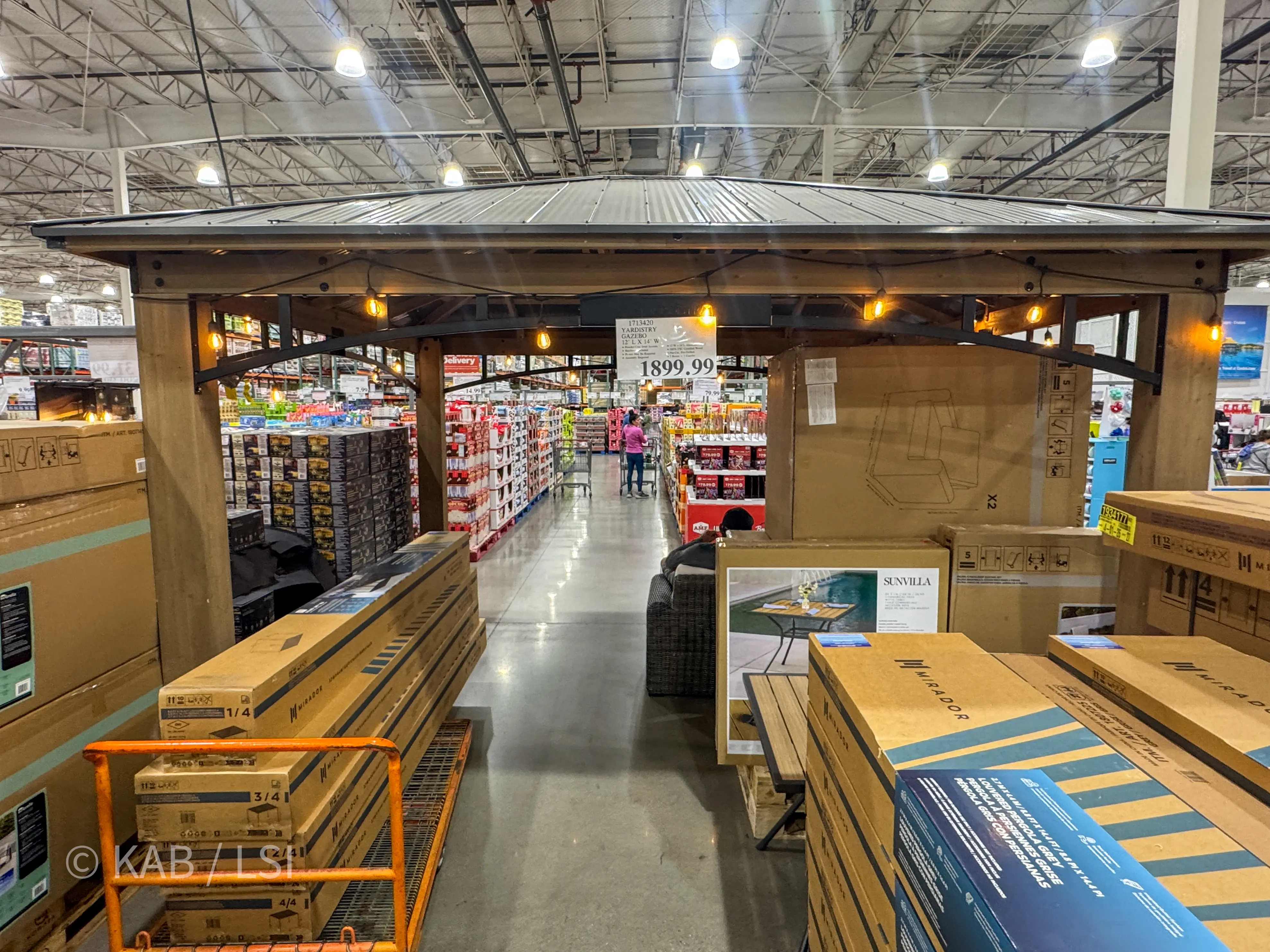
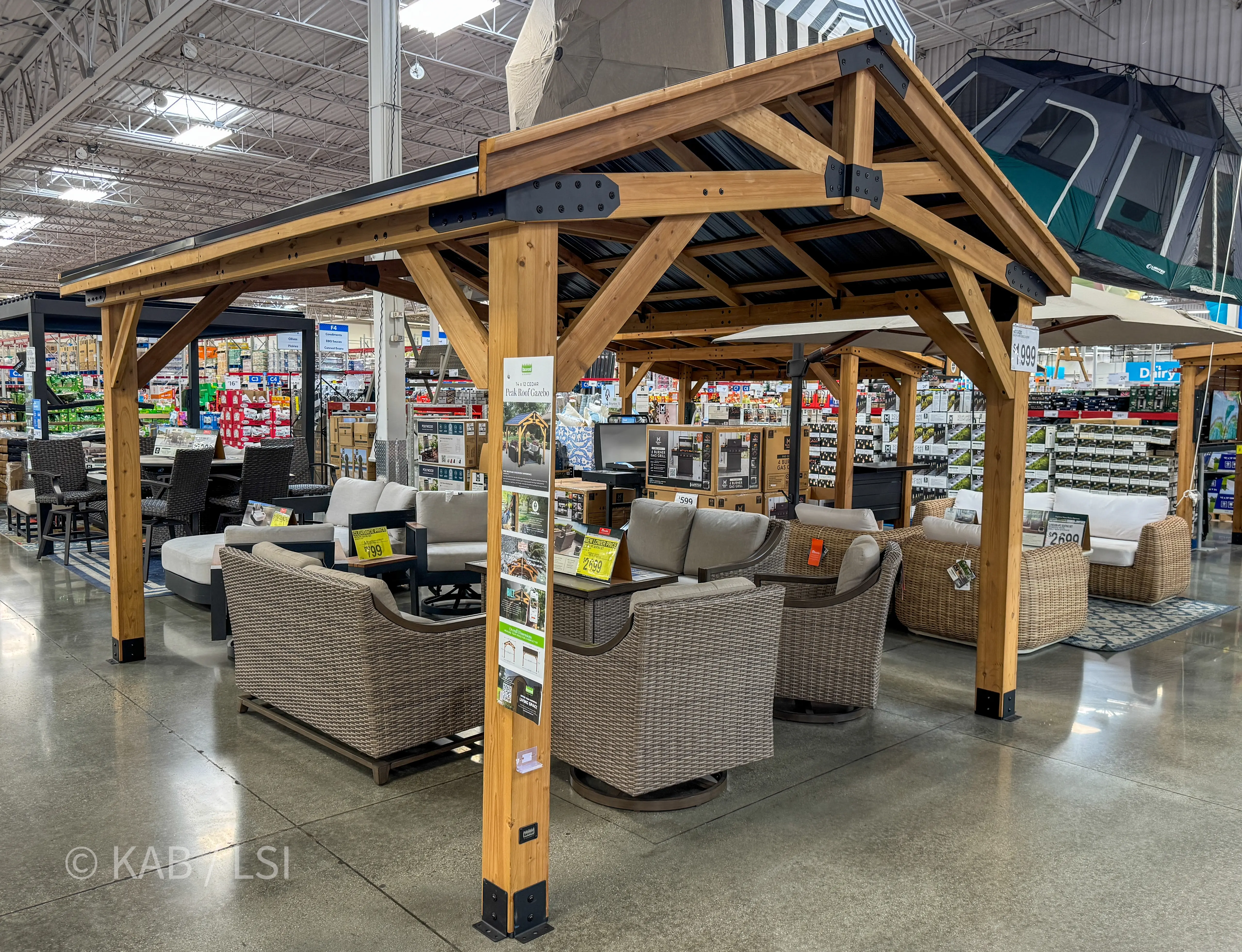
Costco opens the conversation. The Yardistry 12′ × 14′ cedar-post hardtop gazebo — $1,899.99 on the warehouse floor. This is the one almost every La Habra Heights homeowner has stood next to at least once.
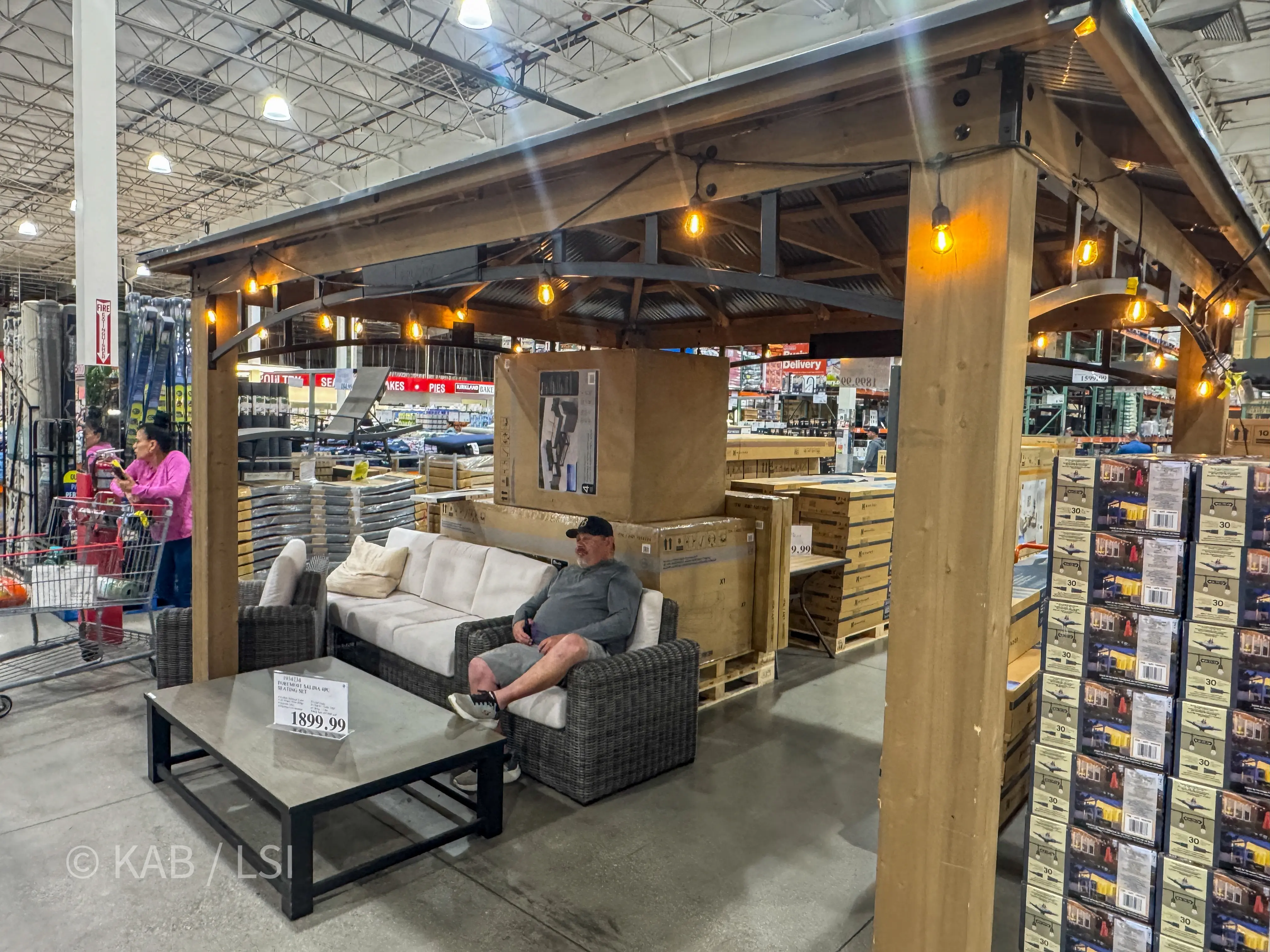
Inside the same Yardistry. Big enough for a full sectional and a stranger willing to sit still for the photo. (He said yes.) The interior feels generous. The question Costco never answers is what's under it.
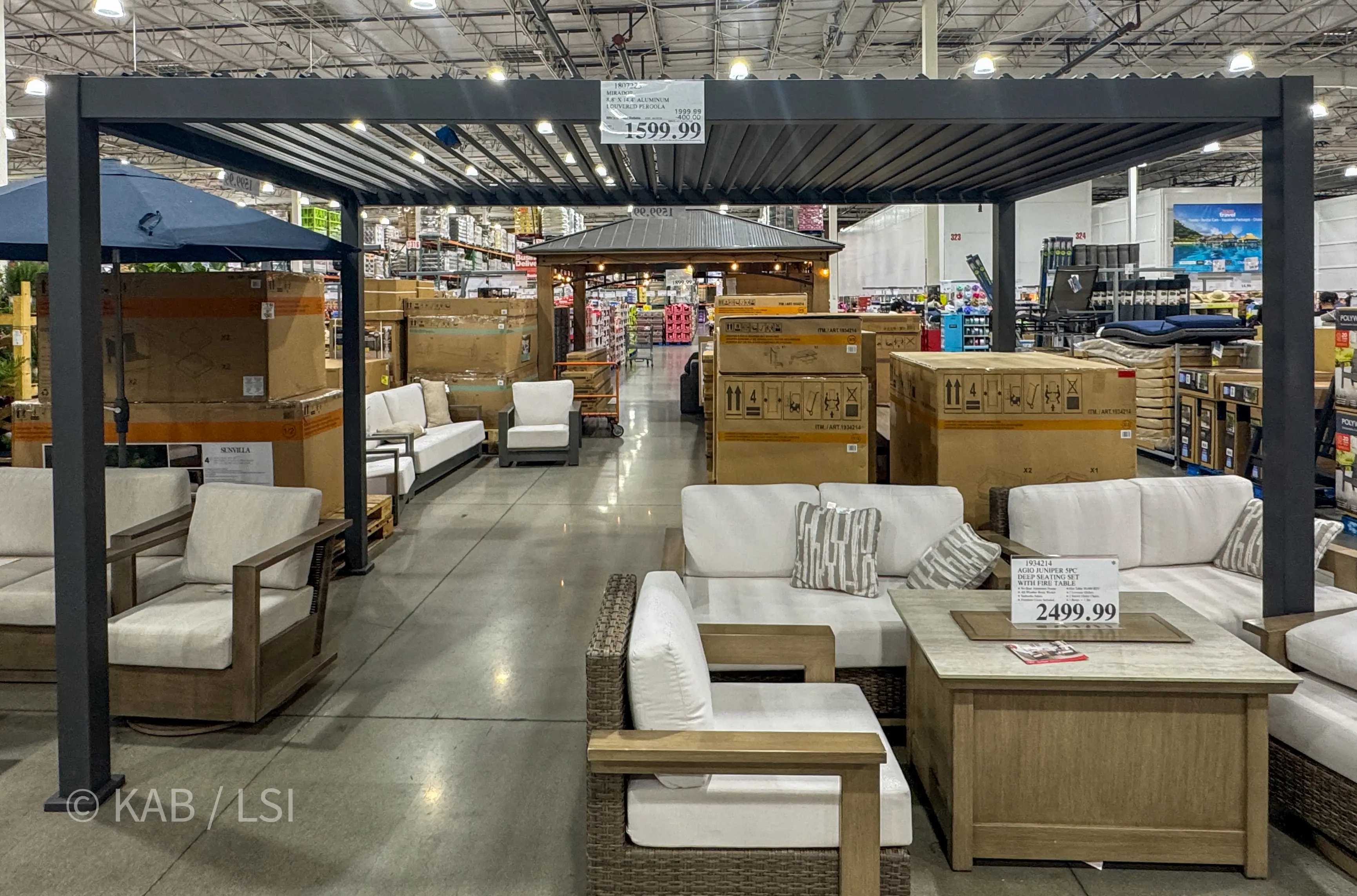
Costco’s other answer — the Mirador louvered aluminum pergola, 12′ × 14′, charcoal frame, operable slats. $1,599.99 on sale from $1,999.99. Anodized aluminum. Lighter frame, easier install, fine for a valley lot out of heavy wind.
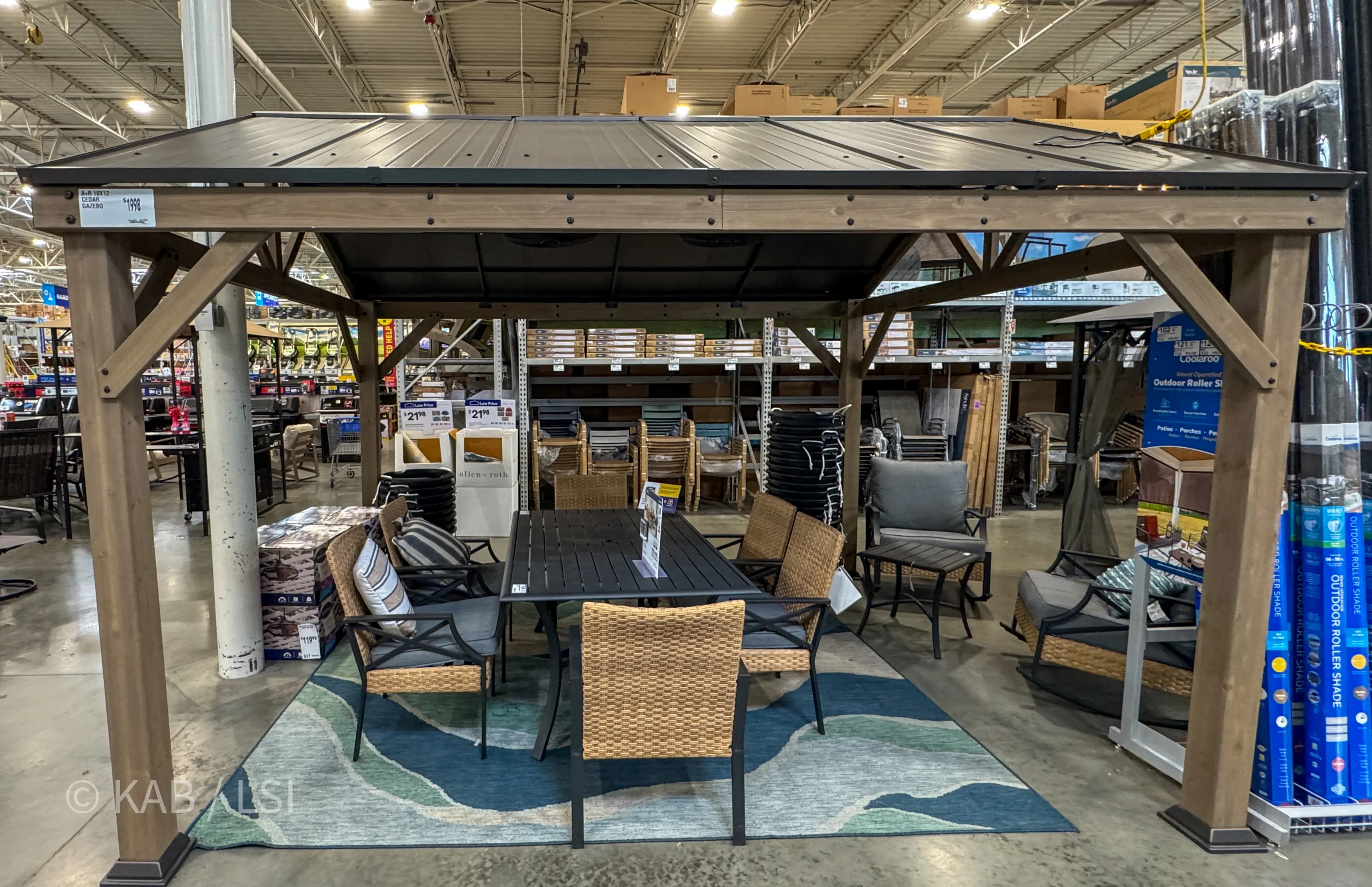
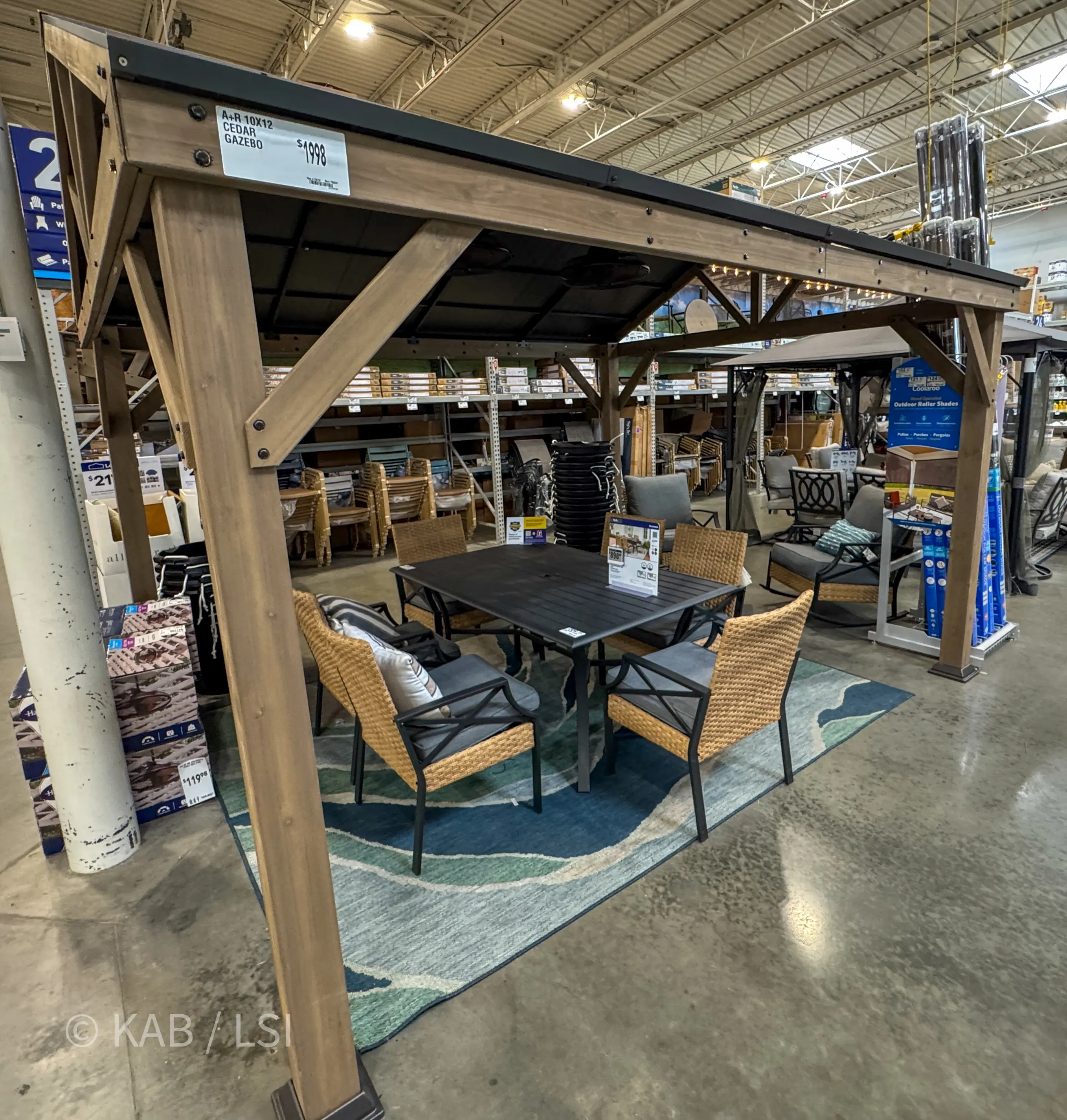
Lowe’s answer to the Yardistry — the allen + roth 10′ × 12′ cedar hardtop at $1,998. Same price band, different shelf, weathered driftwood finish, mosquito netting integrated.
Three-quarter angle on the allen + roth cedar. Price tag and SKU visible. Knee braces and post bracketry readable — which matters when you’re buying an outdoor structure you intend to assemble yourself.
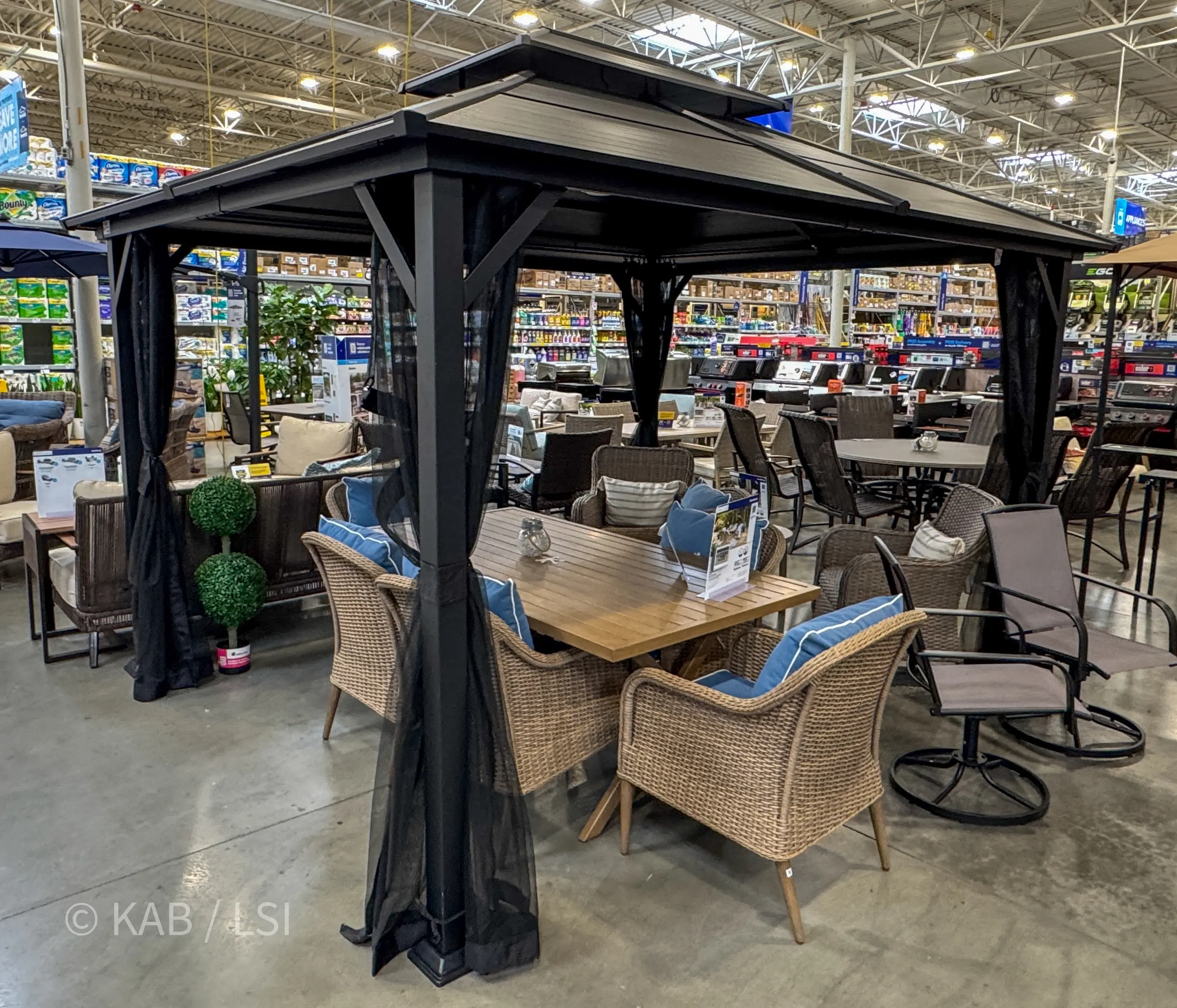
The double-tiered hardtop — Lowe’s premium tier. All-black aluminum, vented upper roof, mosquito netting at every post, dining for six staged underneath. $2,700 range. The shelf’s most styled product.
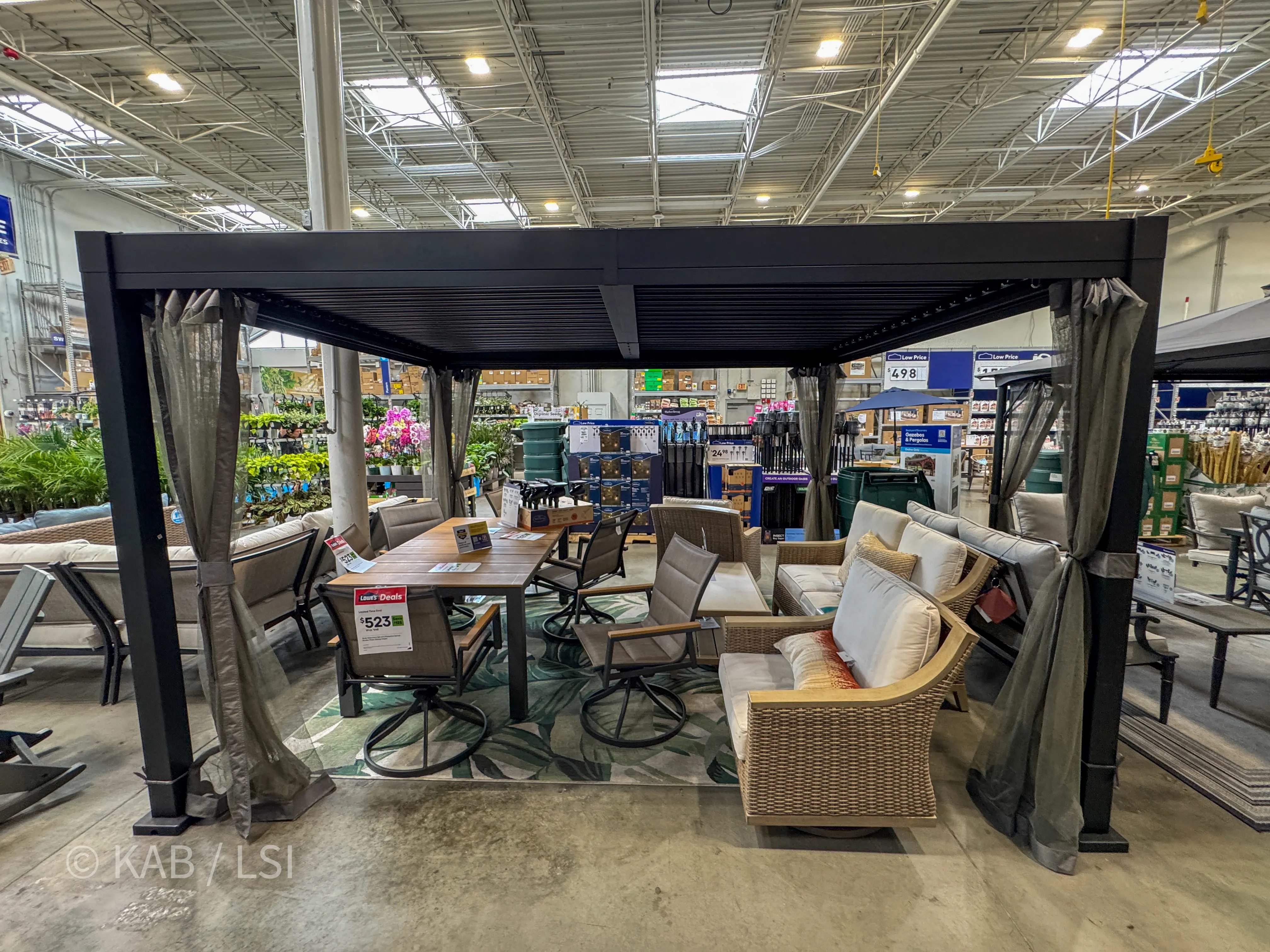
Lowe’s answer to the Costco Mirador — the allen + roth 10′ × 12′ Louvered Pergola at $1,998. Operable louver roof, mesh curtain sides, all-black powder-coated steel frame.
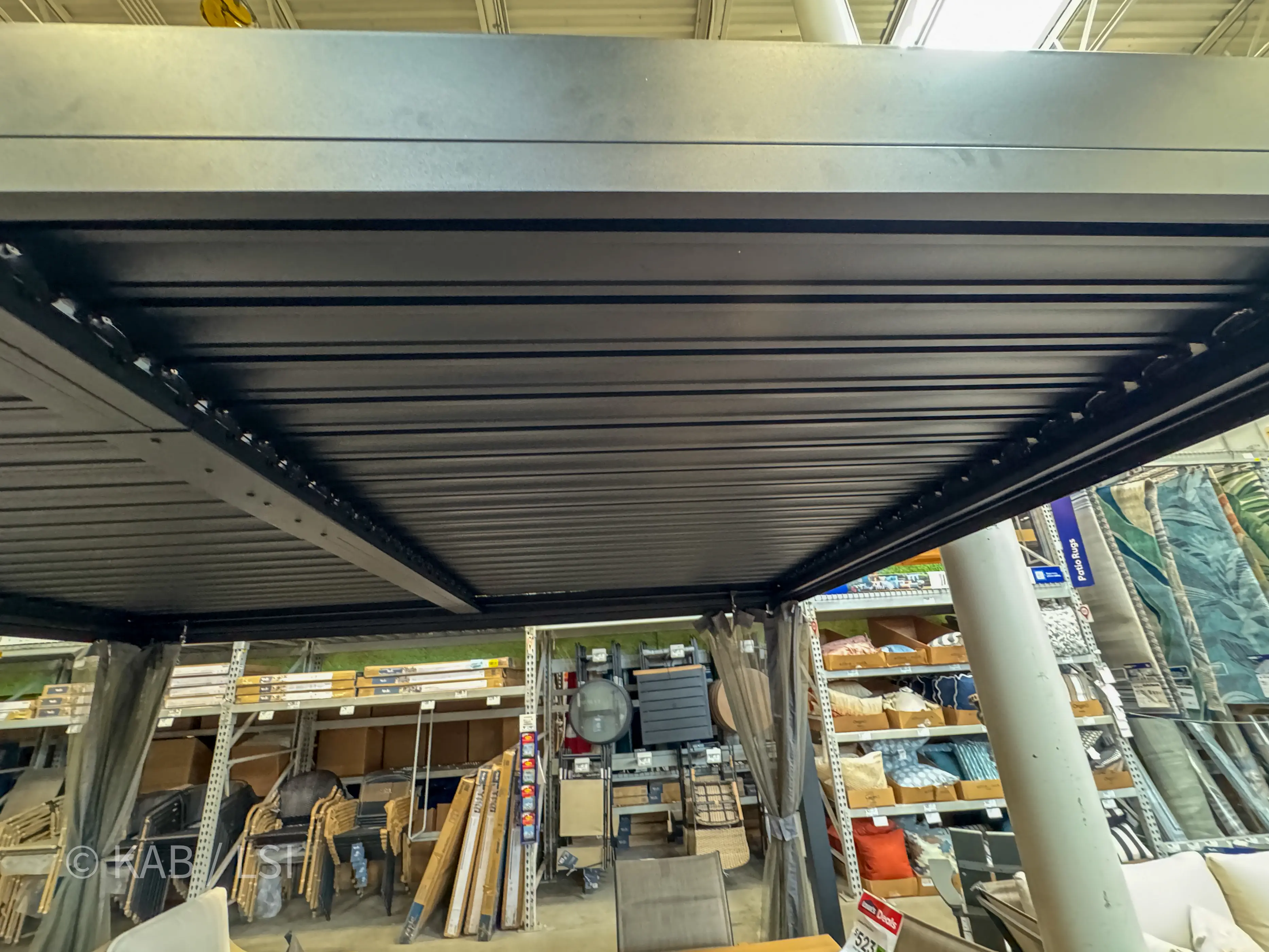
Looking up at the A+R louver slats. Two independently operable sections meeting at a center beam. The mechanical detail most product photos miss — and the kind of detail that tells you whether this thing will still work in year six.
Sam’s Club enters. Backyard Discovery 14′ × 12′ Cedar Peak-Roof Gazebo at roughly $1,999. Heavier timbers than the Yardistry. True A-frame gable. Exposed king-post trusswork. This is the shelf’s best imitation of custom.
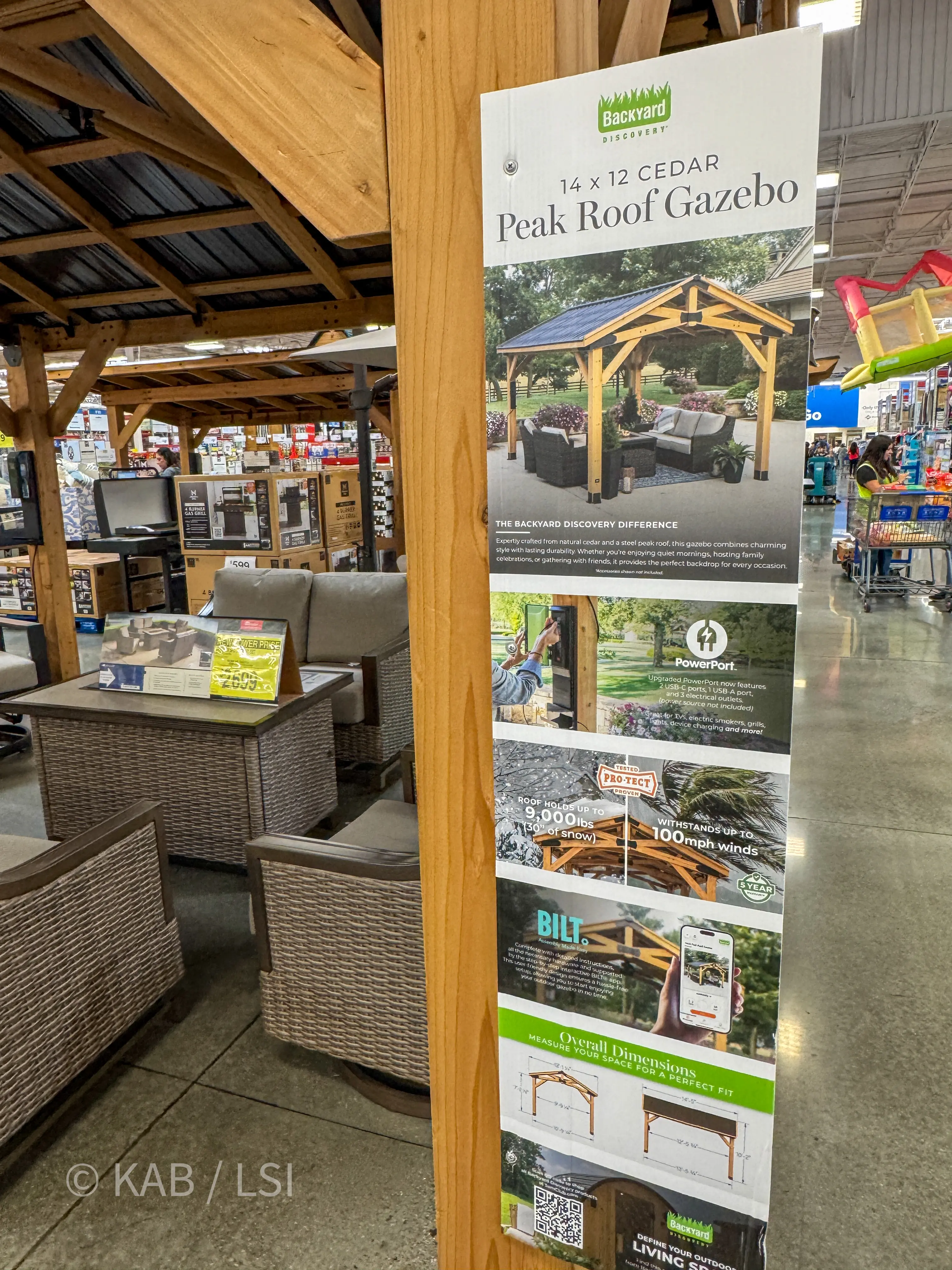
The Backyard Discovery spec placard, read straight: PowerPort (USB-C + USB-A + three outlets), 9,000-lb / 100-mph PRO-TECT roof rating, 5-year warranty, BILT app assembly. The only placard on any of these three shelves that publishes a wind rating.
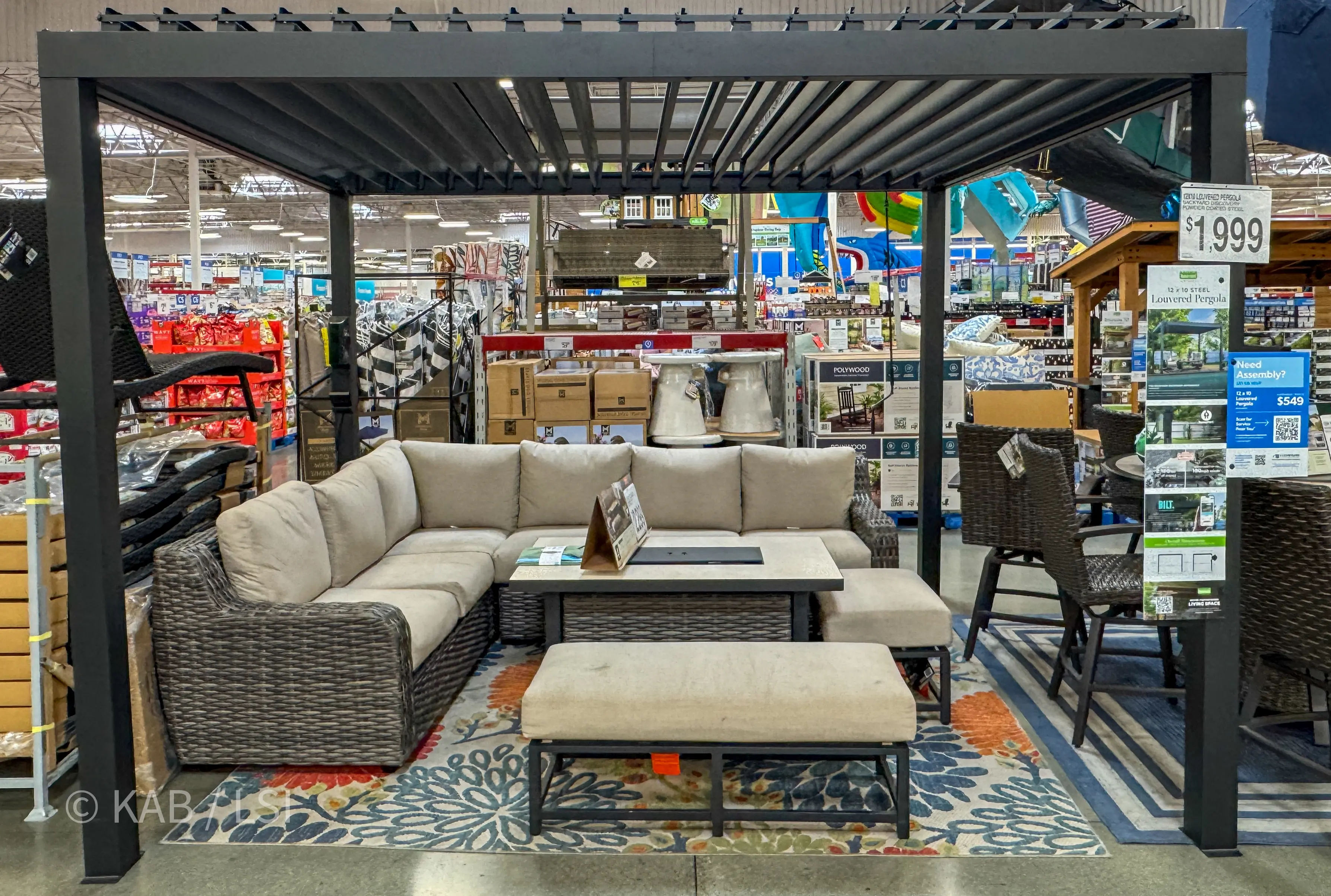
Sam’s Backyard Discovery 12′ × 10′ Steel Louvered Pergola at $1,999. Steel frame, not aluminum — the one meaningful material distinction in the three-way louvered comparison. A hillside exposed to wind will thank you for it.
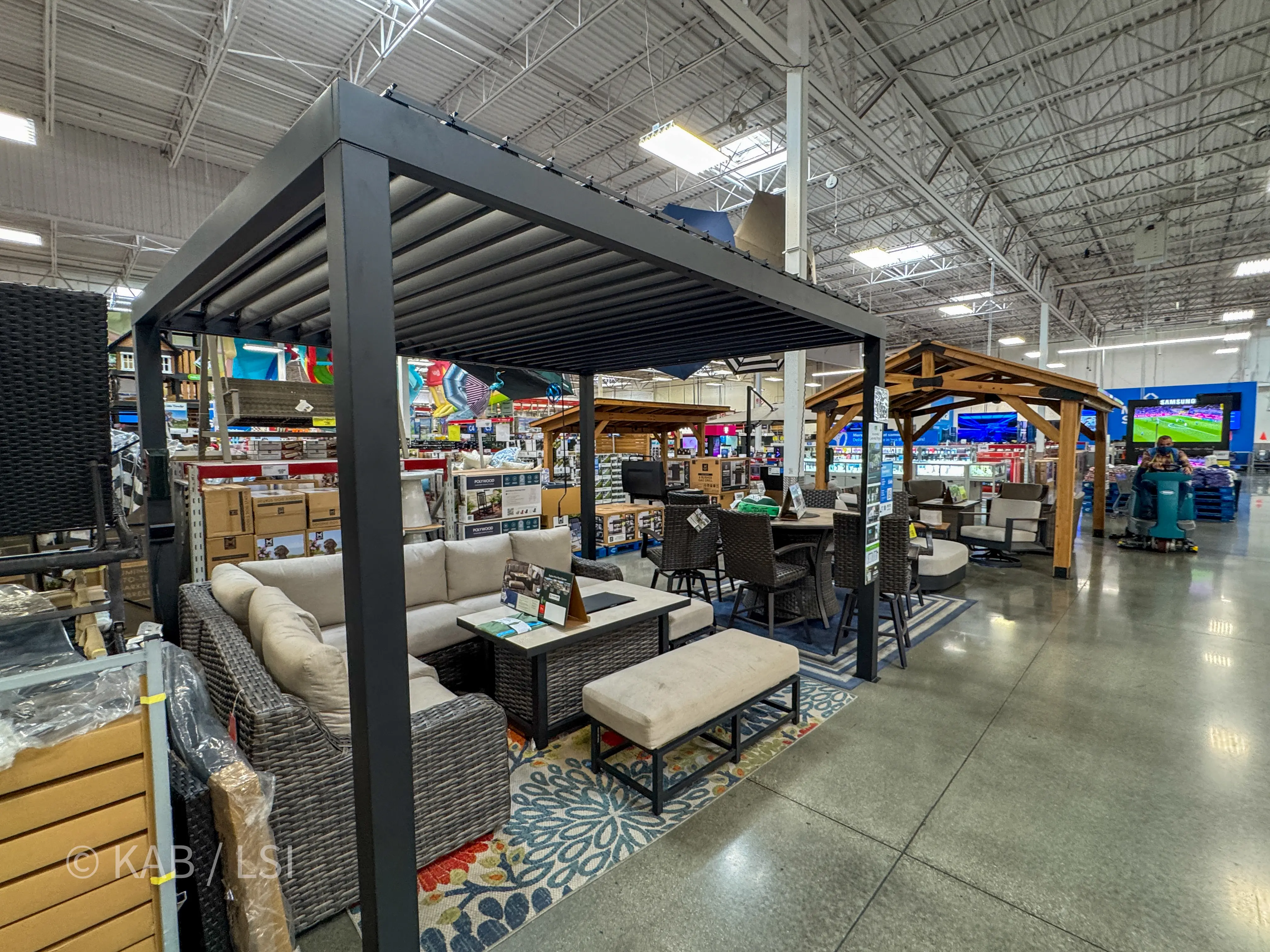
The Sam’s Club spring outdoor living lineup as Americans actually encounter it. Three structure types. Three price points. Three different building decisions. All within twenty paces of each other.
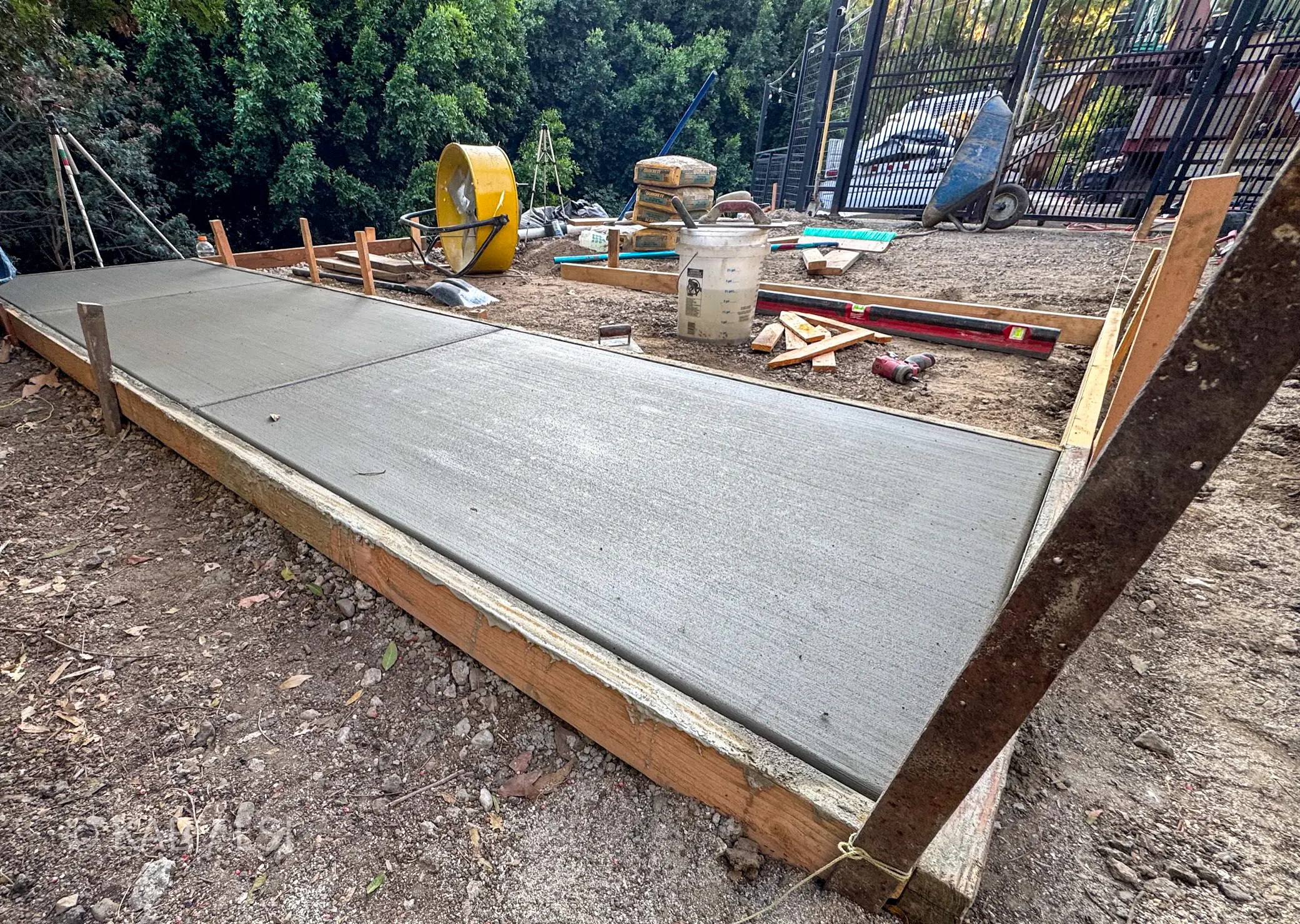
The thing the shelf doesn’t sell. A 13′ × 28′ rebar-reinforced concrete slab on compacted Class 2 road base. Hand-mixed. Hand-poured. Because on a La Habra Heights hillside, a pump truck can’t get here — or the cost to route one in would exceed the pad itself.
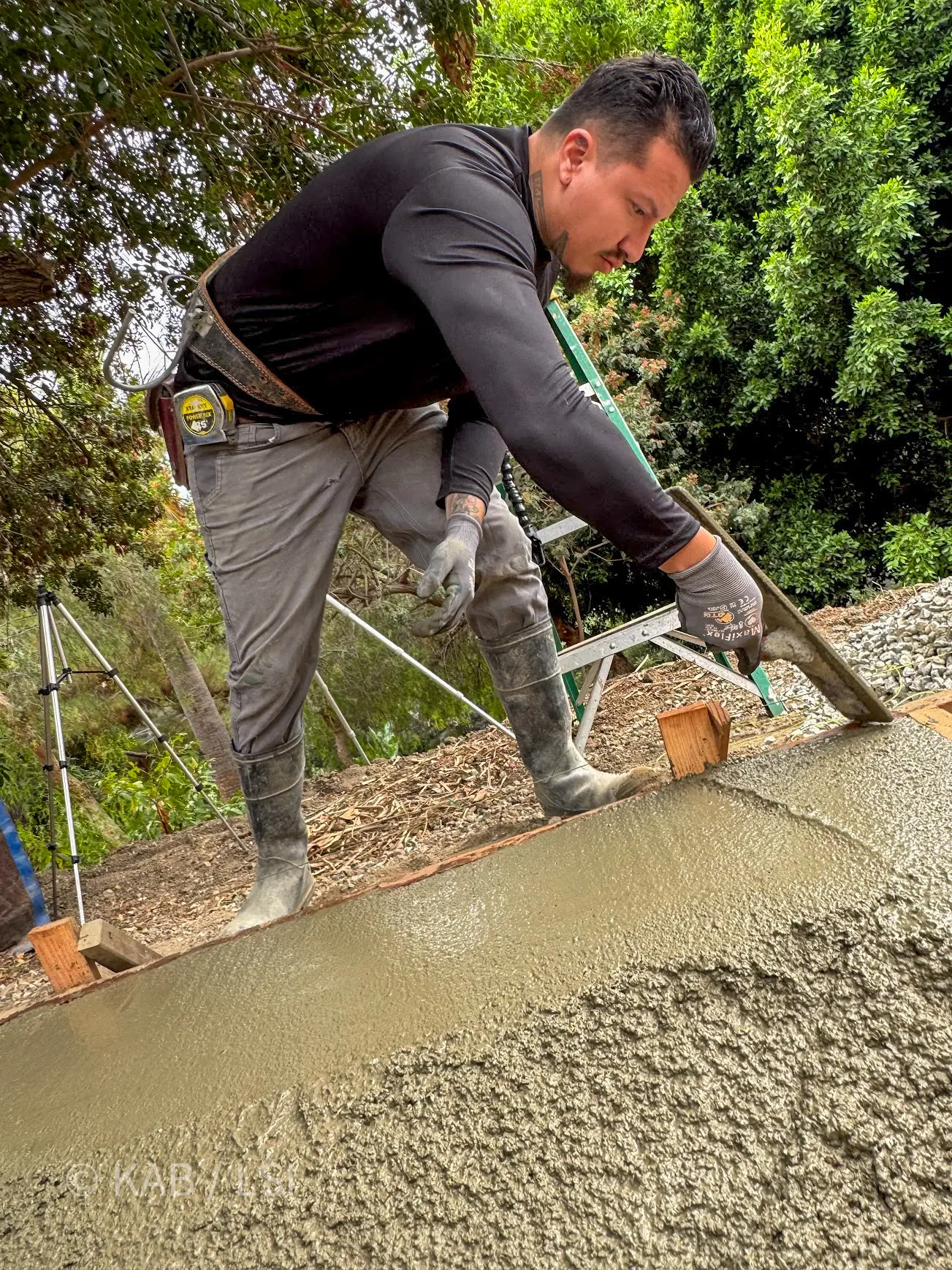
Jeff is doing the part that decides whether this slab lasts forty years or eight. Three drains set into the pad. Very slight slope toward center — so water moves off the slab and away from the hillside instead of into it.
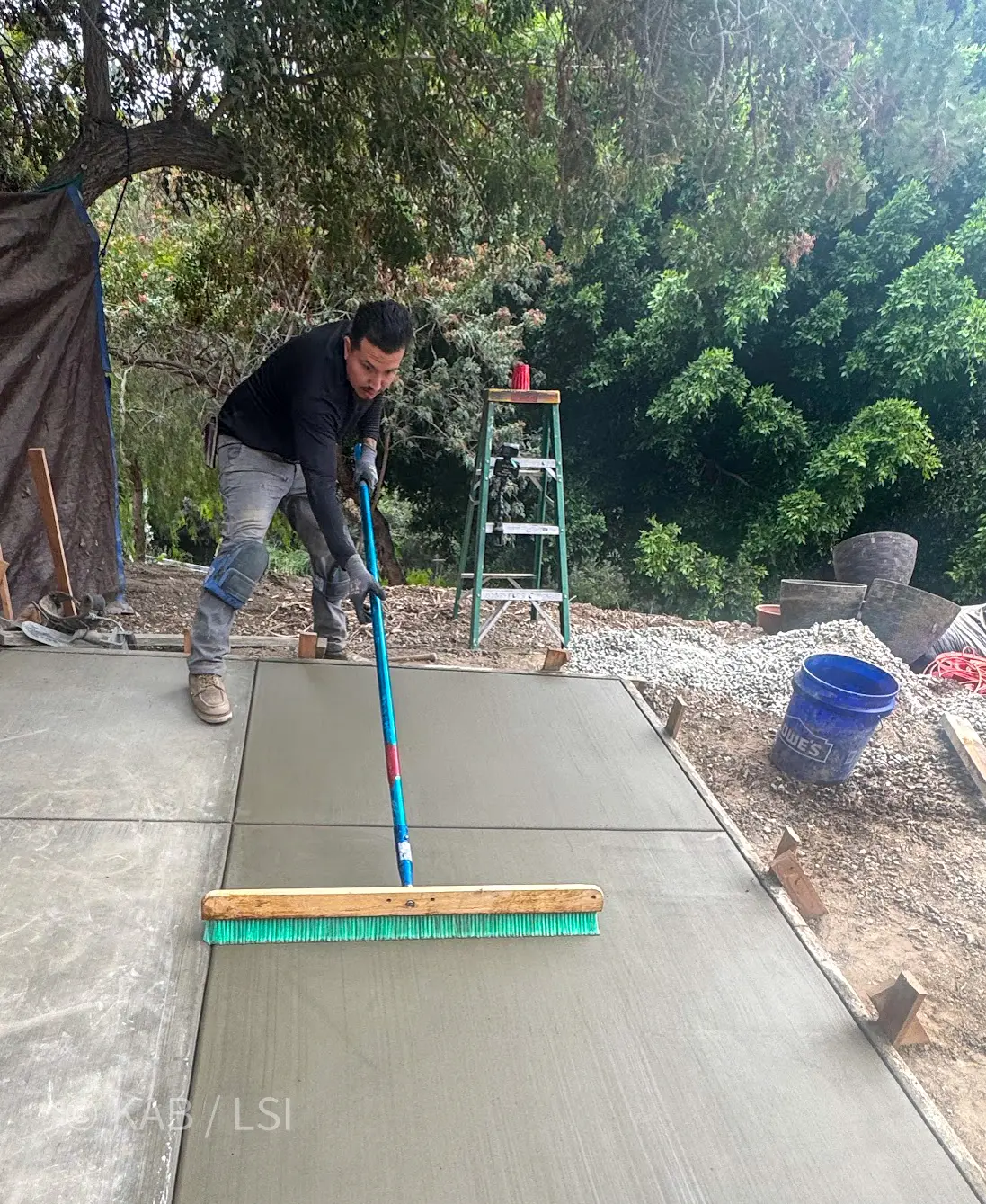
The stroke that separates a slab you can walk on in the rain from a slab you can’t. Concrete is perfect: flat and level around the edges, very slight slope to the drains, broom finish consistent across the full width.
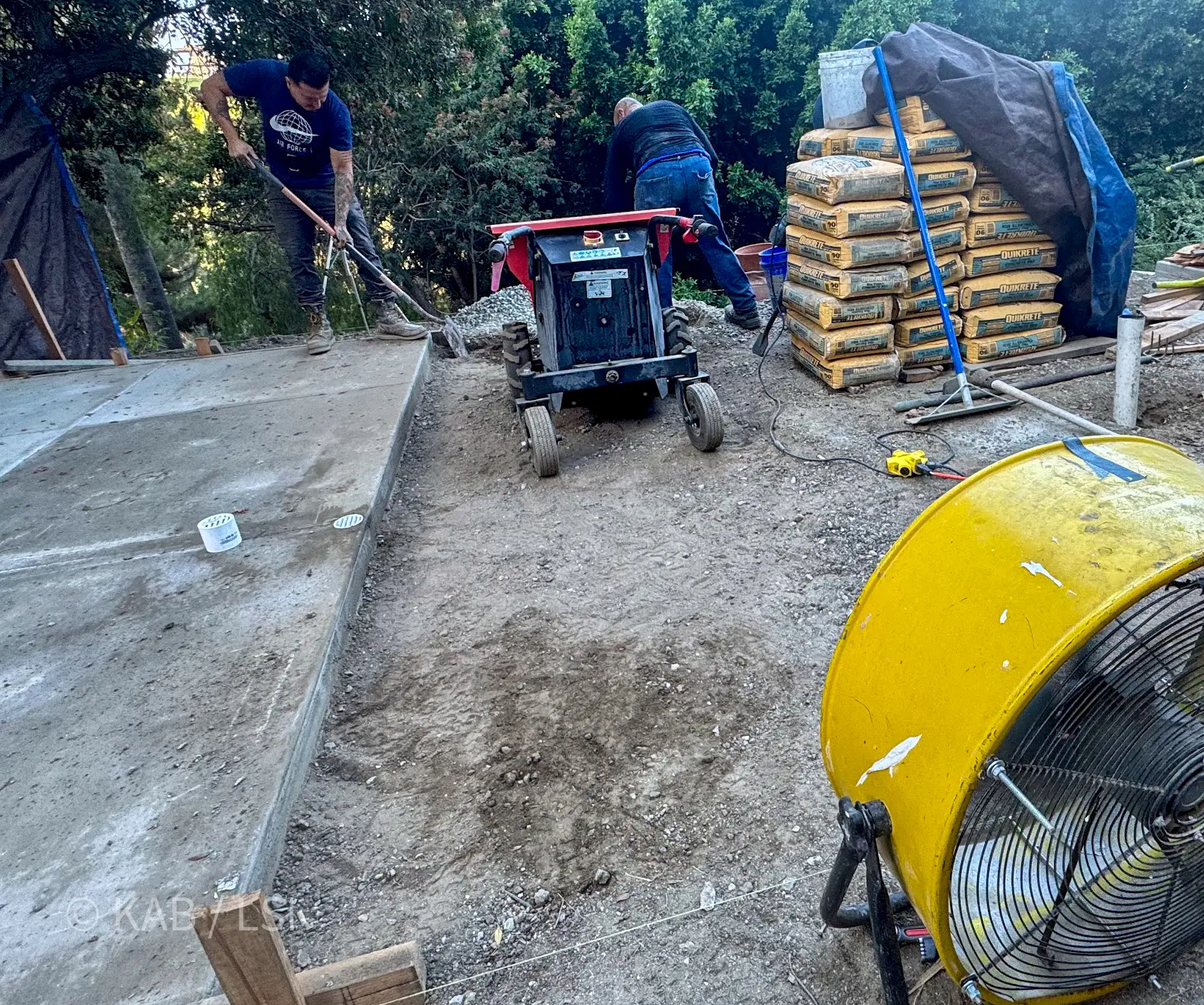
Panel three of four. A pallet and a half of Quikrete staged, a second pallet nearby — you never run short. The yellow fan isn’t for comfort. It carries silica dust away from the mixer so nobody spends retirement paying for it.
Powder-coated steel vs. anodized aluminum.
Of the three louvered pergolas on these shelves, two are aluminum and one is steel. That’s the most important spec on the placard and almost nobody at the cash register mentions it. Costco’s Mirador and Lowe’s allen + roth louvered pergolas are both aluminum-framed. Lighter, easier to ship, perfectly adequate in a sheltered valley lot. Sam’s Club’s Backyard Discovery Steel Louvered Pergola is the only one of the three framed in powder-coated steel.
On a La Habra Heights ridge that catches the evening wind off the canyon, or on any of the exposed pads on Skyline, Reposado, or the higher stretches of West Road — that steel frame is worth the extra pound per foot. On a tucked-in lot on the valley side of the hill, the aluminum is fine and the savings are real.
“Aluminum if you’re protected. Steel if you’re exposed. That’s a ninety-second conversation most homeowners never get to have with anyone at the register.”
Keith Bennett · Forty-five years on the La Habra Heights hillsideThe actual product.
Whichever gazebo or pergola ends up on your hillside — Yardistry, allen + roth, Backyard Discovery, or something custom — the structure is not the durable thing. The pad under it is. A shelf gazebo bolted to a bad slab will hang lopsided in a year, twist in a wind event in three, and have to be unmounted and redone by year five.
The photograph above is a 13′ × 28′ rebar-reinforced concrete slab on compacted Class 2 road base at a La Habra Heights property. Four panels, four days, 210 ninety-pound sacks of Quikrete, six truck trips. Hand-mixed because a pump truck can’t navigate the last 200 feet of driveway and wouldn’t be worth routing in even if it could. Three drains set into the pad with a very slight slope toward center — so water moves off the slab and away from the hillside instead of into it.
That pad will outlast every gazebo that’s ever sat on top of it. Yardistry cedar rots in twenty. Allen + roth finish fades in fifteen. Backyard Discovery PowerPort breaks in eight. The slab is still there in fifty.
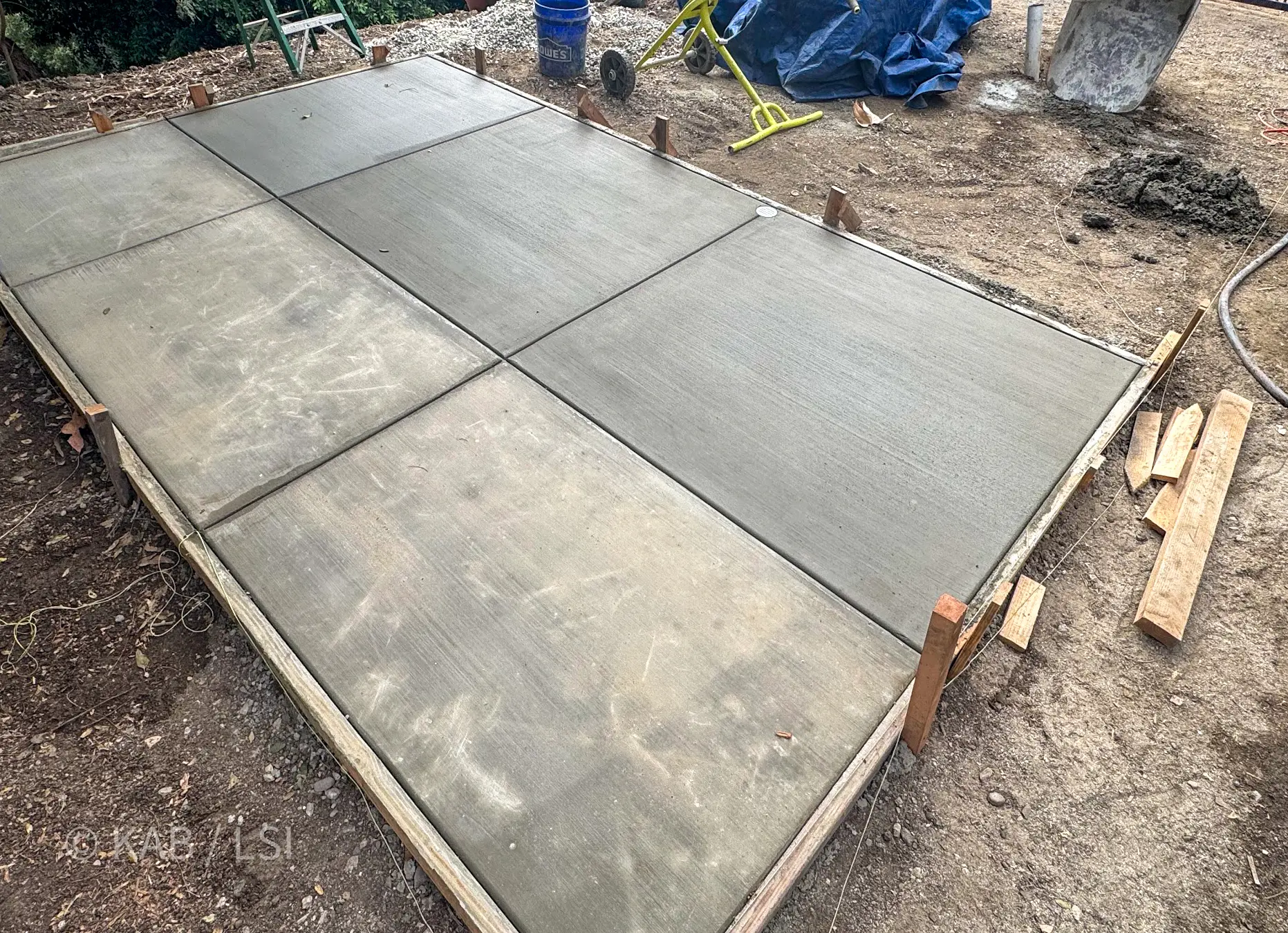
Four days. Two hundred ten 90-pound sacks of Quikrete. Six pallets, six truck trips. One 13′ × 28′ hillside slab. The carport that sits on top costs a fraction of what’s already under it.
“The structure on top isn’t the decision. What’s underneath is.”
Keith BennettThinking about the pad before the gazebo?
If the gazebo is a weekend delivery and the pad is the decision that outlasts it, that’s exactly the kind of job where a couple of cameras and a weekly honest note earn their keep. Eyes on the concrete crew while you’re at work. Footage of the slab before the gazebo goes on top. A short conversation first to see if it even makes sense.
See Owner’s Advocate