private spaces · la habra heights
PetSafe, PeopleSafe Security Fencing
Wrought iron fencing that makes the close-in ground safe — the garden, the dog run, the gently lighted path to the studio — so your private spaces can spread out across the acre you already own.
chapter one
Your Master Suite Was Always Meant to Open Onto the Acre
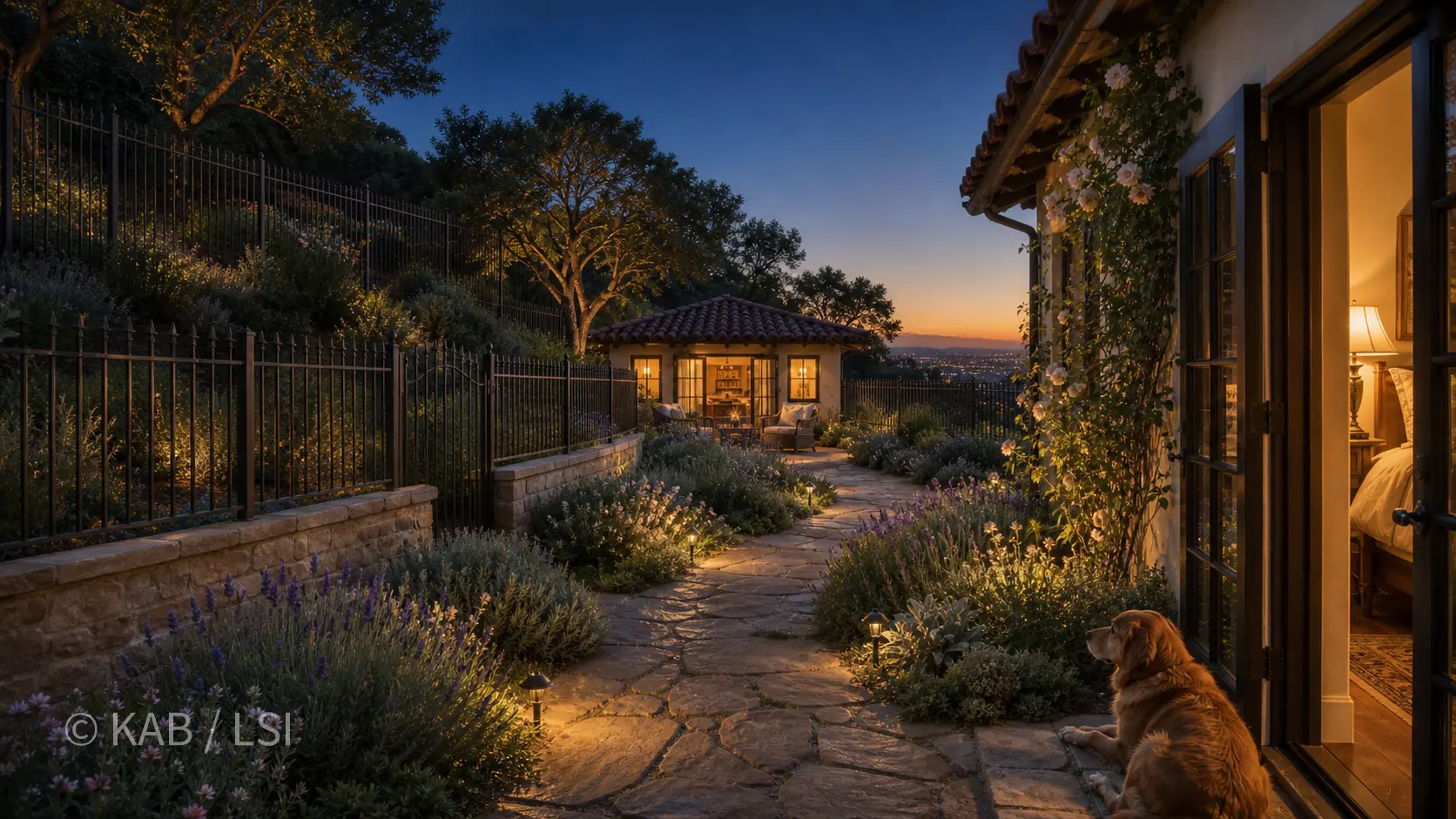
In a hillside home, the master bedroom is often the most private and emotionally important room in the house. Outside those doors may be unused slope, brush, a bare patio, or open yard — acreage the owner is paying for and not yet living on. The savvy hillside owners treat that ground as the opportunity it is. Slowly, methodically, safely, they spread their private spaces outward — and their quality of life grows with every season. A comfortable private space is quiet, daily medicine — when the room around you is calm, you are calmer in it.
Private Spaces looks at that differently. A secure outdoor space can extend the master suite into a protected garden, a dog run, a small sitting area, a walking path, or a private morning-and-evening retreat — without trying to remodel the whole property at once.
And if your master bedroom doesn’t have a door to the outside yet — only a window where a door should be — that is a smaller change than most owners expect. Turning a window into a set of French doors is a clean, contained project, often a single day’s work for the right crew. It is frequently the first move: the door comes first, and the secured space grows outward from it.
And if the master suite is upstairs, the outward move is a deck — a private terrace off the second floor, with a stair that can later reach down to a garden or an outbuilding on the ground below.
From the Field · La Habra Heights
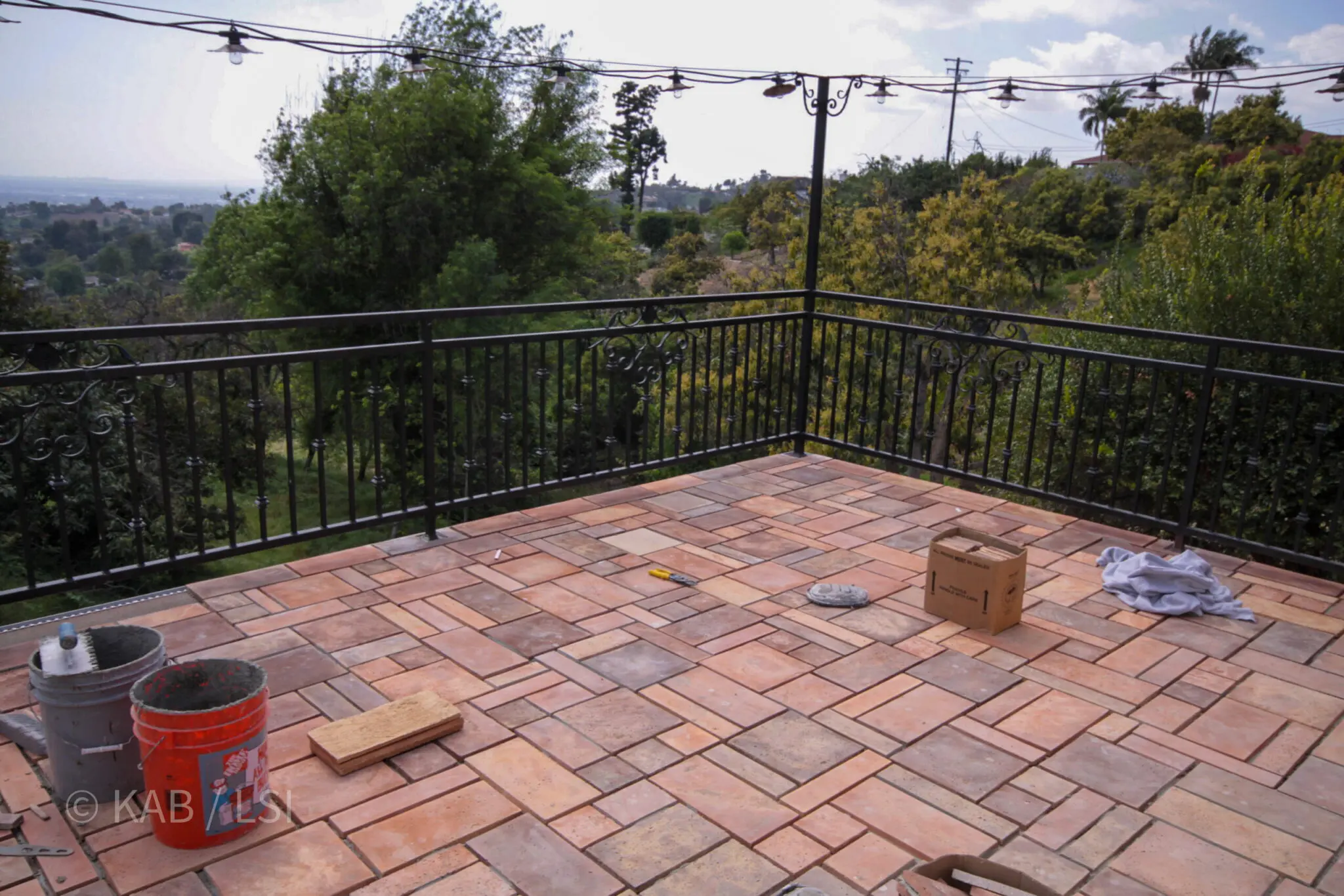
A second-floor master suite deck taking shape on a La Habra Heights hillside — terracotta tile going down over a wrought-iron-railed terrace, string lights already strung. When the suite is upstairs, the private space pushes outward as a deck, and a stair can carry it the rest of the way to a garden or an outbuilding on the ground below.
The most useful change to a hillside property is rarely the biggest one. It is often the smallest secured space, placed exactly where the homeowner already wants to step outside.
chapter two
Built for People First
These spaces are not just “fences.” They are protective outdoor zones for real households: husbands and wives, adult children, visiting grandchildren, aging parents, guests, caregivers, and the pets that move through the home like family.
A properly planned enclosure can give a homeowner a safer place to step outside, sit, breathe, take a phone call, let the dog out, or simply feel less exposed — without the property feeling locked down.
Your puppy walks out and you stay seated with your book.
From the Field · La Habra Heights
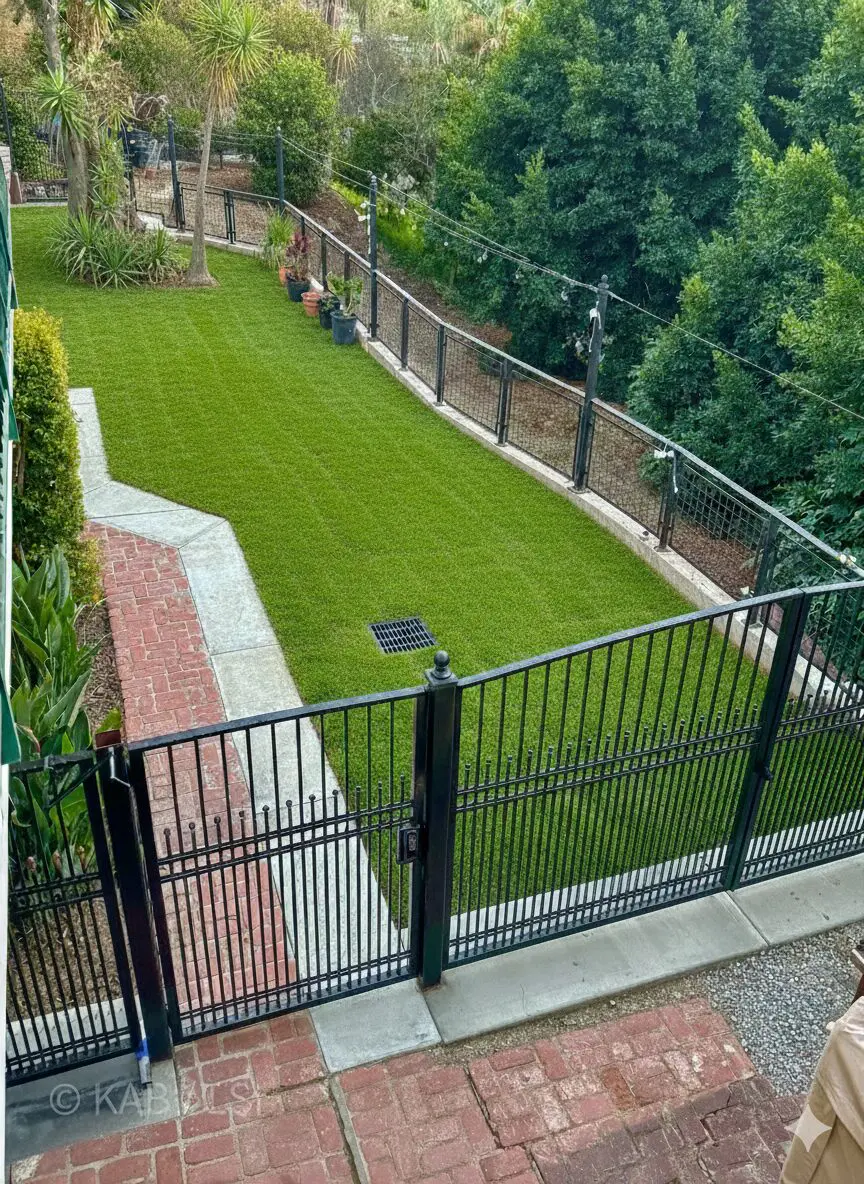
A real La Habra Heights yard, made genuinely safe. The wrought iron is 7½ feet on level ground, with pickets set two inches apart so nothing small gets through or out. The lower run on the right side doesn’t need to be tall — it sits atop a six-foot retaining wall with a flat rail for guests to rest their elbows or set their drinks, and from below it reads as a ten-foot leap no coyote will attempt. Forty-five years on these hillsides teaches you to let the terrain do part of the work.
Still in progress — this yard is being finished as you read this: 300 feet of string lighting going up, and six wireless cameras moving post to post while we test sight lines and lens angles — the right view of the protected space, and of the ground beyond it, from inside the house.
chapter three
Coyote-Aware Pet Protection
In La Habra Heights and similar hillside communities, coyotes are not theoretical. They travel, observe, return, and learn where small animals live.
For small dogs and outdoor cats, a normal open patio or low decorative fence may not be enough. A coyote-aware enclosure is planned with height, gate control, picket spacing, top treatment, visibility, lighting, and escape prevention in mind.
From the Field · La Habra Heights
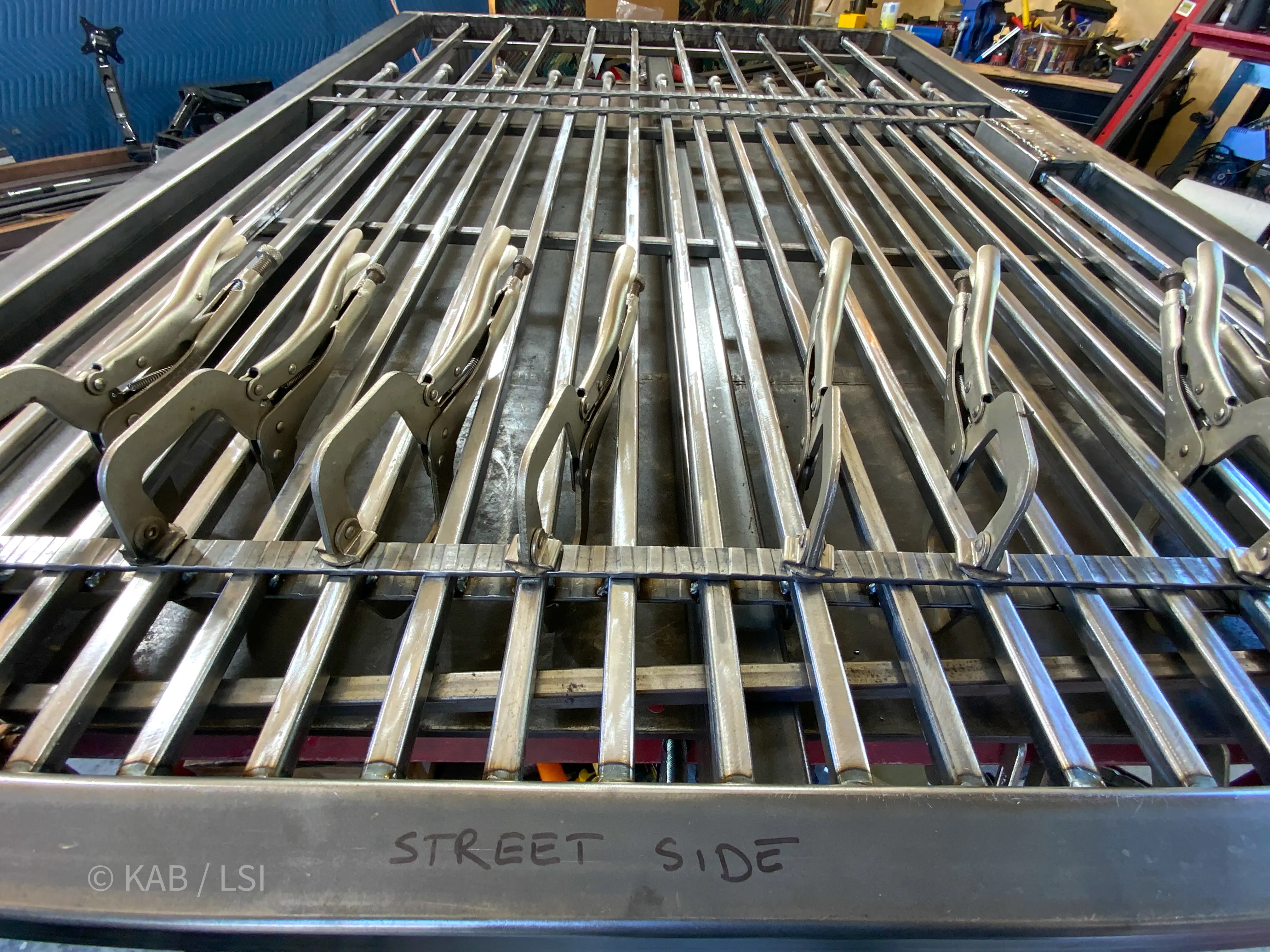
In the welding shop — a fence panel built to protect small dogs. The pickets are 1¾-inch and the gaps are held to two inches on center, so nothing small slips through or out. “Street side” is marked on the rail so the panel installs facing the right way.
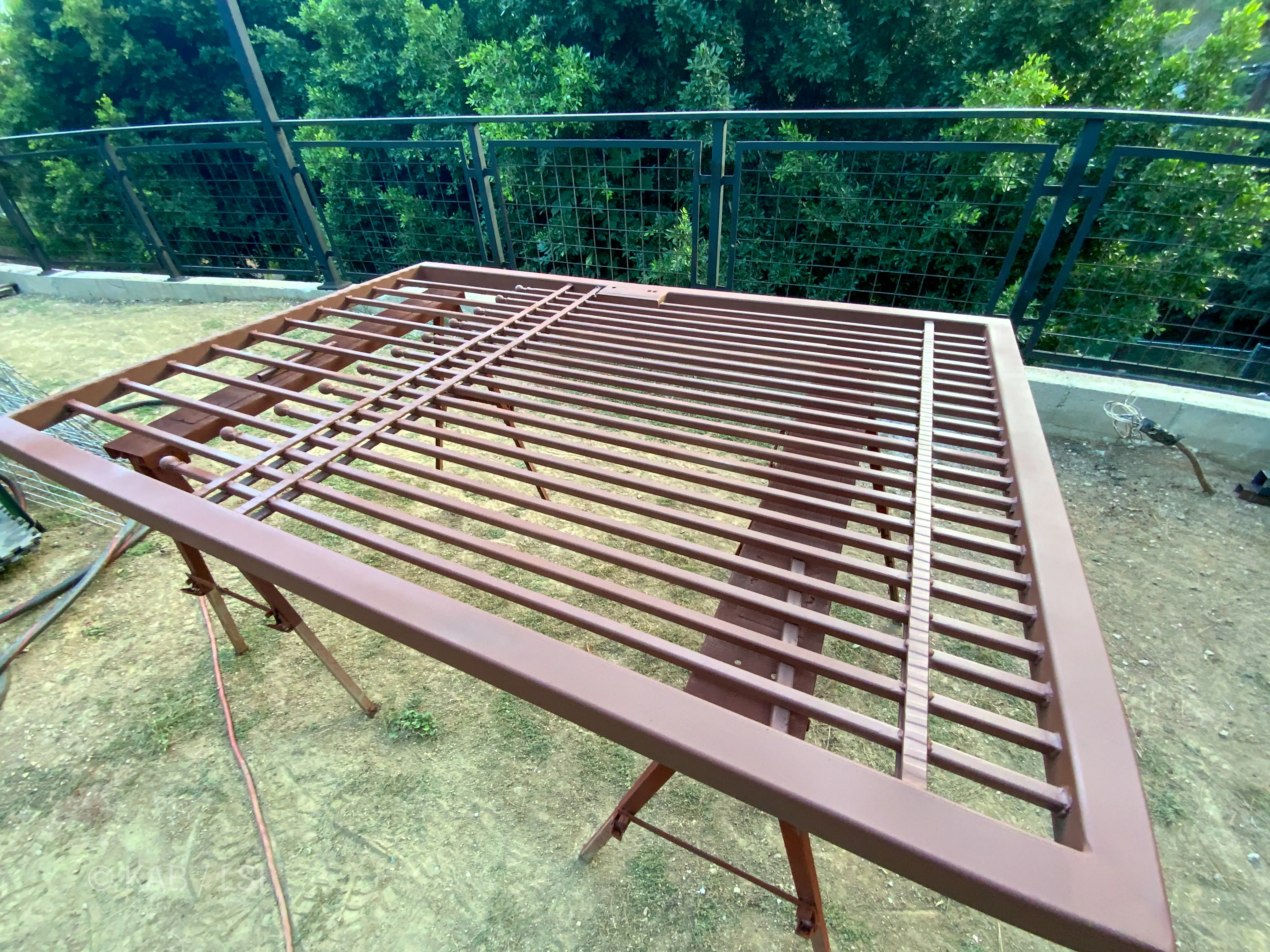
On site — the matching gate, primed in red-oxide metal primer before its finish coat. Precision made off-site, primed and hung on the hillside.
Let the pets enjoy outside air — without turning them into unattended prey.
chapter four
Cat-Safe Outdoor Access
This is one of the more unusual but valuable ideas. Many indoor cats try to slip through doors. Families chase them under cars, through side yards, into shrubs, or across driveways. In hillside neighborhoods, the danger is not only traffic — coyotes actively hunt cats.
A properly designed cat-safe outdoor room can let a homeowner open the master bedroom doors into a controlled exterior space. This is not a loose “catio” bolted onto a window. It can be part of a larger, elegant wrought iron garden enclosure designed for the home itself.
Where the cat can feel the sun, smell the air, and move safely — without being able to bolt into open terrain.
chapter five
Security Without Turning the Home Into a Fortress
The best security improvements do not make a home feel hostile. They make the right areas feel calm, protected, and usable.
Wrought iron fencing, locking gates, layered lighting, cameras, sensors, thorny planting, controlled pathways, and strong bedroom doors can work together quietly.
An Illustration · Not a Photograph
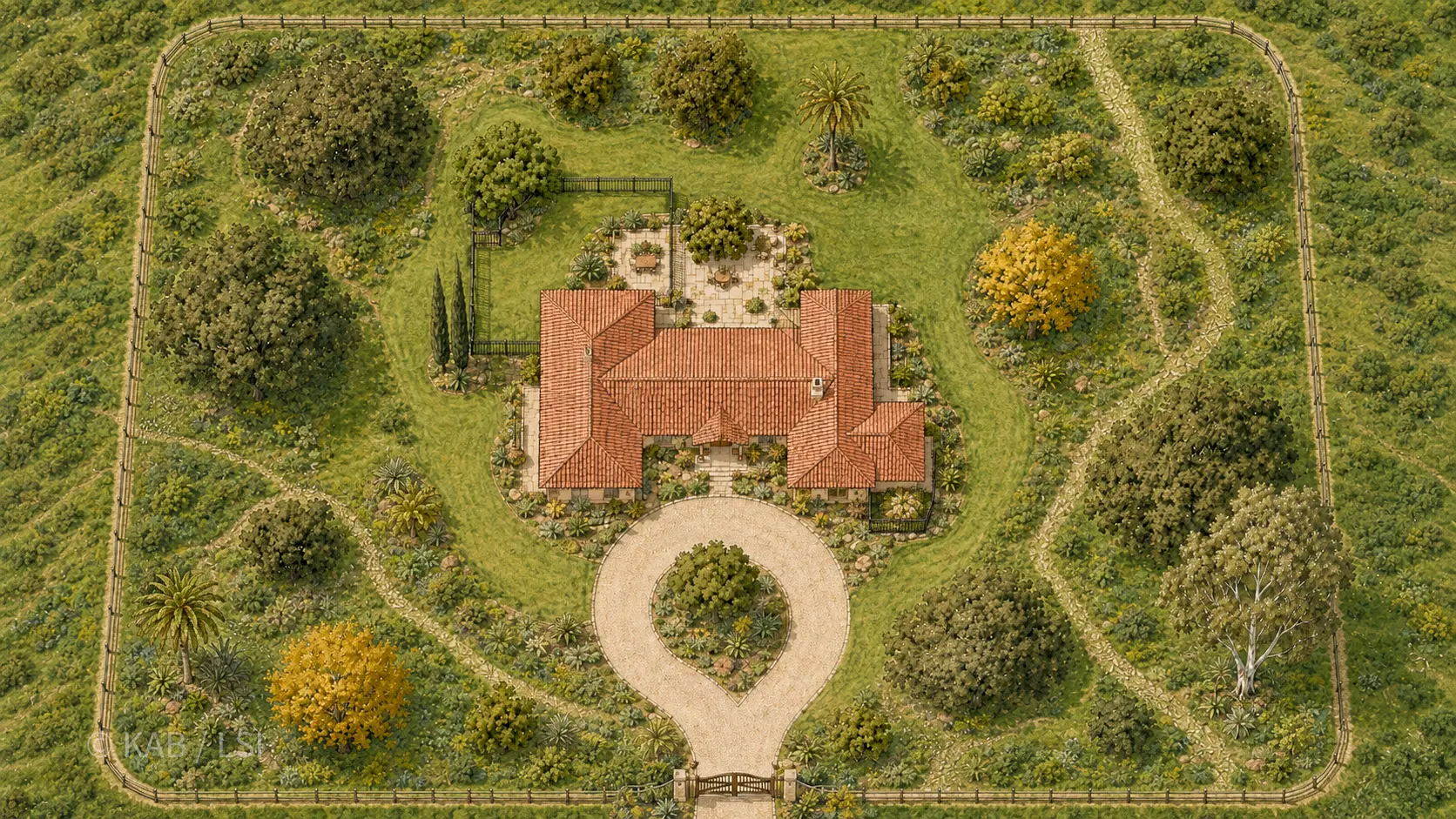
We use a plot plan illustration here, not a project photo, because the point is hard to photograph: two fences doing two different jobs. Assume the perimeter fence already exists — most hillside acres have one, and where they don’t, it is the inexpensive line. What matters is the close-in fence. Here it draws a 7½-foot wrought-iron yard off the master suite, opening onto the same patio as the kitchen and family room — the protected ground where a grandchild plays and a small dog goes out at night, while the cameras watch the fence line so the household is warned long before anything reaches it.
The result is not a prison yard. It is a more usable private space — with better warning time, better control, and better peace of mind.
chapter six
Phase One: Start Outside the Master Suite
For many hillside properties, the best first step is not the entire perimeter. It is the zone just outside the master bedroom — where privacy, personal safety, pets, daily use, emergency response time, and quality of life all overlap.
From there, the secure space can expand outward in phases: to a garden path, a small sitting area, an outbuilding, a telehealth office, a private workroom, or a larger family zone. The discipline is the same one Private Spaces applies to every hillside property — build one quiet, finished, useful thing before reaching for the next.
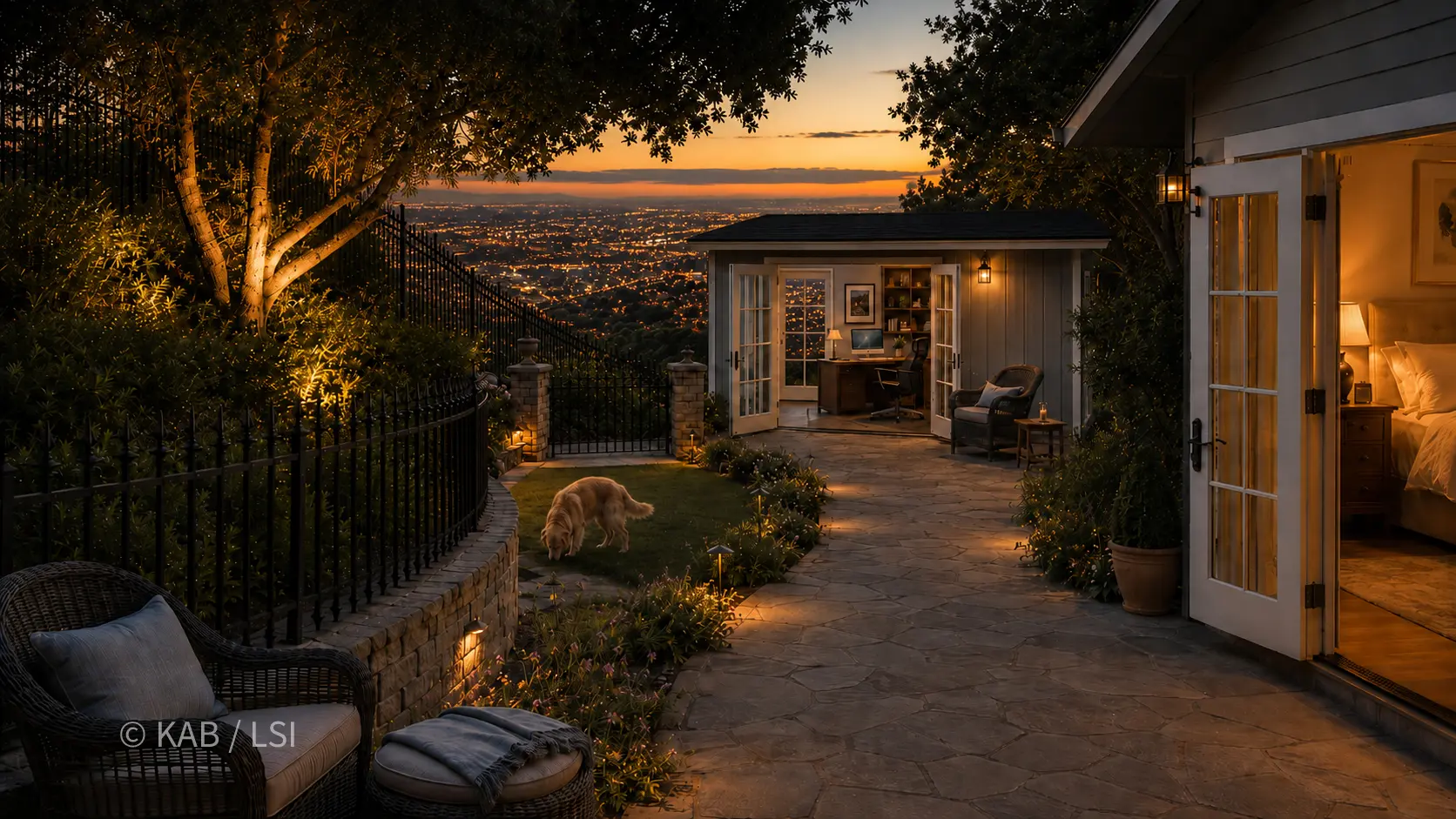
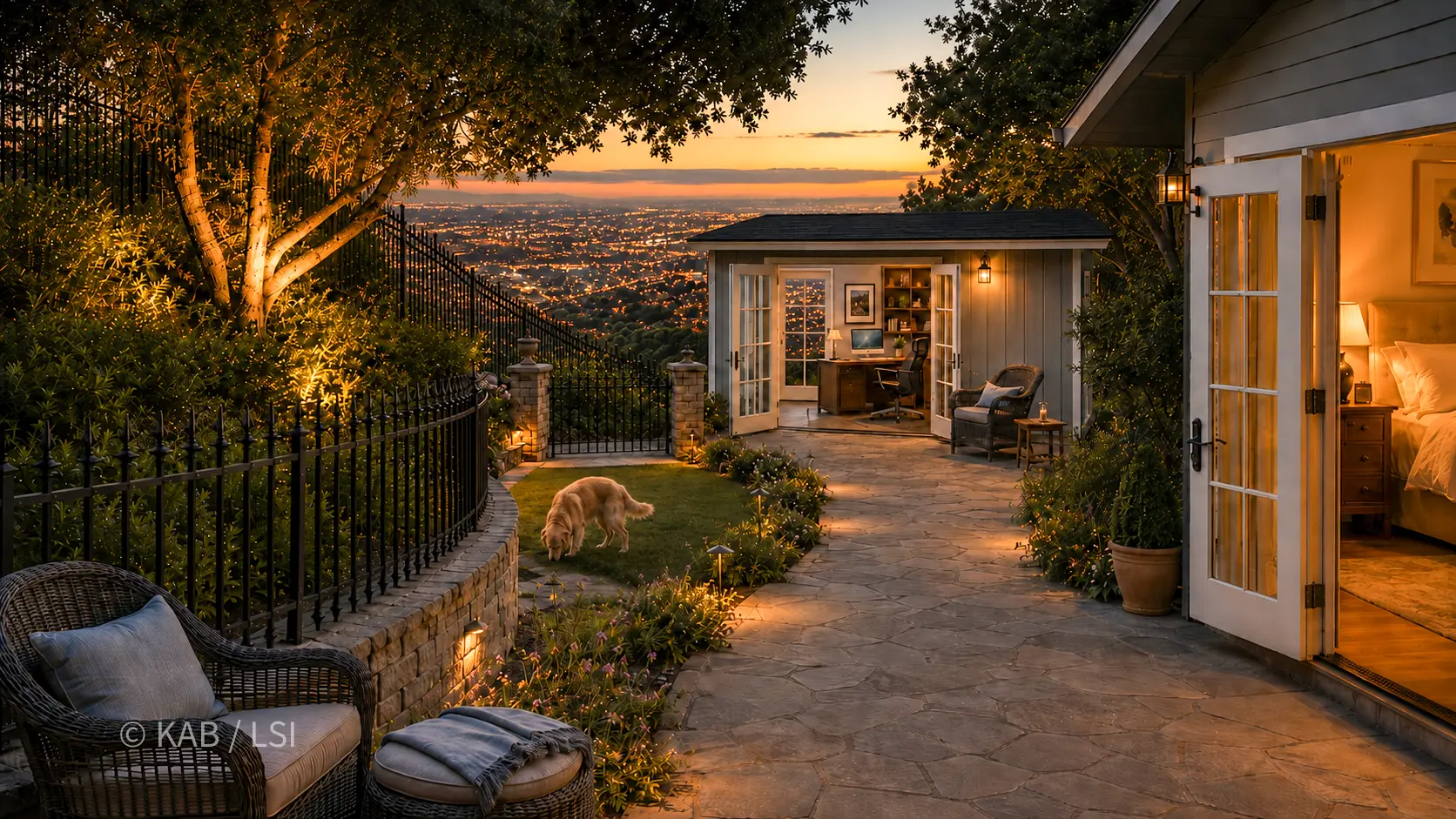
A client stood outside their master suite and asked what the hillside could become — the view, the level ground, the space. This is the answer we drew for them: one of the destinations the secured ground can grow toward.
If your hillside house feels safe but your hillside property does not, the conversation starts here.
By referral and invitation. Reach Keith with a paragraph about what you are protecting and what you are protecting it from.
By referral and invitation
Tell me what you are protecting.
One paragraph is enough — what you are protecting, and what you are protecting it from. There is no charge for the conversation.
Send a note →