Tile Roofs · La Habra Heights
Tile Roof Repair and Restoration
Concrete, clay, cement, polymer — the tile on your roof has no expiration date. What ages is the felt underneath it, and neither one is a reason to buy a second roof.
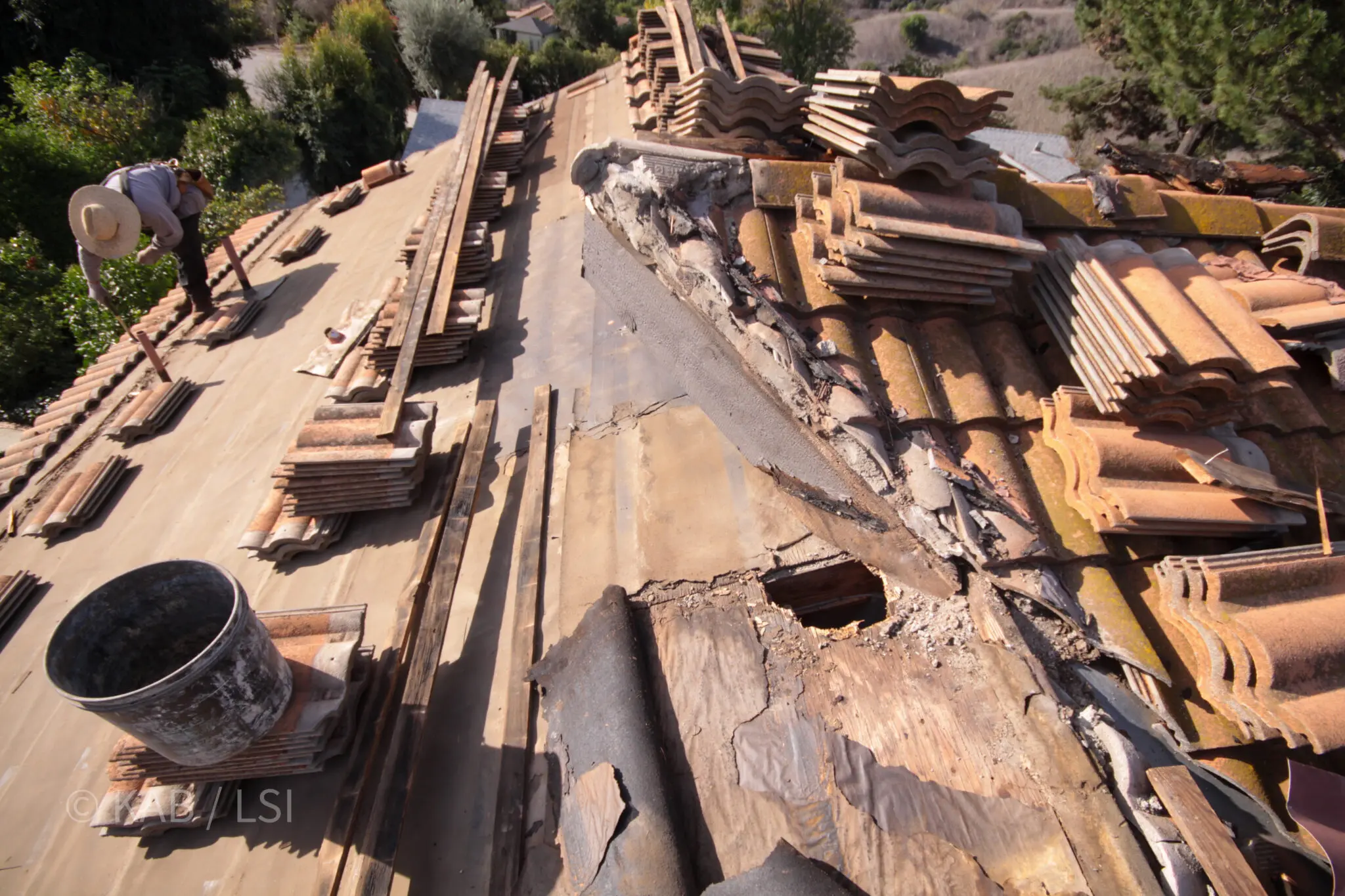
The second roof you do not need
Your tile roof did not fail.
The paper under it did.
Sixty thousand dollars, and a large part of that number is the cost of hauling away material that was never worn out.
Concrete, clay, cement, polymer — the tile on your roof has no expiration date. Forty-year-old concrete tile can be washed, and stained if it needs it, and pass for new. What ages is the felt underneath it and the wood under that. Neither one is a reason to buy a second roof.
The failure almost never starts with the tile. It starts with somebody walking on it.
A crew comes through to tent the house for termites. Grown men carrying heavy rubberized tarps across a surface that was never meant to be walked on casually. They break a hundred tiles, sometimes closer to two hundred, and nobody mentions it. The tarps come off, the trucks leave, and from the driveway the roof looks exactly the way it looked the week before.
Then the clock starts. Within two summers the sun has found the underlayment through every break and baked it brittle. The first hard winter, rain reaches the wood. The wood rots. The rot leaks. Water drips into the attic, the insulation gives up, and it finally arrives where you can see it — a stain in the ceiling. By then you have drywall or plaster damage, possibly mold, and a roofer standing in your driveway telling you the whole thing has to come off.
The quote is twenty to sixty thousand dollars. Ask what you are buying. A large share of that number is labor and dump fees to remove tons of tile that is in perfectly serviceable condition.
A concrete tile weighs seven or eight pounds, and gravity works on it every day of its life. Every time a door slams in the house below, the nail hole opens a little. Water follows the nail shaft past the underlayment into the wood. The wood dry-rots around the nail, the nail stops holding, and the tile slides — off the roof, or just far enough to leave the paper naked in the sun. One-by-two battens carry that load instead of the nails. A great many builders skipped them.
You will also be told the modern system is a generation better than what went on thirty years ago. It is not, particularly. And if the conversation turns to lightweight tile, ask one question: is this house already engineered to carry full-weight tile? It is — that is what is on it right now. So the weight you save is a couple of pounds a tile, and what you give up is toughness. Lightweight tile breaks more easily, and something will walk on your roof again eventually: a tenting crew, a plumber, whoever moves the heating equipment. You are going to lose tiles either way. Better they are the hard ones.
The repair that was not a repair.
Somebody had been up here before us, and you can read it in the color. Twenty or thirty tiles bought off a rack at a tile yard, dropped into the gaps, ridge caps nailed back down, and nothing whatsoever done to the paper underneath. The ridge had never been solid-mortared to begin with — ridges and hips are supposed to be bedded in mortar, the way clay roofs have been built for a hundred years. On a house sitting up on a ridgeline, where rain arrives sideways, that is not a detail you skip.
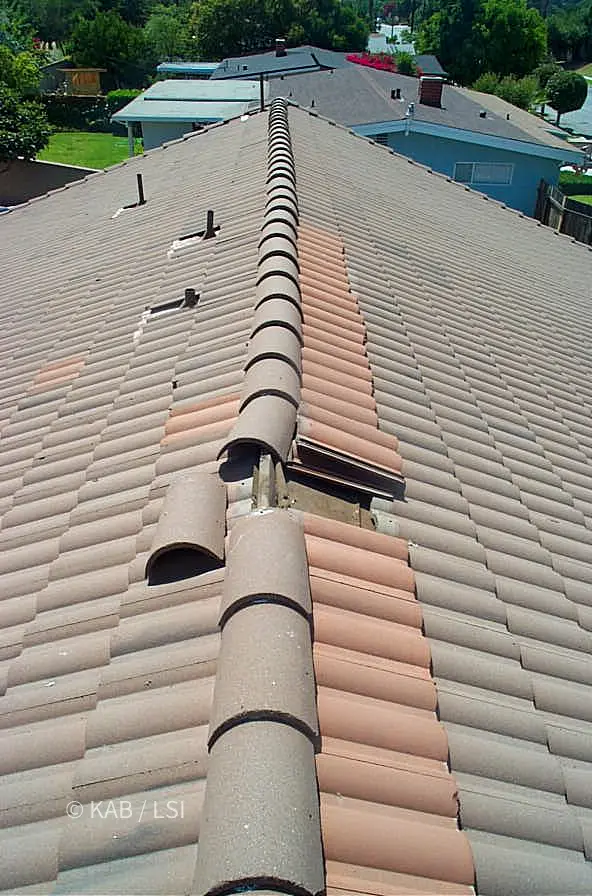
Read the color. The lighter tiles are the previous repair. The ridge caps were nailed, never mortared.
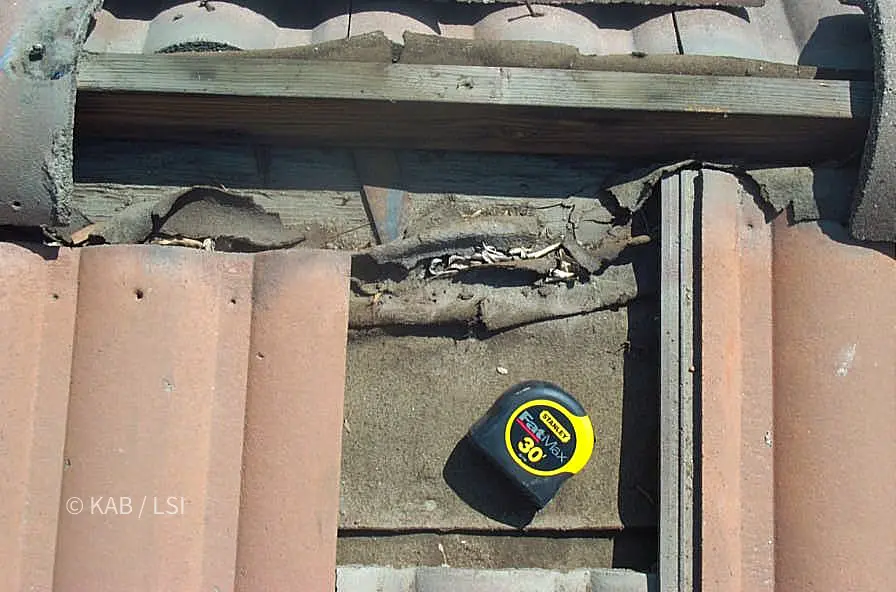
What was under it. The felt had cooked and folded and the plywood had rotted through into the attic.
We lifted the tile and stacked it. Replaced every board that had gone. Laid two layers of ASTM 30 felt, twice what the code asked for. Added a small quantity of new tile to make up the breakage, and put the whole thing back. It is a better roof today than it was the day the house was finished.
Two hundred broken tiles,
and nobody said a word.
The house had been tented for termites. The crew broke close to two hundred tiles and drove away without mentioning it. The owners were a year or two out from selling.
The hard part was never the repair. It was the match. Every hillside house above this one looks straight down onto its roof, and thousands of cars a day see it from the road below. New tile mixed into forty-year-old sun-bleached tile would have read as a patch from a quarter mile away.
So we harvested the old tile off the back of the garage — the one plane on the property nobody can see from anywhere — and used it to make every visible repair invisible. Then I drove out to the tile plant myself and picked up a pallet in the original profile and color to re-cover the garage. Three men, about a week.
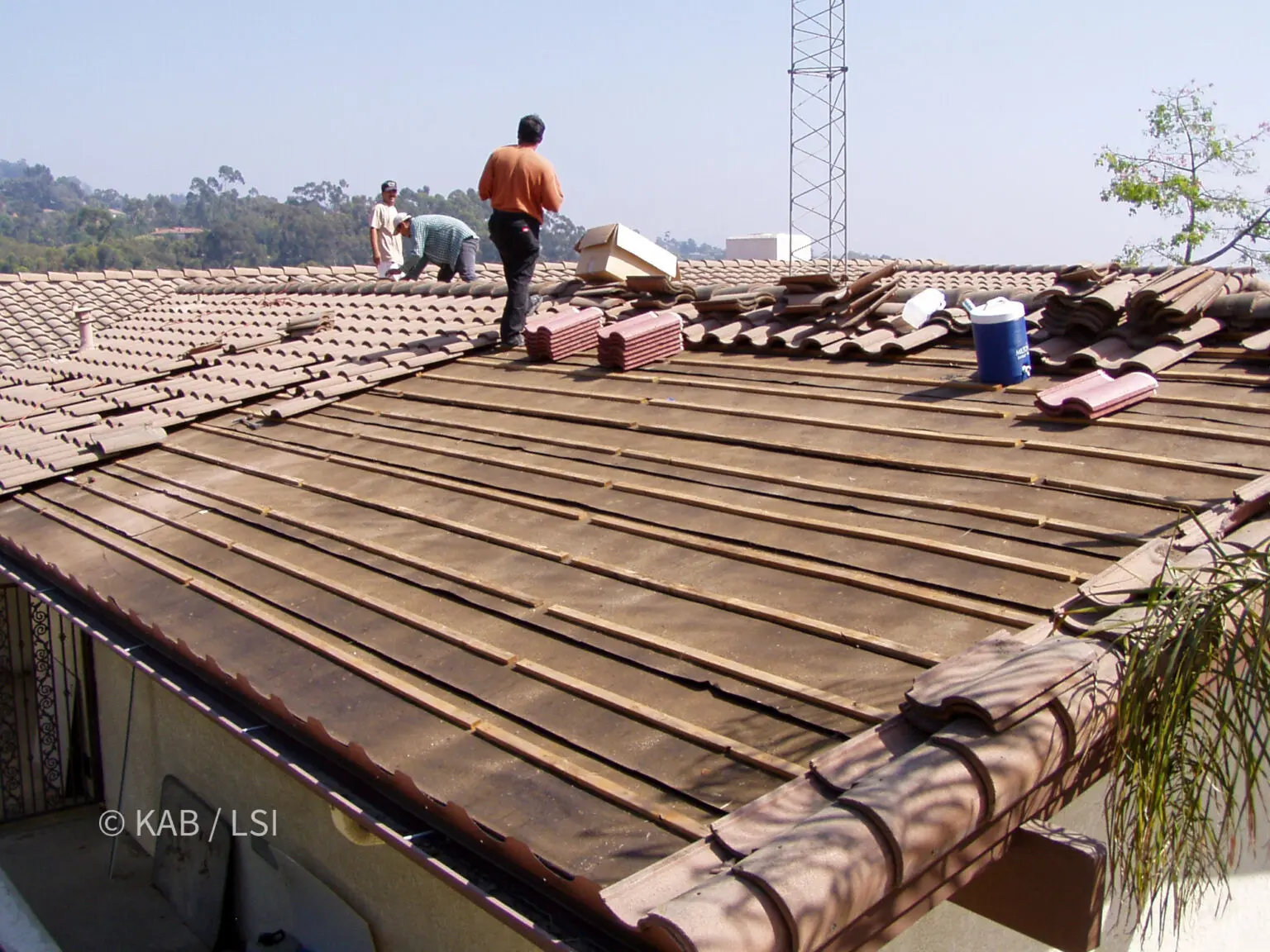
Stripped back in sections, tile stacked in courses so every piece returns to where it came from.
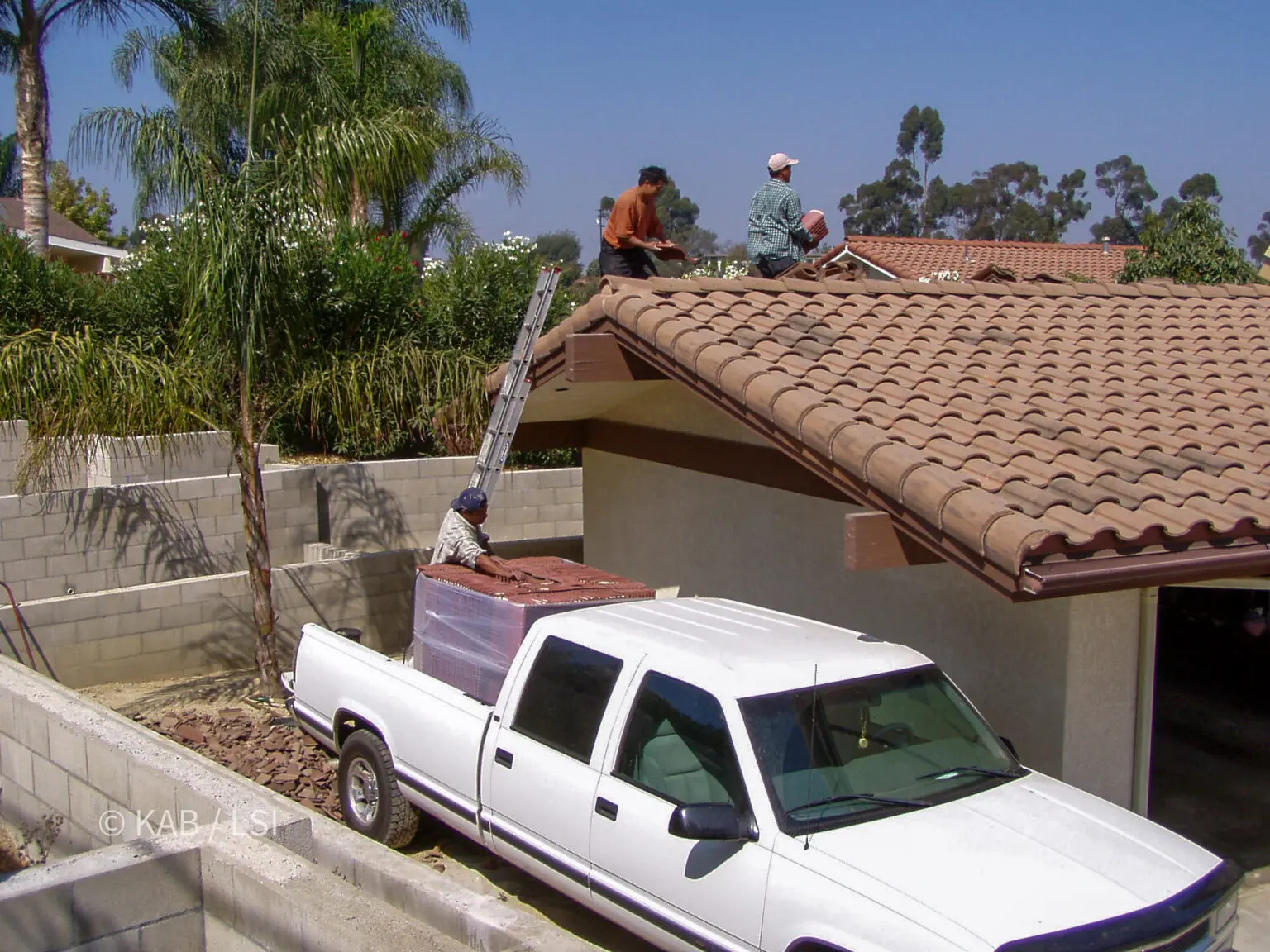
One pallet, matched profile and original color, fetched rather than ordered. That is the whole material bill.
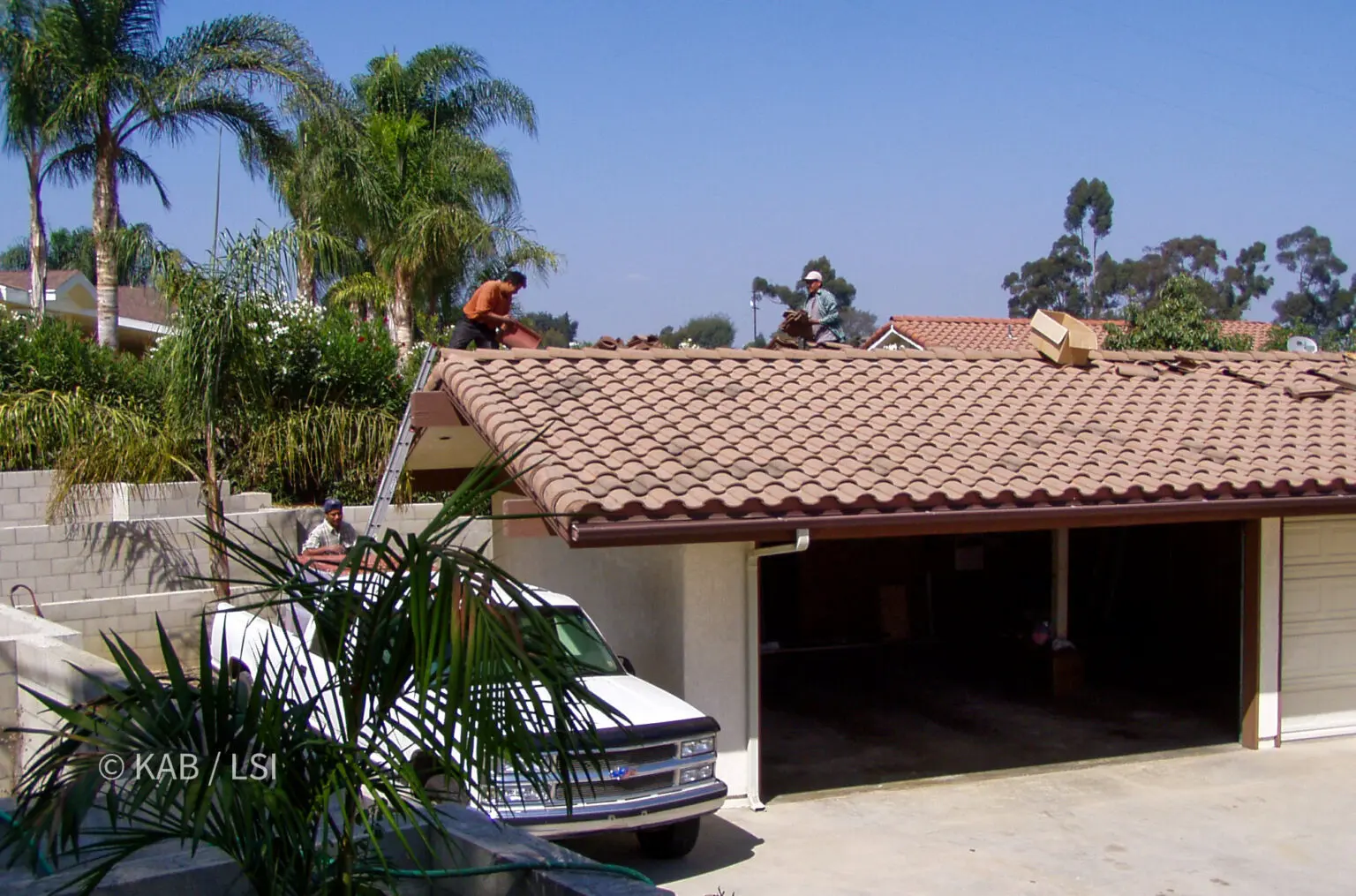
The garage carried the new tile. The visible roof kept its original weathered color.
The whole system,
taken apart and done once.
Roughly forty-five hundred square feet of concrete tile on a single-story house, leaking in several places, and indifferently built to begin with. We worked it one rectangle at a time — lift the tile, stack it on the opposite slope, open up what is underneath.
Rotted sheathing, fascia boards, the shiplap in the overhangs. All of it replaced and primed. The original builder had laid spaced sheathing, which is not flat enough to carry tile properly, so we sheeted over it in plywood. Two layers of ASTM 30. And one-by-two battens, which the builder never installed at all.
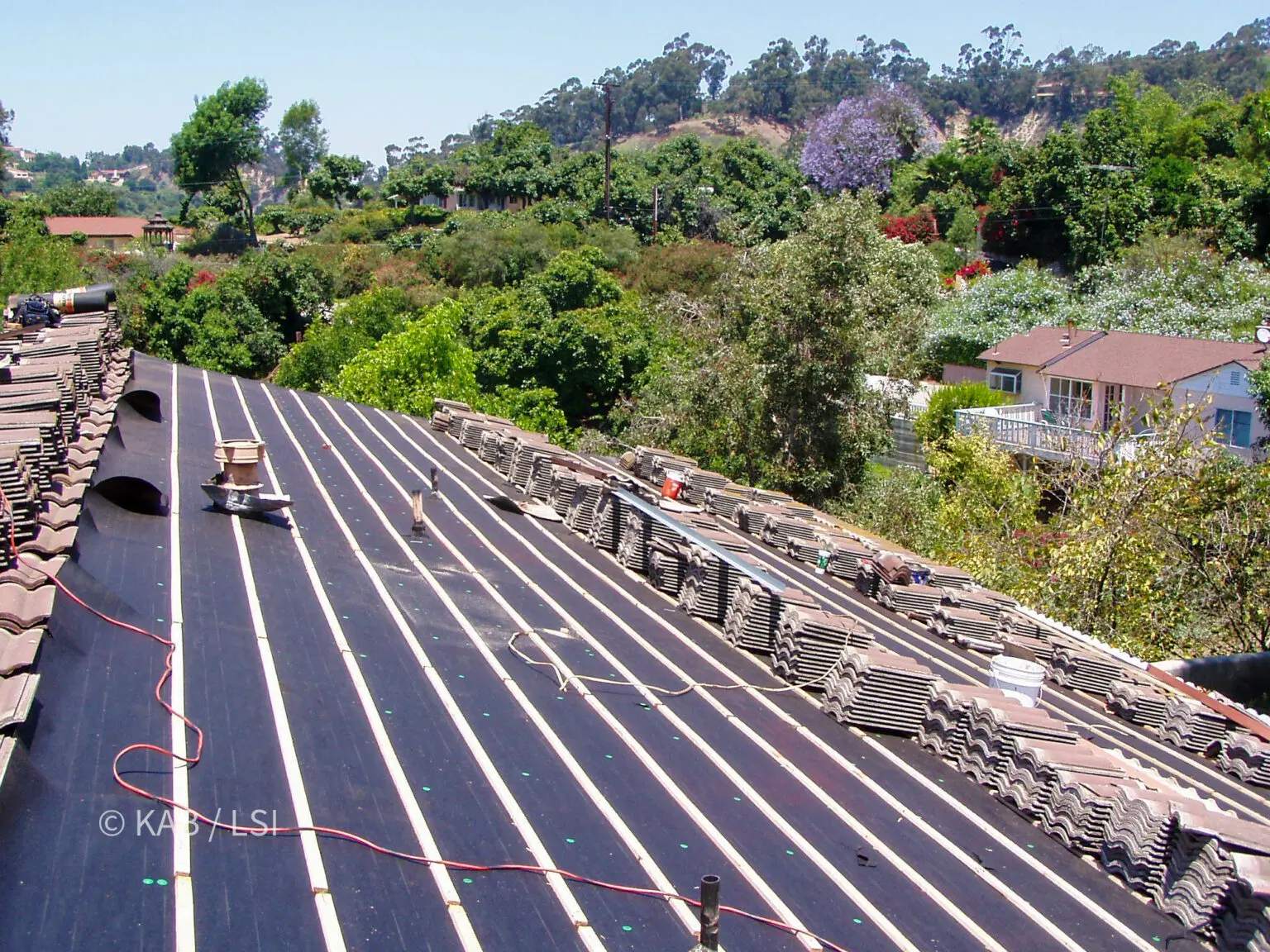
Resheeted, papered twice, and battened. The battens carry the weight so the nails do not have to.
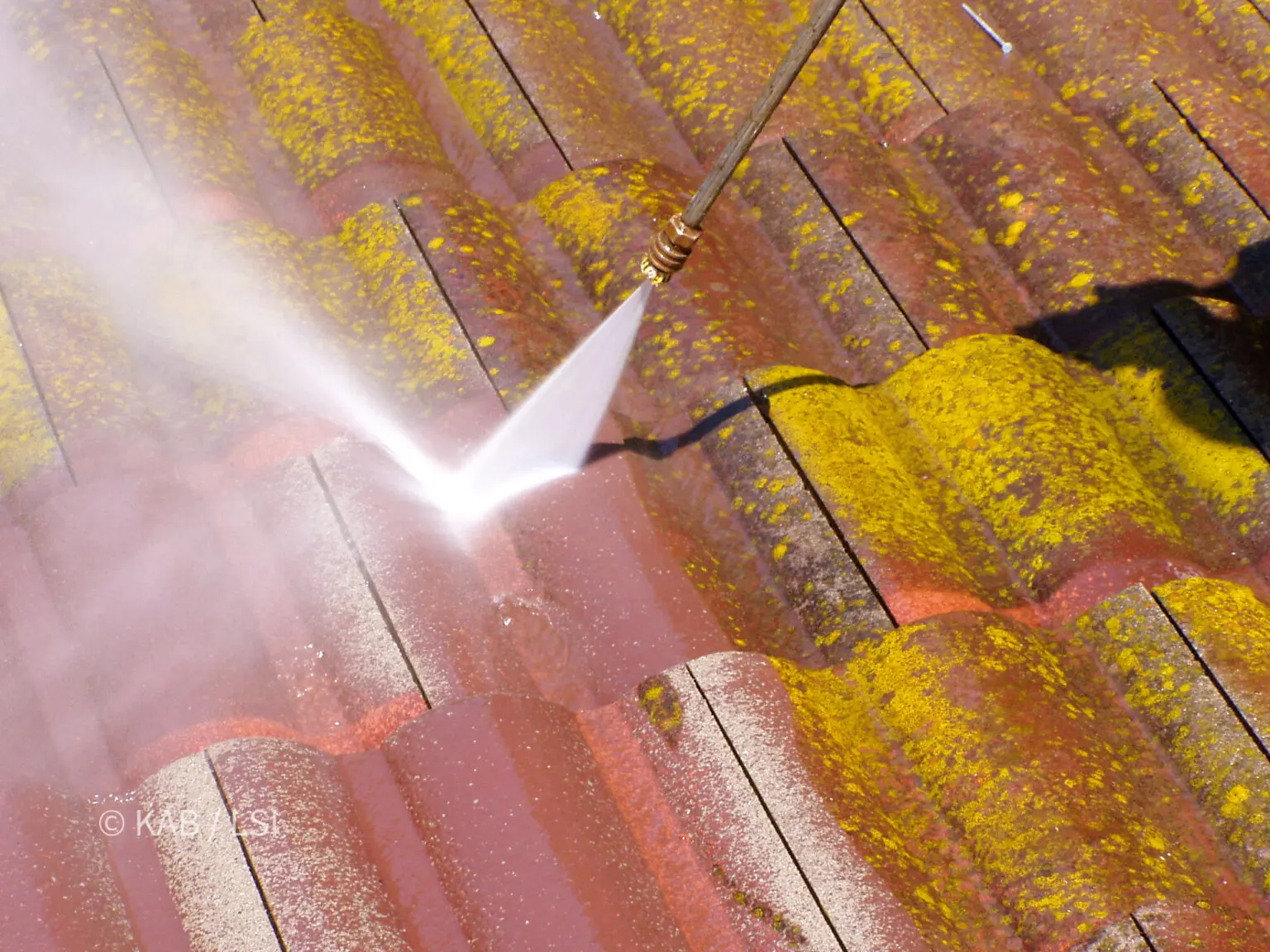
Forty years of algae and airborne fallout. It comes off. The tile underneath was never the problem.
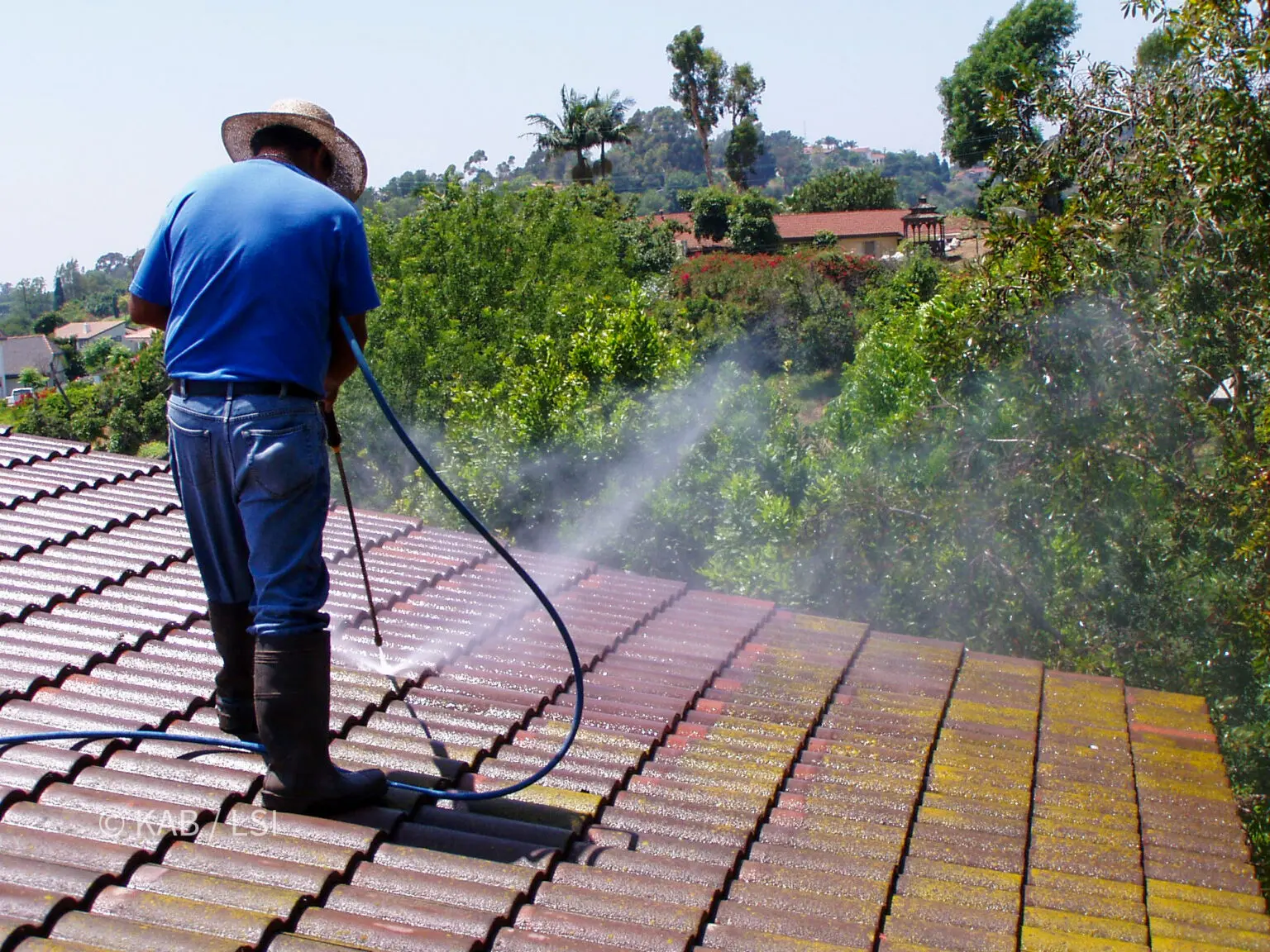
Washed by hand, plane by plane, on a hillside where the fallout never stops arriving.
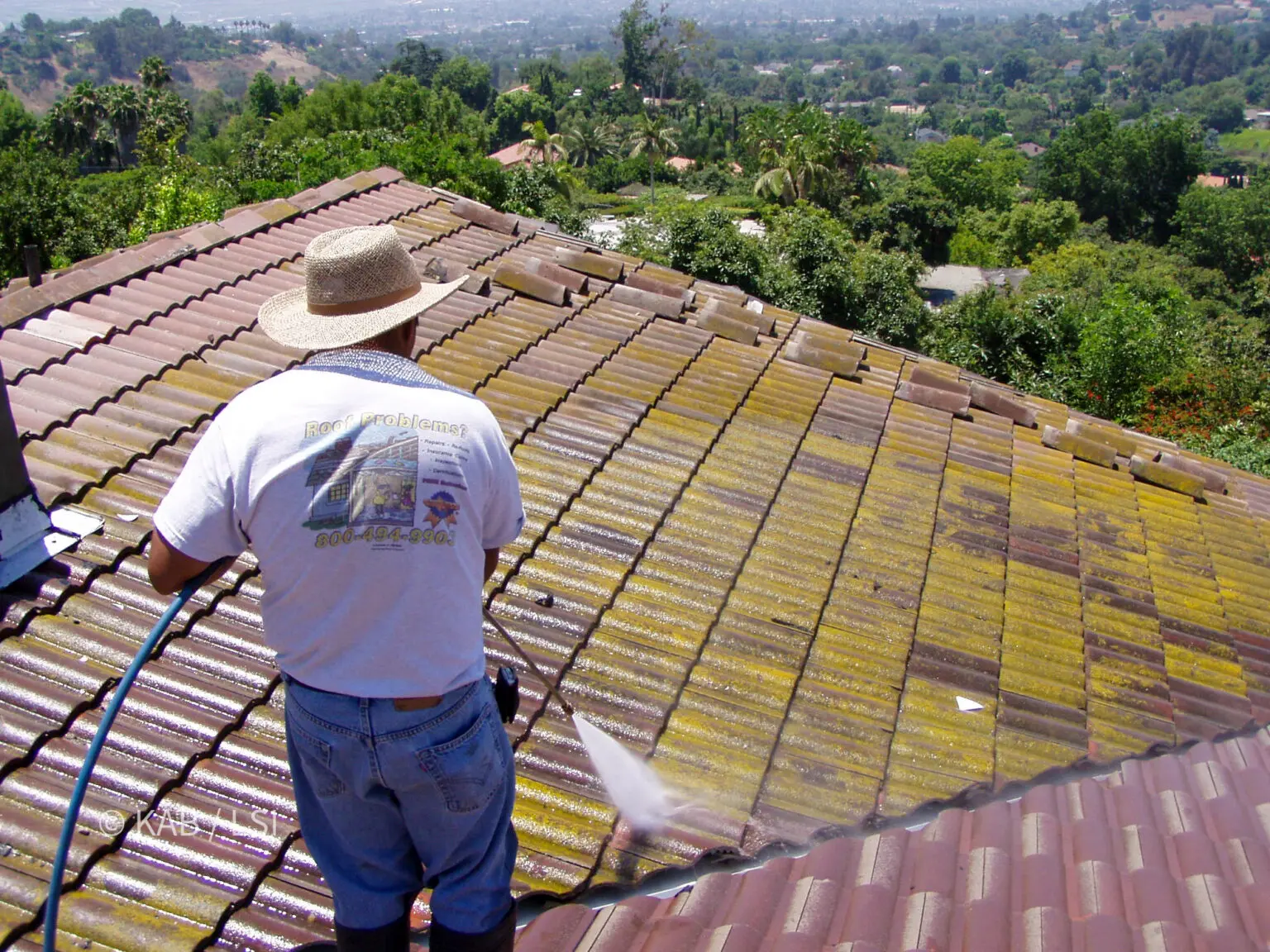
The line down the middle is the whole argument. Same tile, same age, same roof.
Then we washed it. The fallout up here is real — particulates settle on these hills continuously — and four decades of it, with algae on top, had turned half the roof yellow. Pressure washing took it back. Where the color has genuinely gone out of the tile, concrete stain finishes the job.
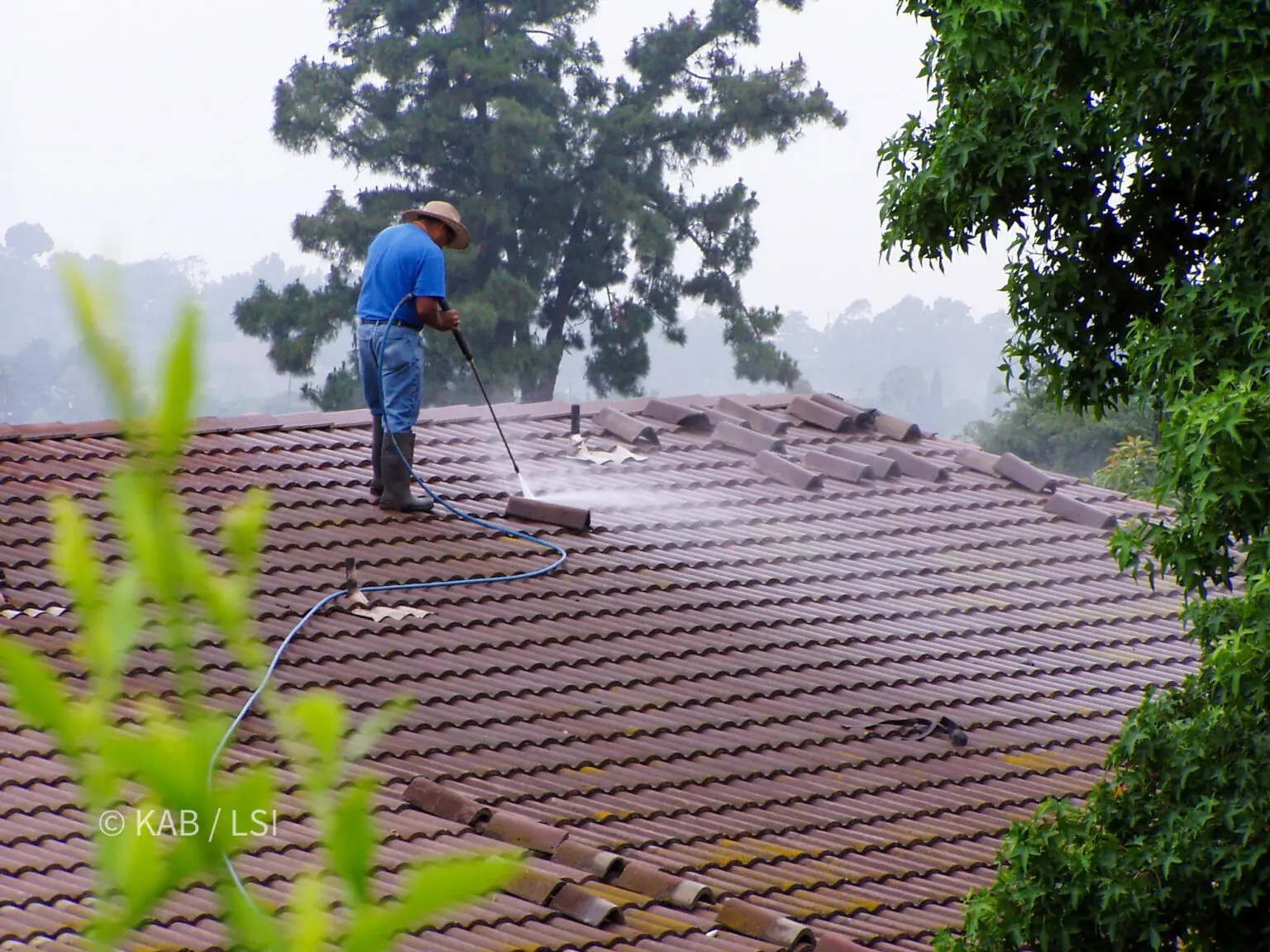
Early, before the heat. Half of restoring a tile roof is simply being willing to spend the days on it.
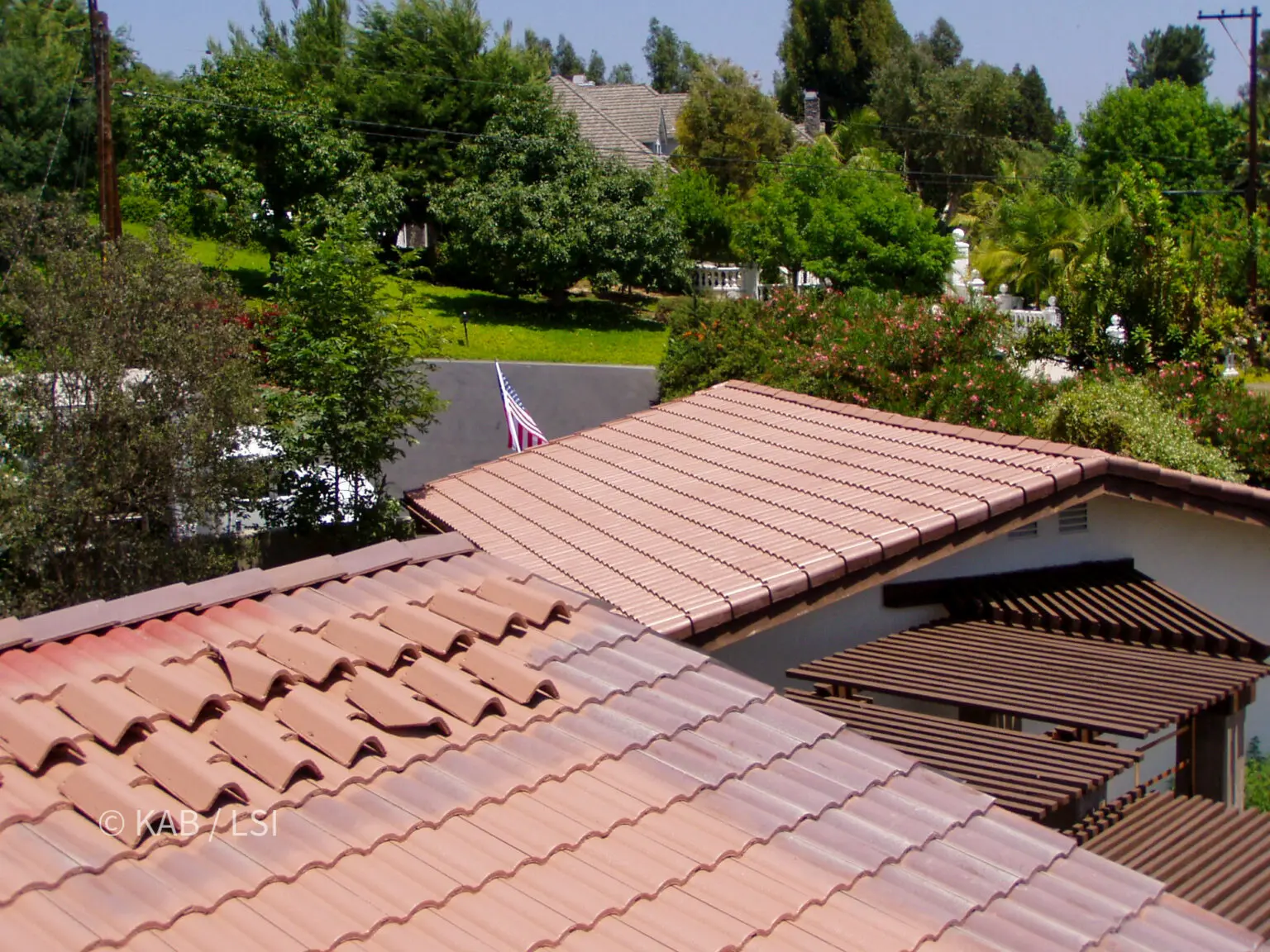
Finished. It looks like a new roof. It is the same roof it always was.
Ninety years,
and one bad corner.
The carriage house on a property built in the twenties, standing on its own, with the original clay tile still on it after more than ninety years. Only one corner was in trouble — the corner most open to driving wind, with water lines running beneath the tile that may well have played a part.
We did the whole roof anyway, and it is worth saying why. The owners were a year or two from selling, we were already on site, and they wanted it done properly rather than in patches. That is a legitimate reason to redo a whole roof. “The tile is old” is not one.
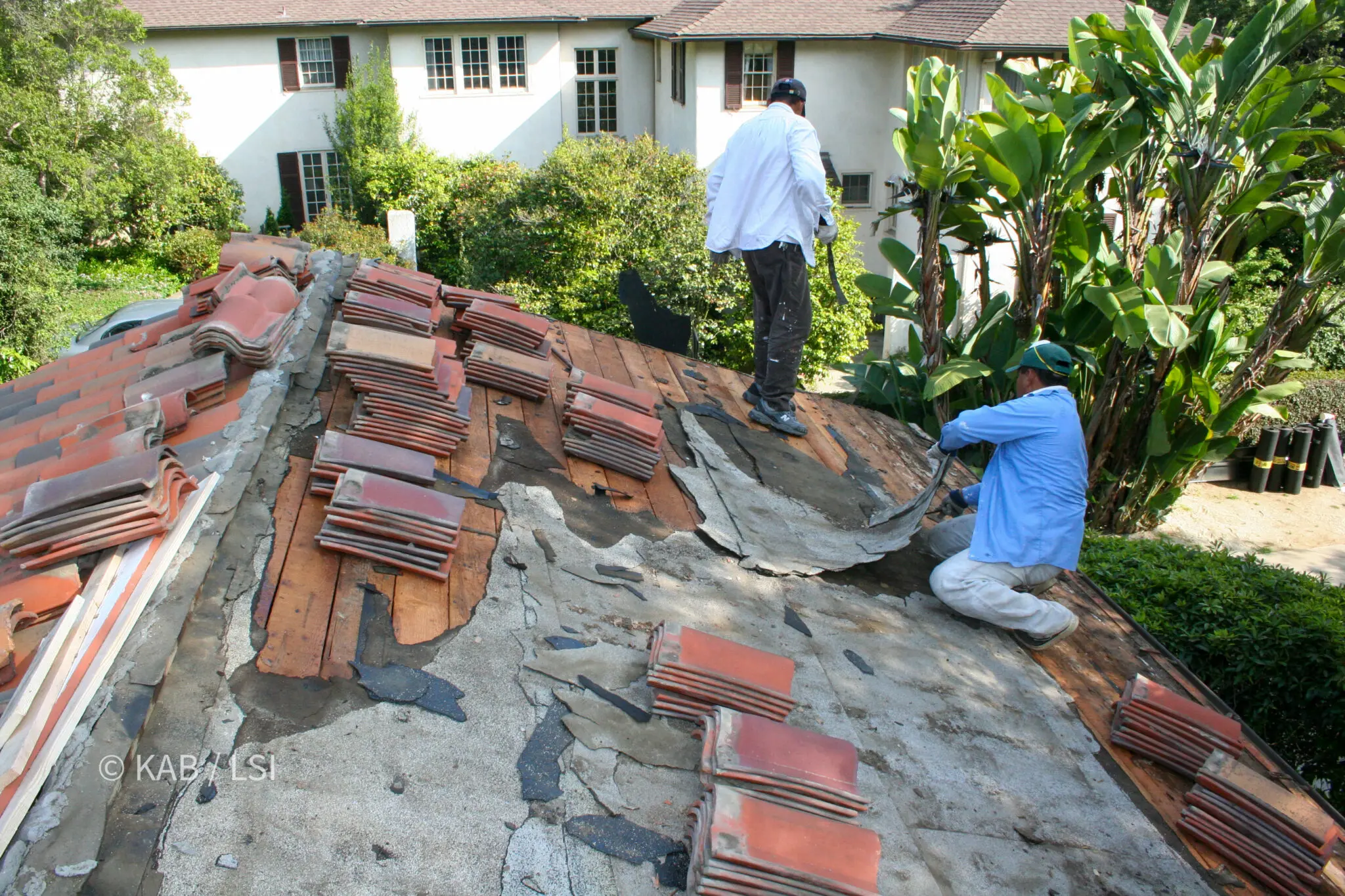
Ninety-year-old clay tile lifted and stacked in courses. Not one piece of it was worn out.
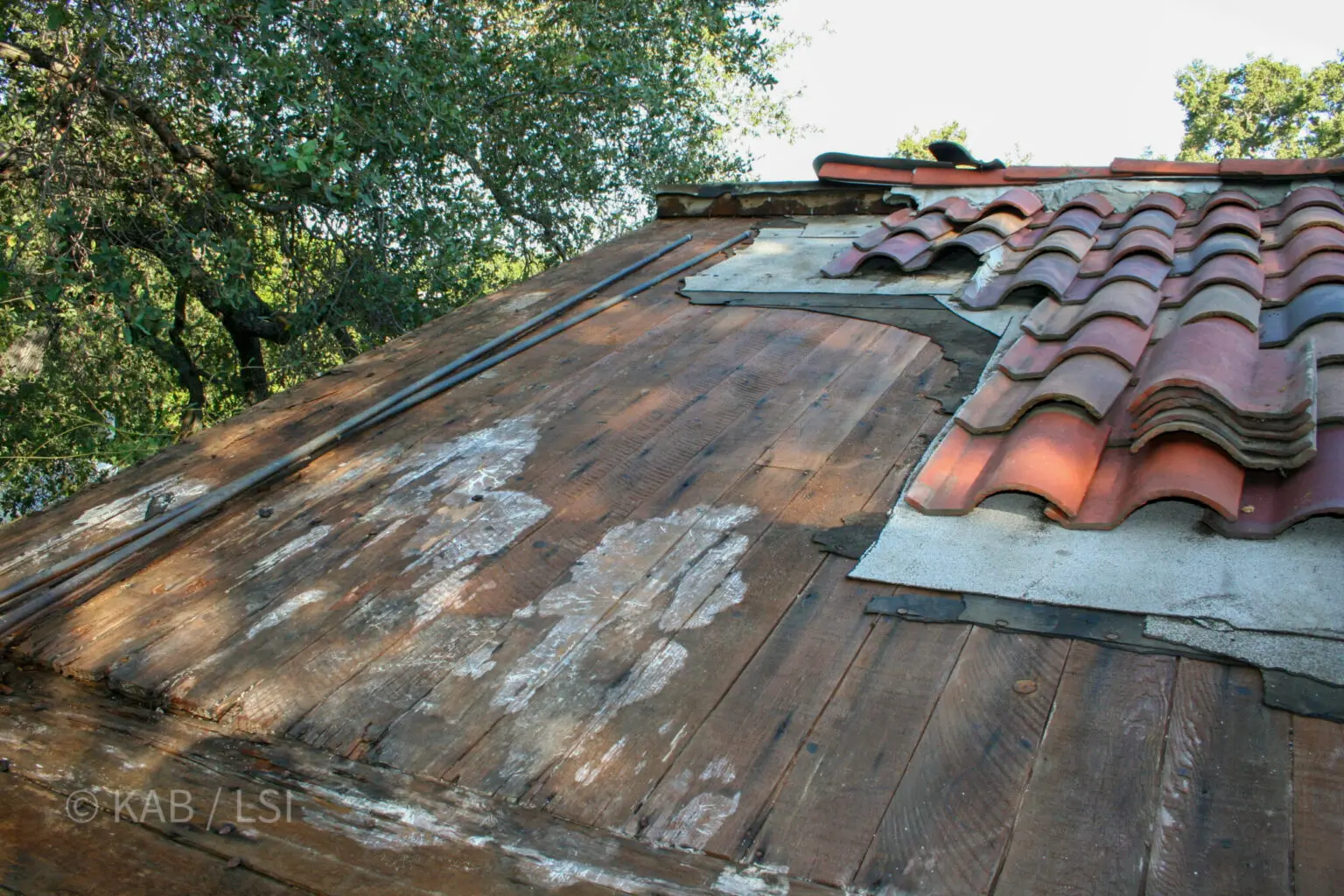
The original board sheathing underneath, still sound after ninety years. What had failed was the paper, as it always is.
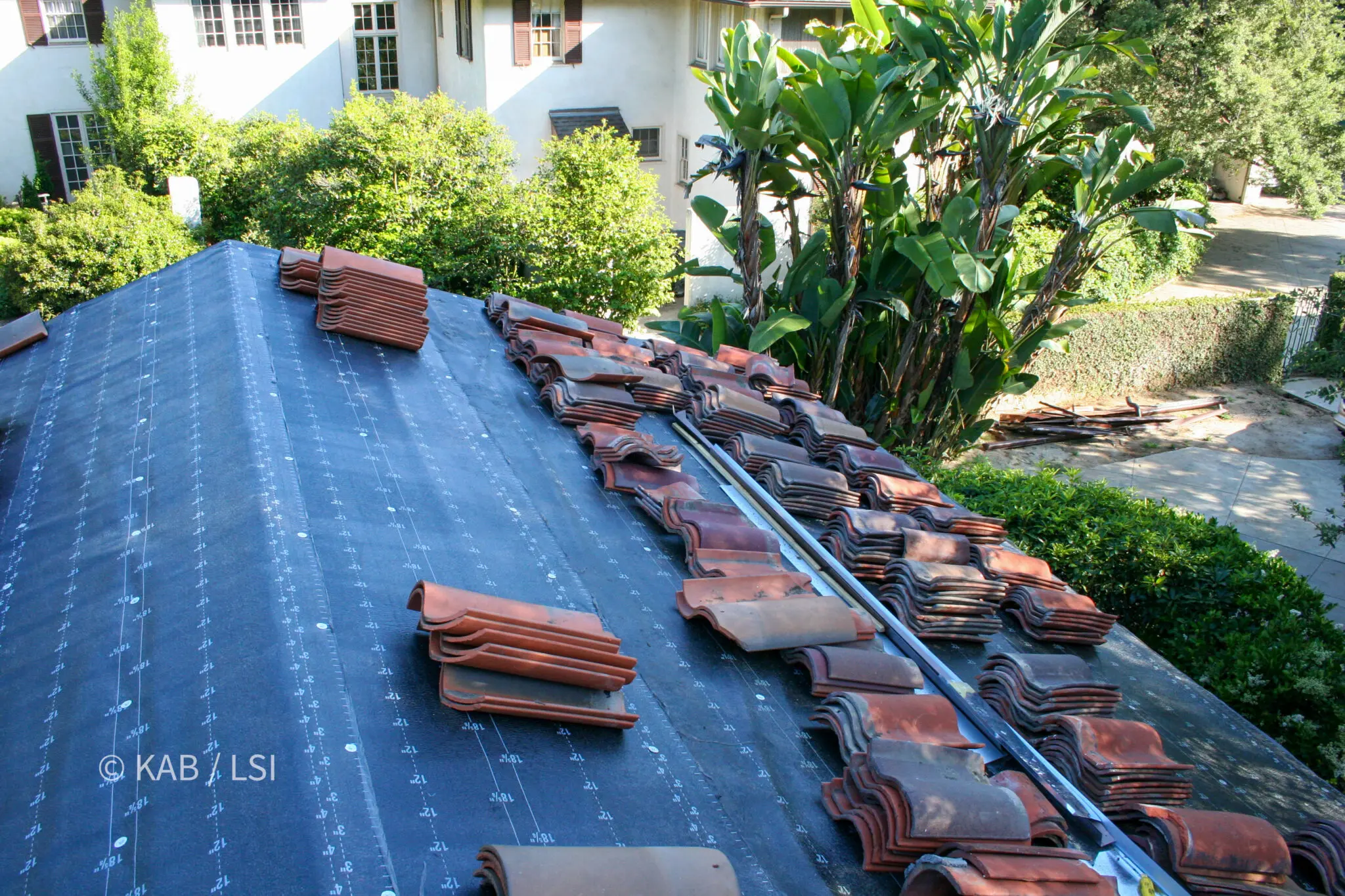
New paper down, the same tile waiting to go back where it came from.
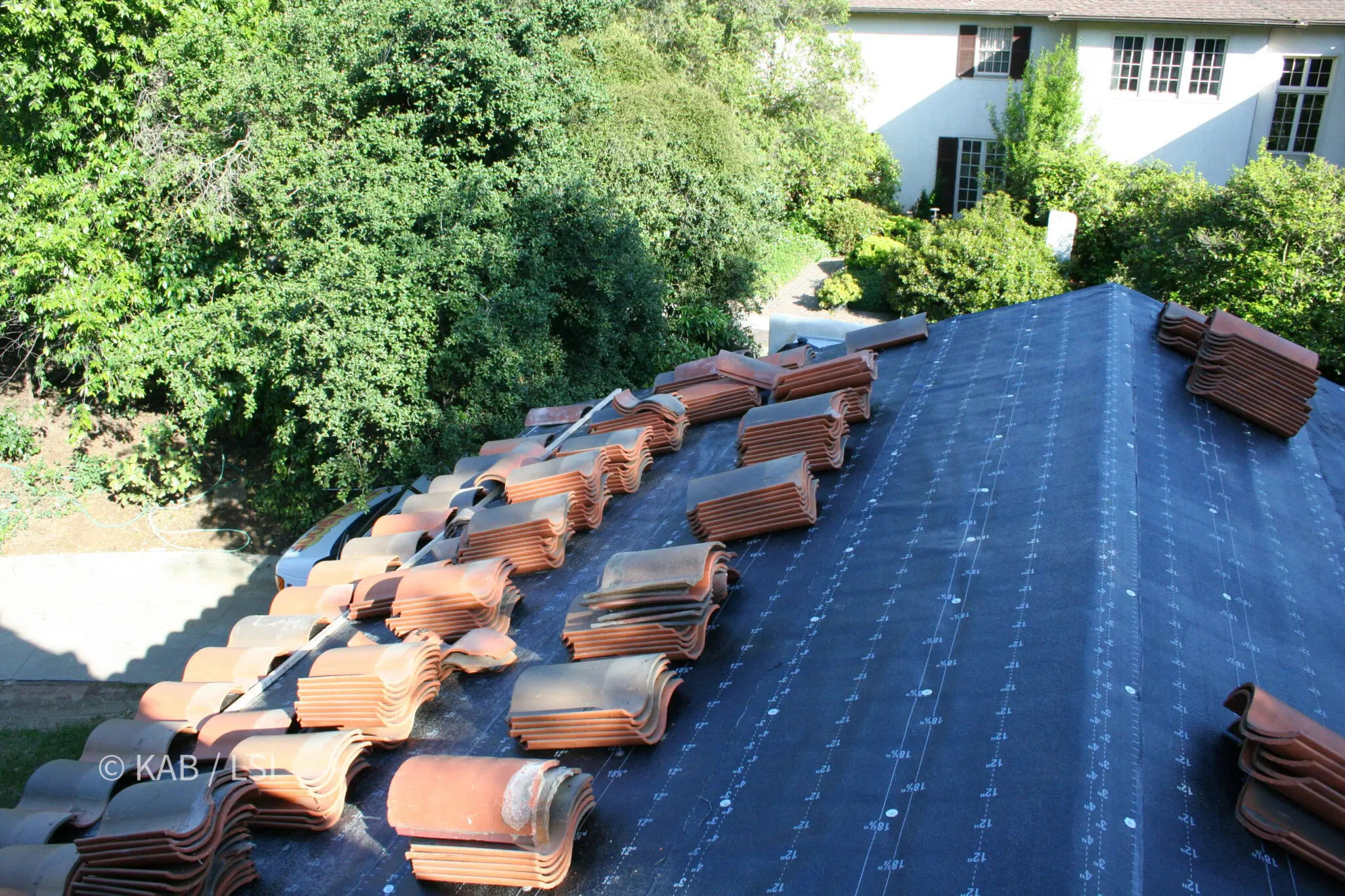
Every stack is a course. Reset in the order it came off, the roof keeps ninety years of weathering intact.
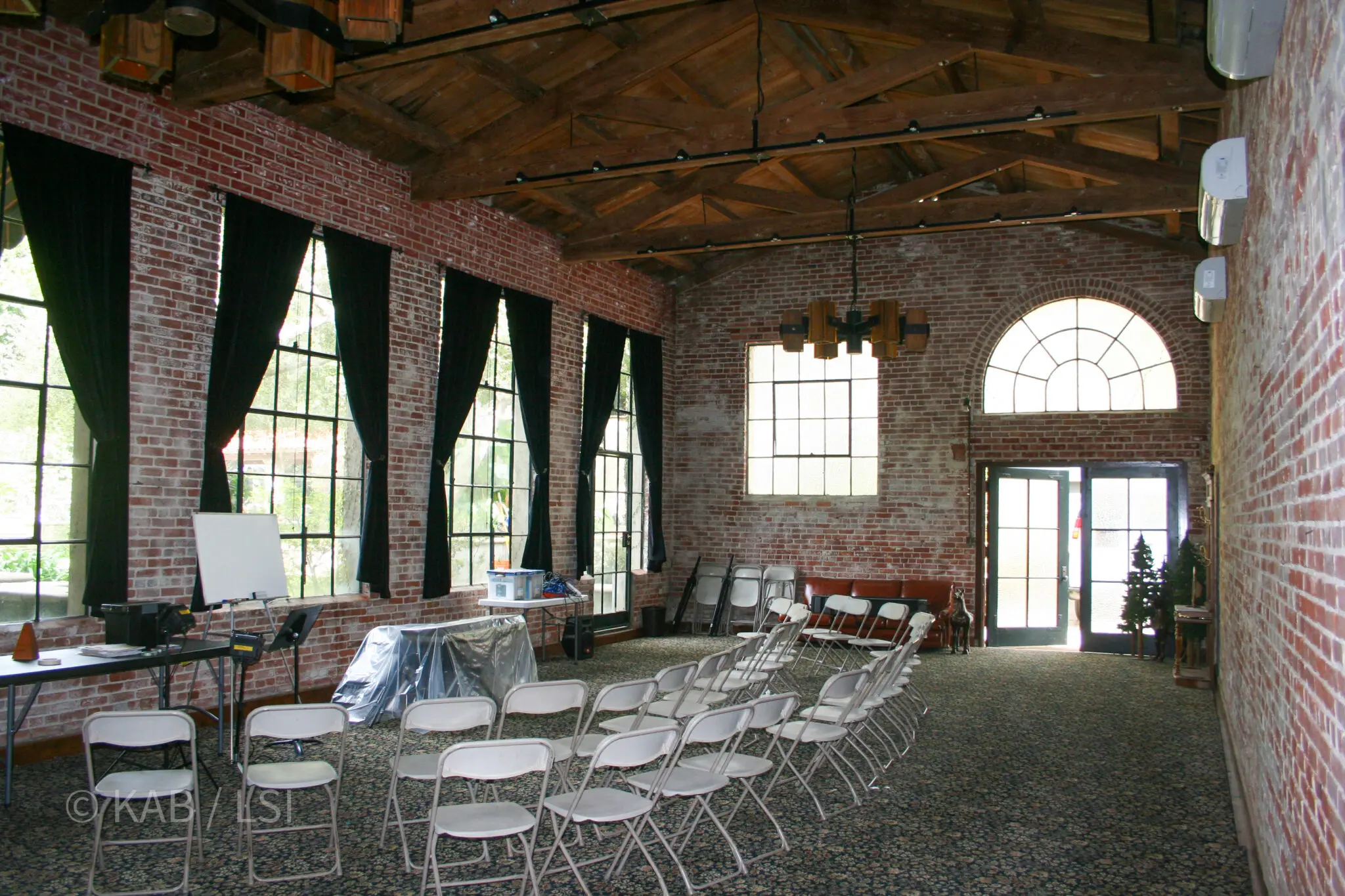
This is what is under that roof. It has stayed dry for ninety years because periodically somebody looked after the paper instead of selling the owners a new roof.
Not one of these four roofs was worn out. Every one of them needed somebody who understood the system — the tile, the paper, the wood, the battens, the mortar — and was willing to take it apart and put it back correctly. That person is harder to find than a salesman, and he costs a fraction of what the salesman is asking. If you have been handed a five-figure number for a tile roof, get a second opinion from somebody whose living does not depend on selling you the roof.
The Hillside Network
That was one card out of forty-two.
Roofs, water, ground, structures, and the trades I would call for each one. No names are published here — introductions happen in conversation.
See the full index →