Hot Water · La Habra Heights
Tankless and Instant Hot Water
A tankless heater is a gas problem before it is a water problem — and the complaint people actually voice is distance, not temperature.
Hot water, and the waiting for it
A tankless heater is a gas problem
before it is a water problem.
Ask what else is on the gas line before you ask anything at all about the heater.
A forty-gallon tank heats water and reheats it all day whether anyone is home or not, runs out halfway through the second shower, and takes an entire closet to do it.
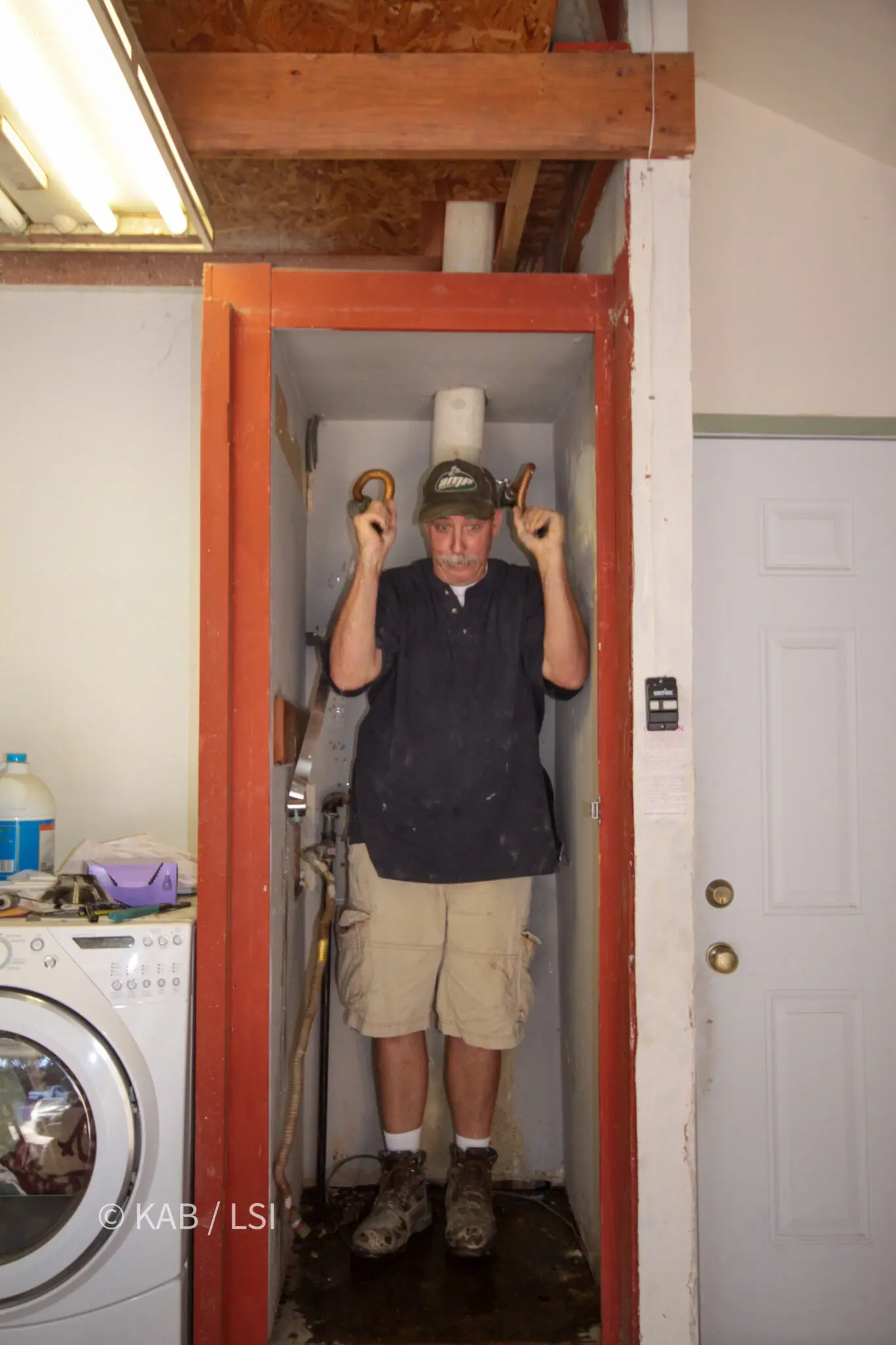
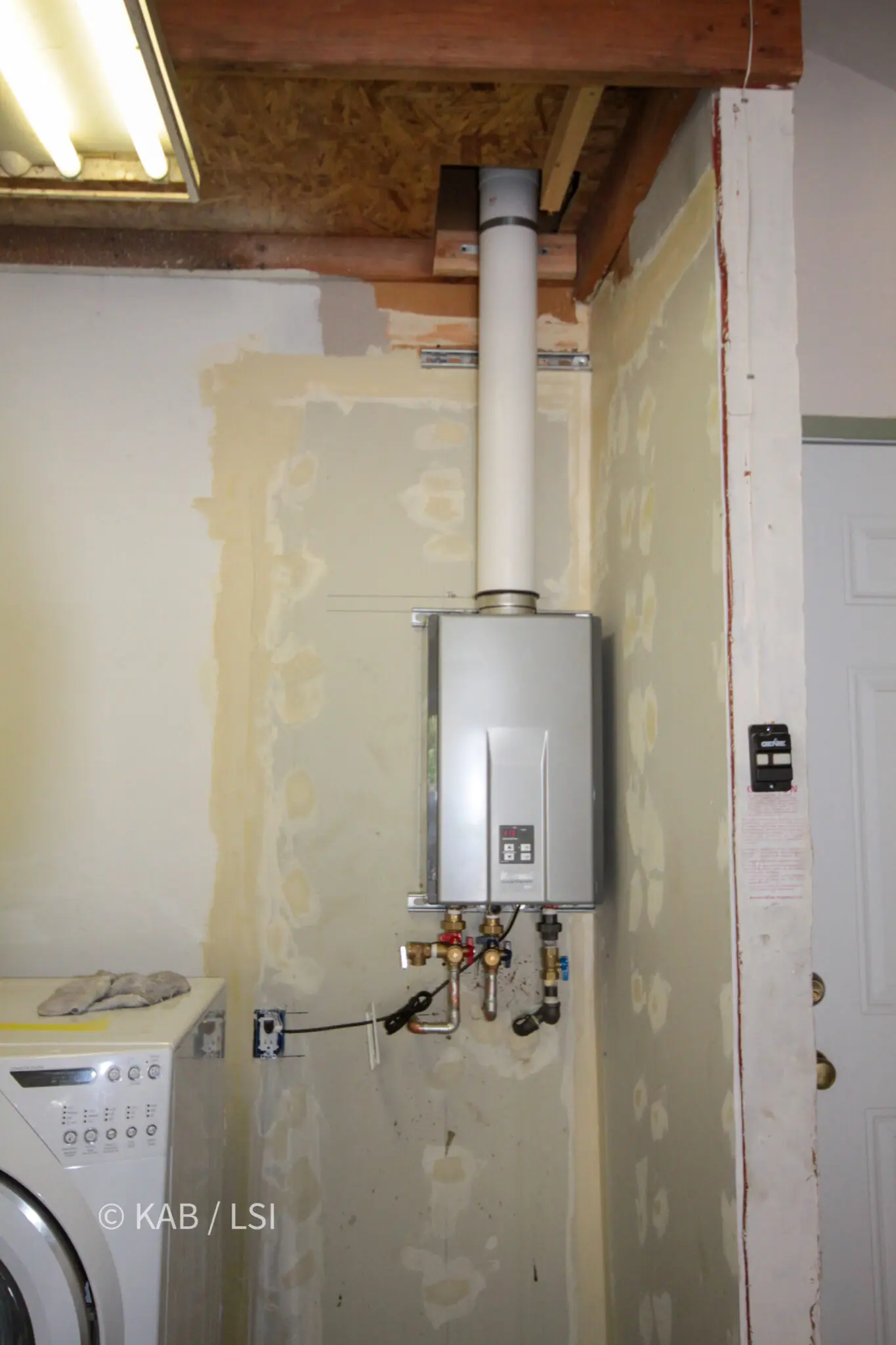
Drag the handle →
A man stands comfortably in what used to be the water heater. Pull the handle across and the whole thing becomes a box on the wall — and the closet becomes yours.
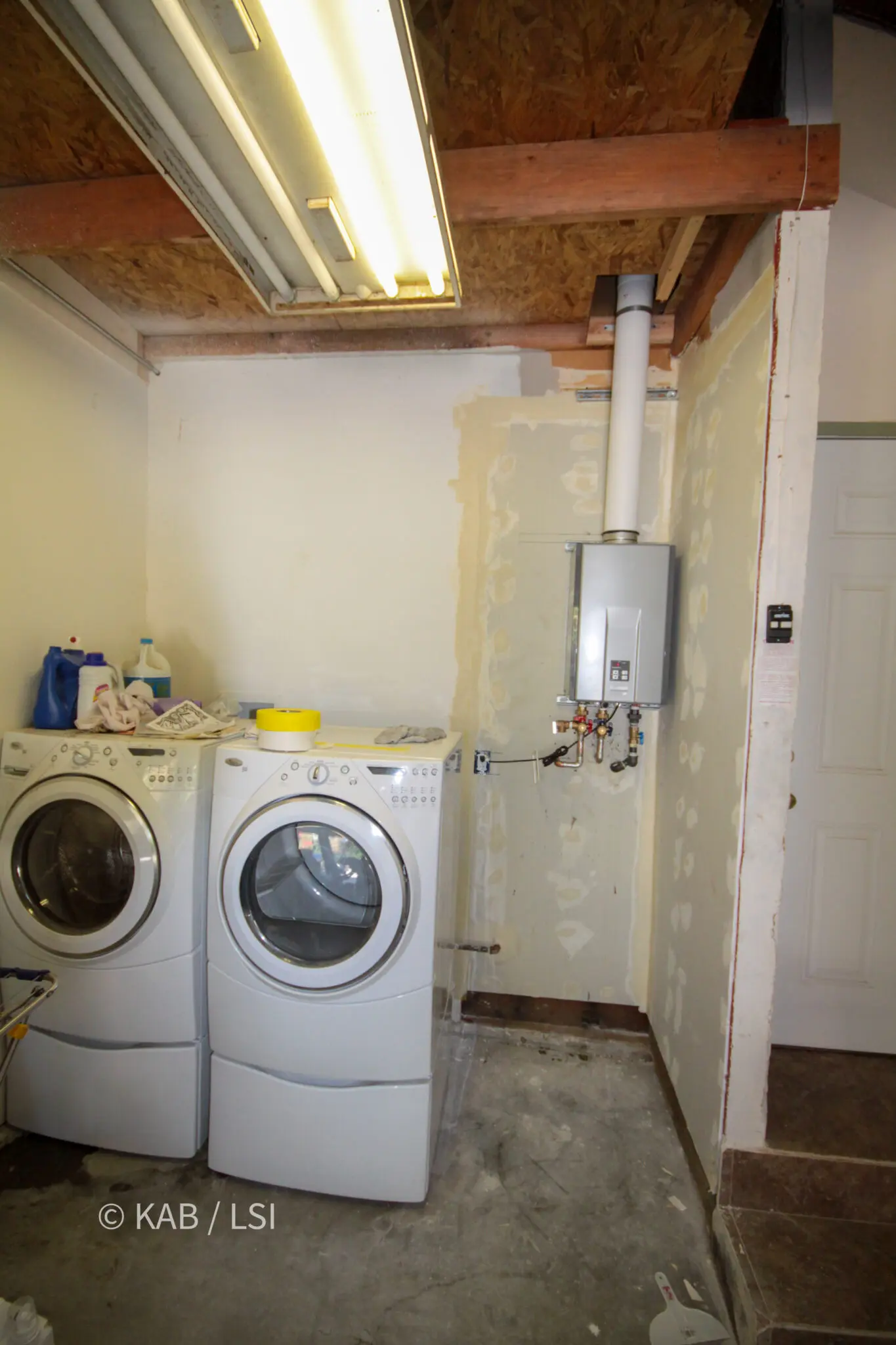
Stand back and this is the whole room. Washer, dryer, and the water heater — which is now the small grey box on the right. Everything else in this photograph is floor you did not have before.
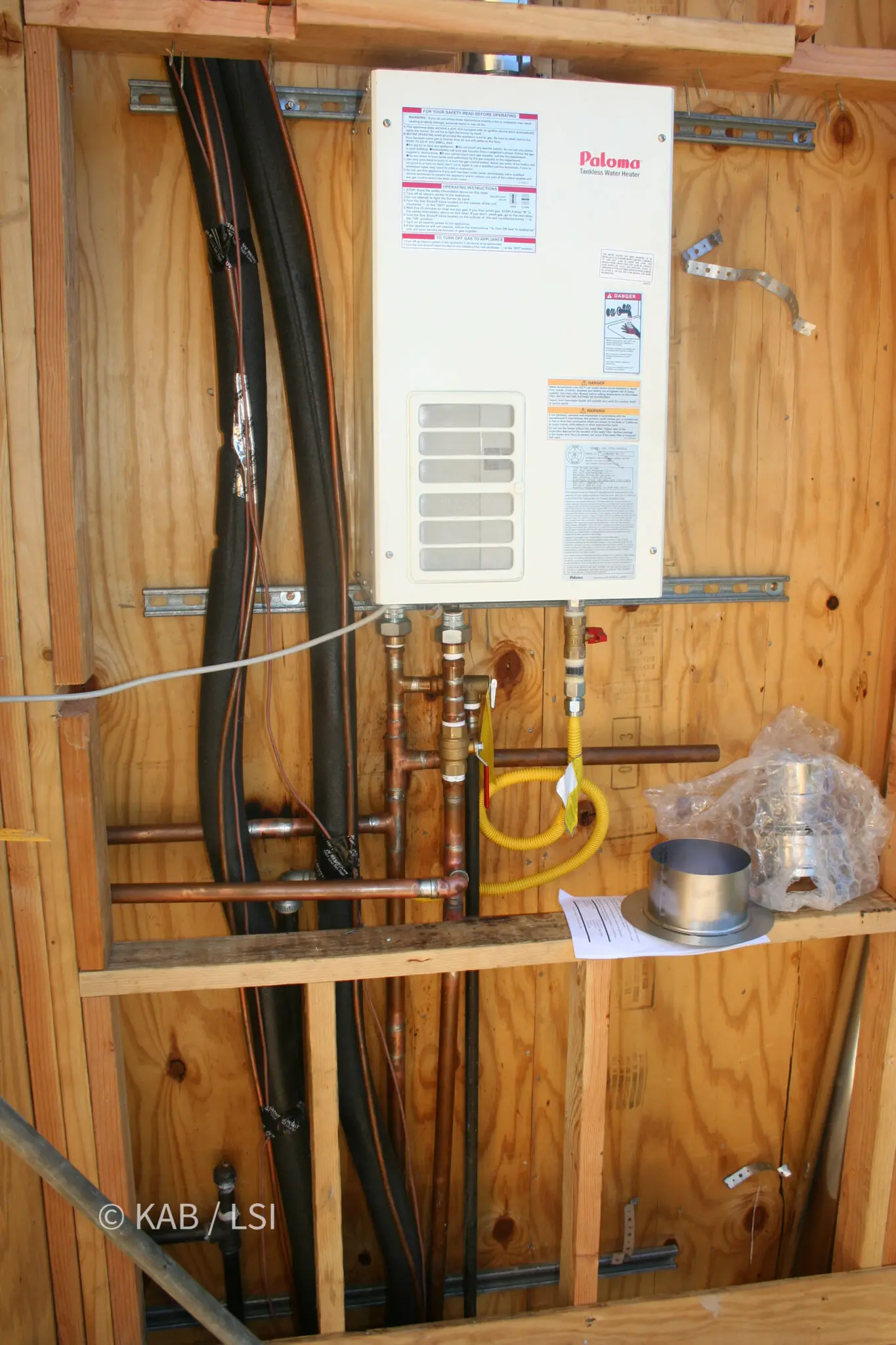
Everything in that closet ends up as a box on an outside wall. But these units fire hard when they run, and that is where people get caught. Hang a tankless heater off the small line that used to feed a tank and it gets blamed for what is actually a supply problem — lukewarm water, cycling, a unit that never quite delivers. The installation below shares an inch-and-a-half gas line with a commercial range and a gas fireplace. Before anything else, the question is what else is on that line.
Photographed before the wall was closed. Gas, water, venting and combustion air are all legible here and will never be seen again.
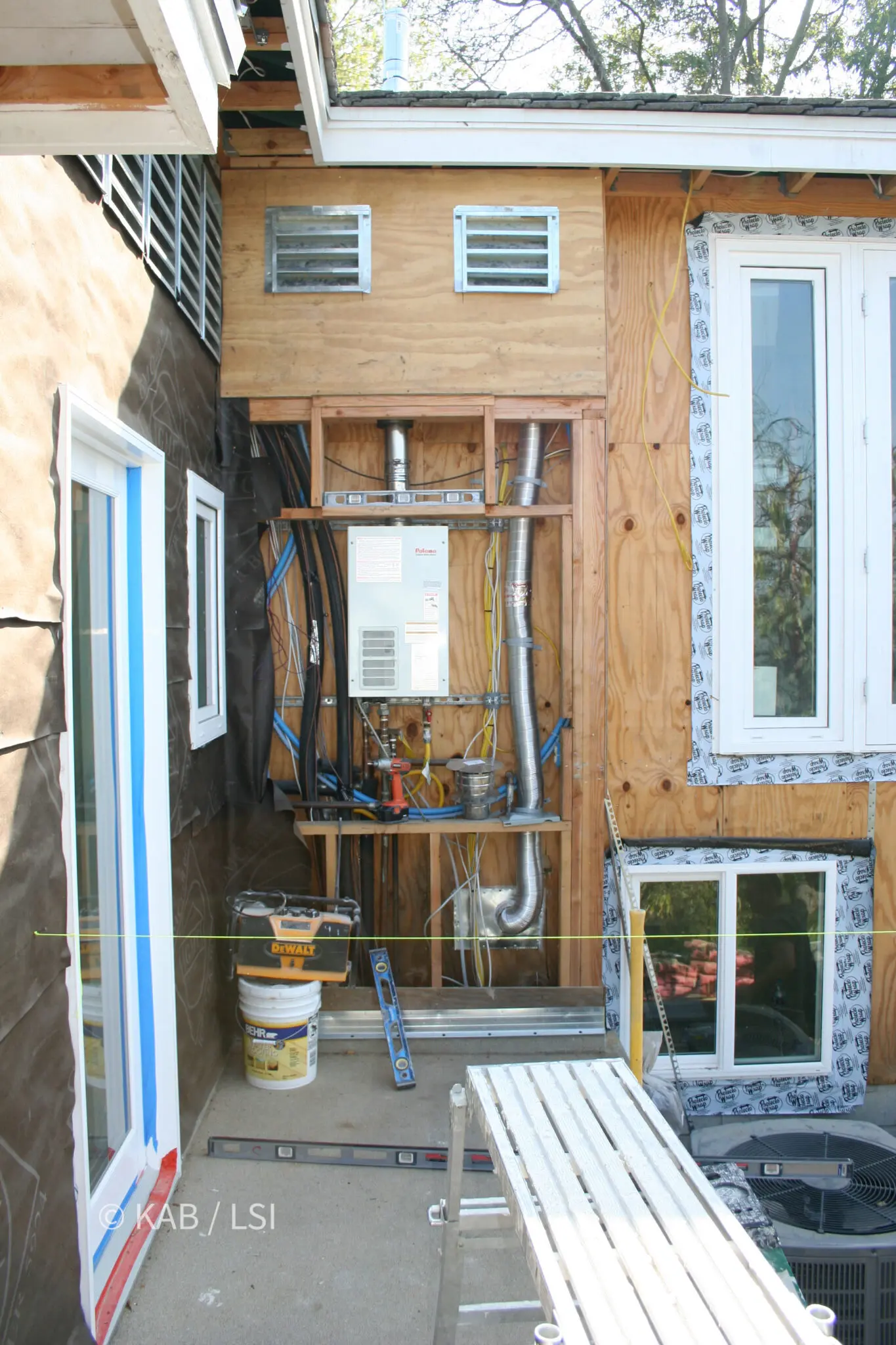
Heater, panel and service planned as one wall rather than three separate afterthoughts.
The second thing to look for is the valve set underneath. Hard water scales the heat exchanger and every one of these needs descaling periodically. With isolation valves and flush ports it is an hour with a small pump. Without them it is a plumbing call and somebody cuts pipe. Whether they are there tells you what kind of installer you had.
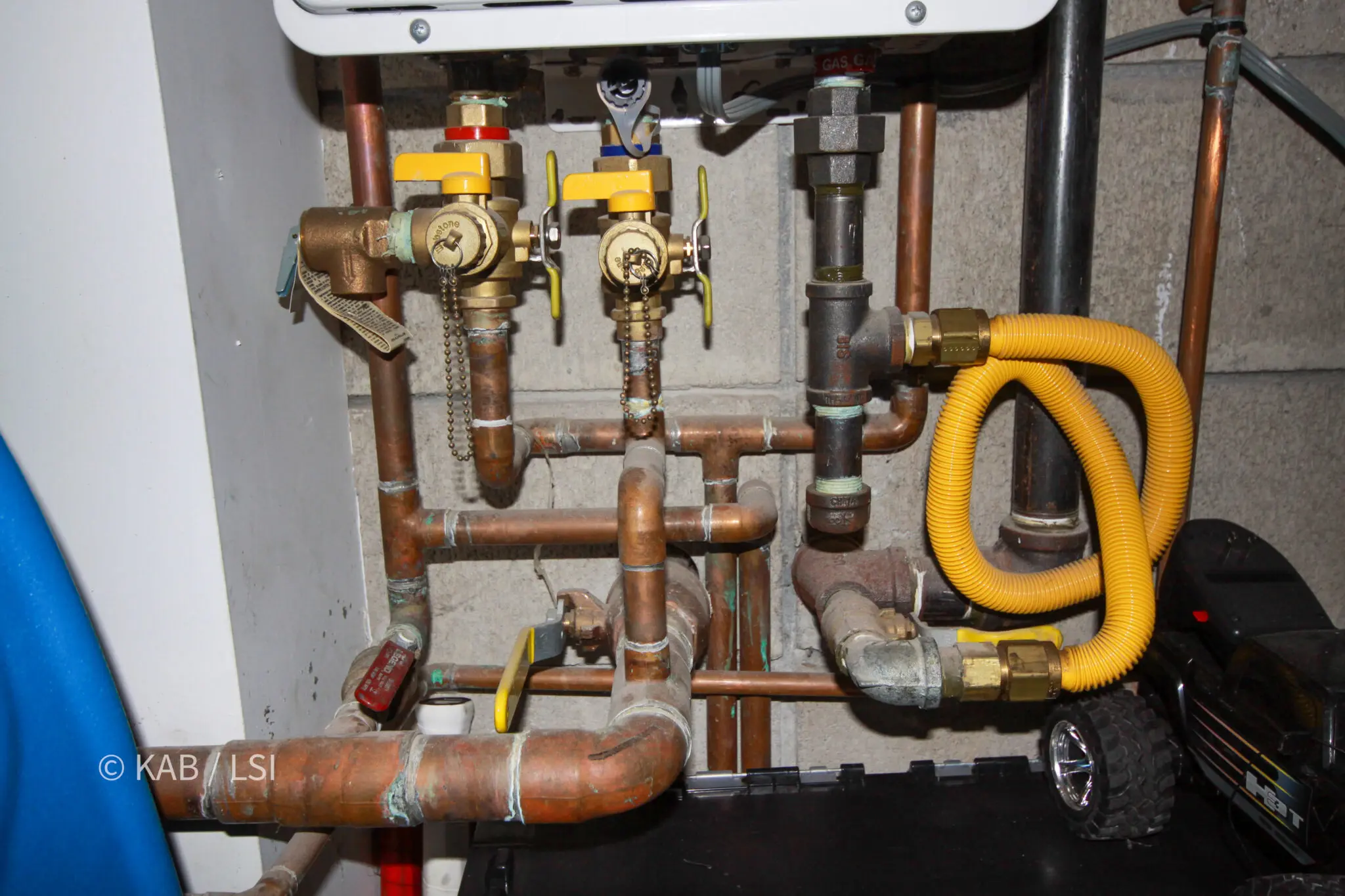
Isolation valves with flush ports. This is the difference between an hour of maintenance and a service call.
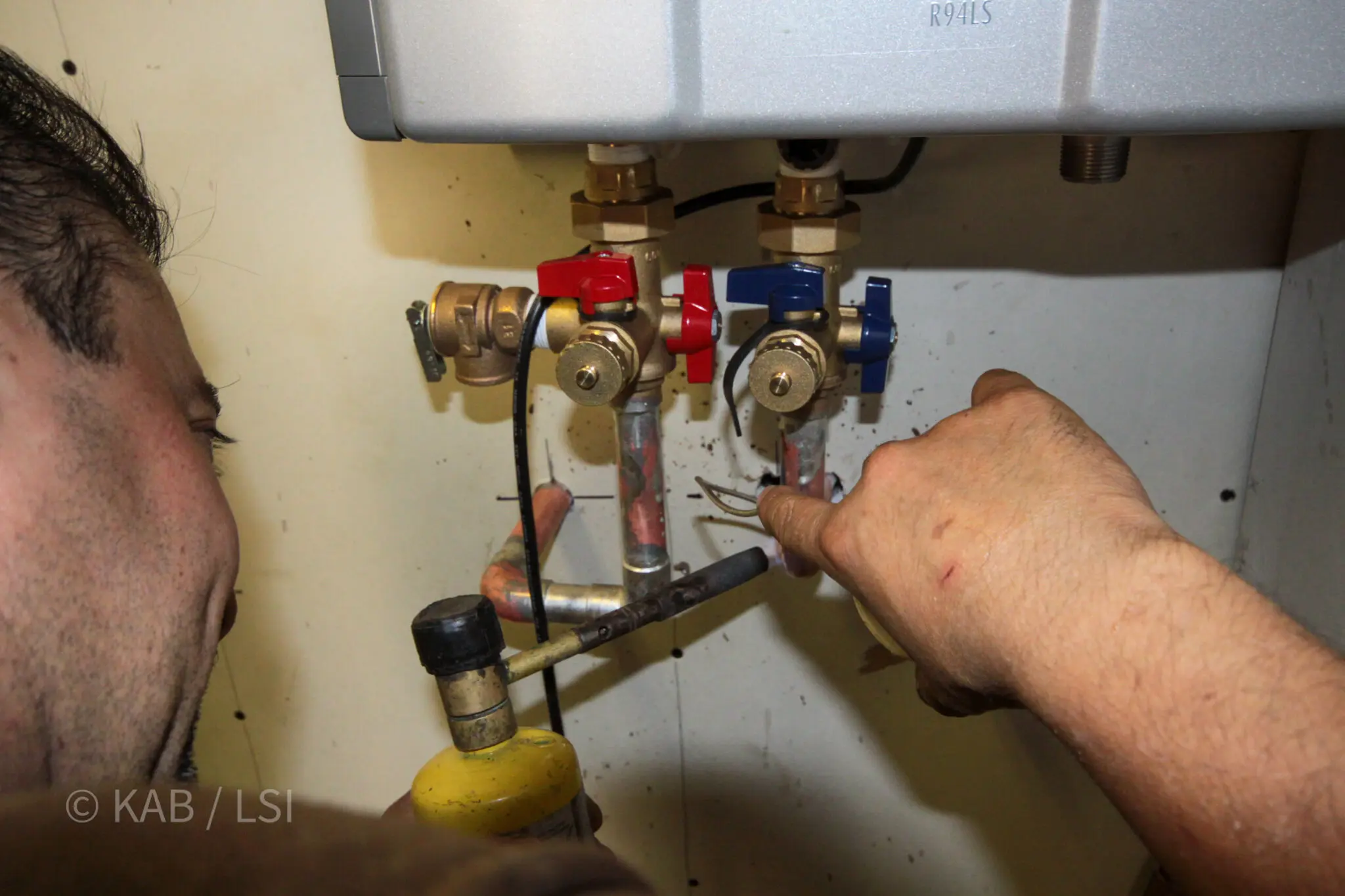
A tankless install is how we watch someone solder, plan a run, and clean up after themselves before trusting them with anything larger.
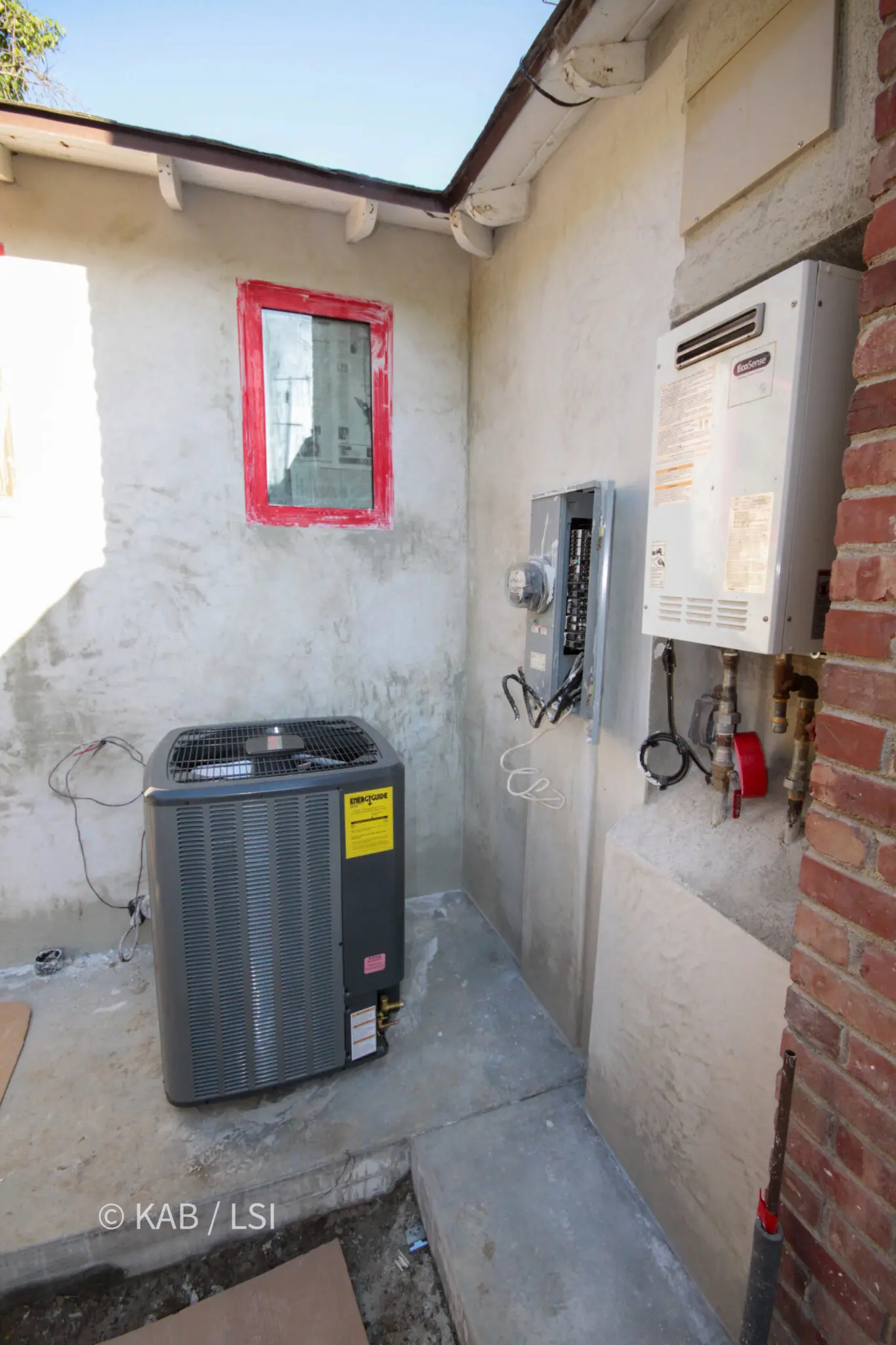
And here is the closet, afterward. Heater, electrical service and condenser gathered into one tidy corner outside the house.
All of that still leaves the complaint people actually voice. The kitchen sits sixty feet from the mechanical room. You turn the tap and stand there while gallons of cold water go down the drain waiting for hot to arrive. No heater anywhere in the house fixes distance.
You know the version of this that actually stings. It is two in the morning, you want the dishwasher running before bed, and it needs hot water to start its cycle properly. So you stand at the kitchen sink with the tap open for a minute and a half, waiting for hot to travel sixty feet, too tired to be standing anywhere at all. You will do that a few hundred times this year.
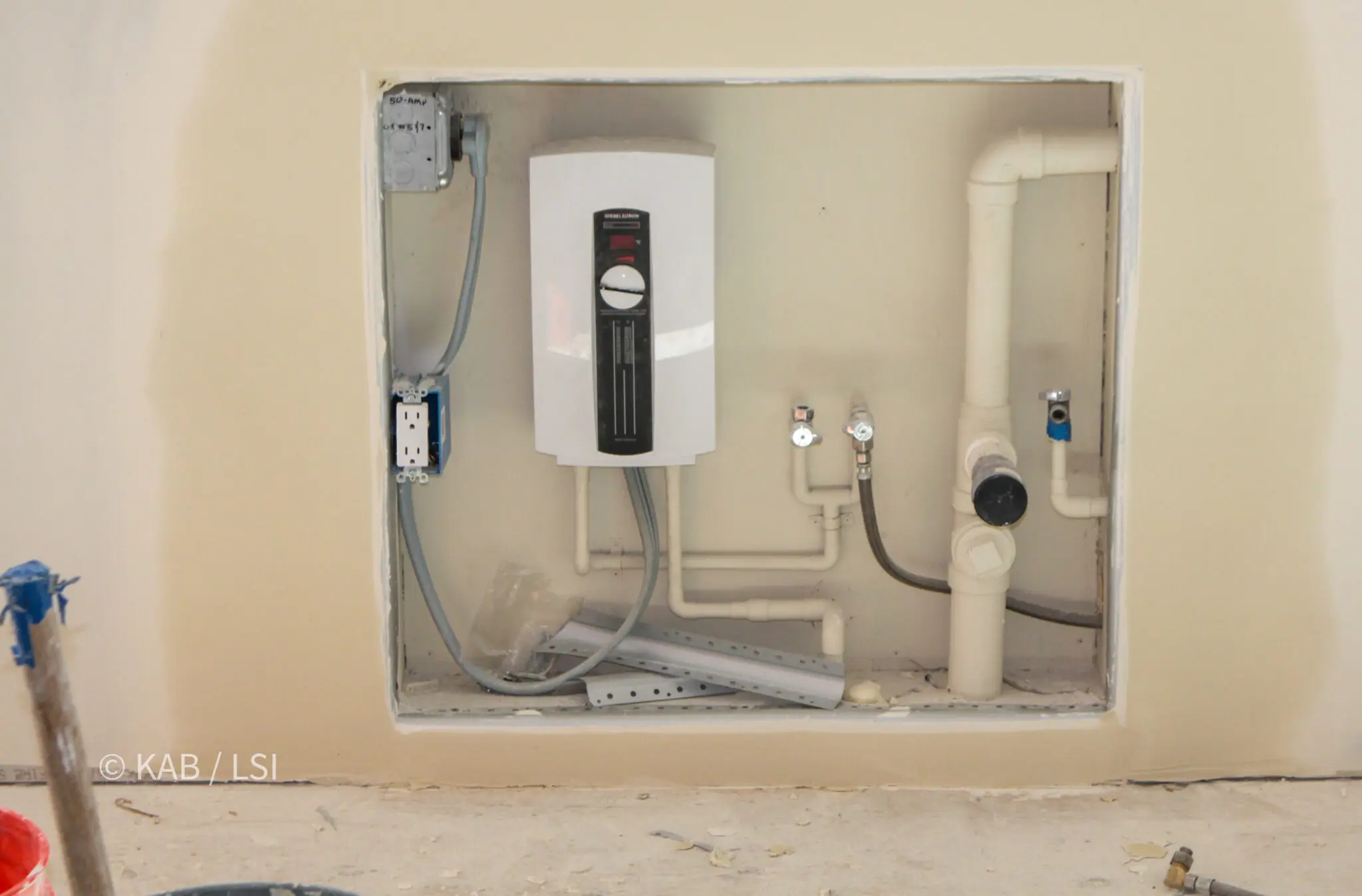
Tankless, at the fixture. No tank behind it, nothing stored, nothing being reheated at two in the afternoon for a tap nobody will touch until morning.
A point-of-use tankless heater under that sink ends it. There is no tank in this at all. It fires the moment you open the valve and heats the water on its way past — six feet from the faucet instead of sixty. Hot is hot, immediately, at the tap and at the dishwasher.
And you already have the instinct for why this is the right answer. Look at the single-cup coffee maker on your kitchen counter. There is a small tank inside it holding water hot so your cup is instant. Nearly everybody who owns one walks past it at noon and switches it off — not to save eleven cents, but because keeping water hot all afternoon and all night to serve one cup at six fifteen tomorrow morning is simply wrong. Wealthy people do it and broke people do it. That instinct is correct, and it is the entire argument against putting a tank anywhere in a house.
Now the part that scares people off, and the counsel that fixes it. Yes, these are electric and they draw hard — the one above is on a dedicated 50-amp, 240-volt circuit. If you are pulling that from a panel at the opposite corner of the house, the copper will cost more than the heater. So do not pull it from the opposite corner of the house.
My standing advice, and it is worth more than anything else on this page: any time you open a kitchen or a master suite, put a subpanel in that room while the walls are open. It is the cheapest it will ever be, and every decision after it becomes easy — this heater, an induction range, a heated floor, a charger in the garage below. On the job above, the subpanel was already in the kitchen. The run to the heater was about twenty feet. The unit was around seven hundred dollars. That is the whole story.
What that circuit is actually made of
A 240-volt circuit does not need a neutral, so what you are running is two hots and a ground — two blacks and a green. Whether that is #8 copper pulled through conduit or #6 in cable depends on the wiring method and on what your inspector wants to see. Both live on the truck for exactly that reason.
None of it is exotic. A hundred dollars of wire here, a hundred of conduit and fittings there, a two-pole breaker, and an afternoon. What makes it expensive is distance — which is the entire reason the subpanel decision matters more than which heater you pick.
Copper is sold by the pound and priced like the commodity it is. If you have watched metals at all in the last few years you already know which direction that number goes, and why the twenty-foot run and the hundred-foot run are not the same project.
If you pay any attention to metals, you already understand why the length is the number that matters. Copper is not getting cheaper. Twenty feet of it, decided once, while the wall is open.
That unit is roughly fifteen years old and still working. The ones built today are smaller, more efficient and better controlled. The same trick works at a laundry sink, or a guest bath at the far end of a wing. None of it replaces the house system. It removes the wait — and the water you send down the drain while you wait.
The Hillside Network
That was one card out of forty-two.
Roofs, water, ground, structures, and the trades I would call for each one. No names are published here — introductions happen in conversation.
See the full index →