Water · La Habra Heights
Whole-House Filtration and Softening
The water up here is extremely hard. Two to three thousand dollars of parts against ten or twelve for the version advertised on the AM dial.
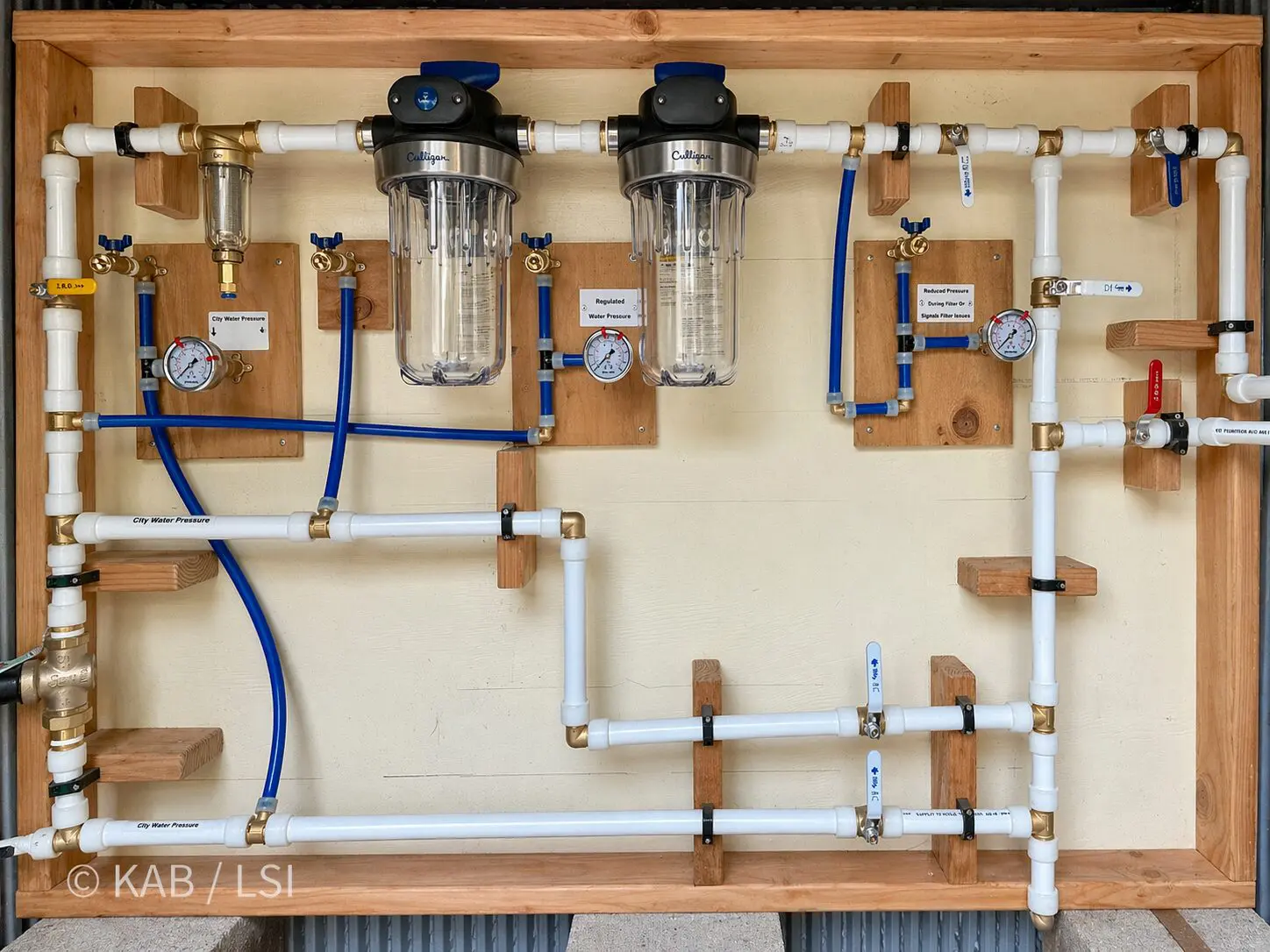
The system the radio sells for ten thousand
Hard water, high pressure,
and a board you can actually service.
Two to three thousand dollars of parts, against ten or twelve for the version advertised on the AM dial.
You have heard the advertisements on the AM dial on your way down the hill. Six to ten thousand dollars, sometimes more, for whole-house filtration. I built the board below as a test rig at my own house — partly to prove it out, partly so neighbors could stand in front of a real one instead of a brochure.
City water enters at the lower left through a one-inch regulator. From there: a mineral and debris trap, then a paper cartridge for the sand and calcium that arrives with our supply, then a one-micron carbon cartridge. Liquid-filled gauges before and after, so the drop across the filters tells you when they are loading up. The small spigots are for bleeding air during testing.
The bypass is the part that matters. You can take the filters out of service, change cartridges, or repair the board entirely, and the house keeps running on reduced-pressure water the whole time. The softener sits just off the right edge of the frame and isolates the same way, so adding potassium chloride does not mean shutting anything down.
There is one more position on that board worth understanding. Two valves will send full city pressure — 150, 160 psi — straight past everything and out to the house and the yard. If a fire is coming down the hill and you want every spigot on the property throwing as hard as it can, you do not want to be learning your plumbing at that moment. You want two valves you already know.
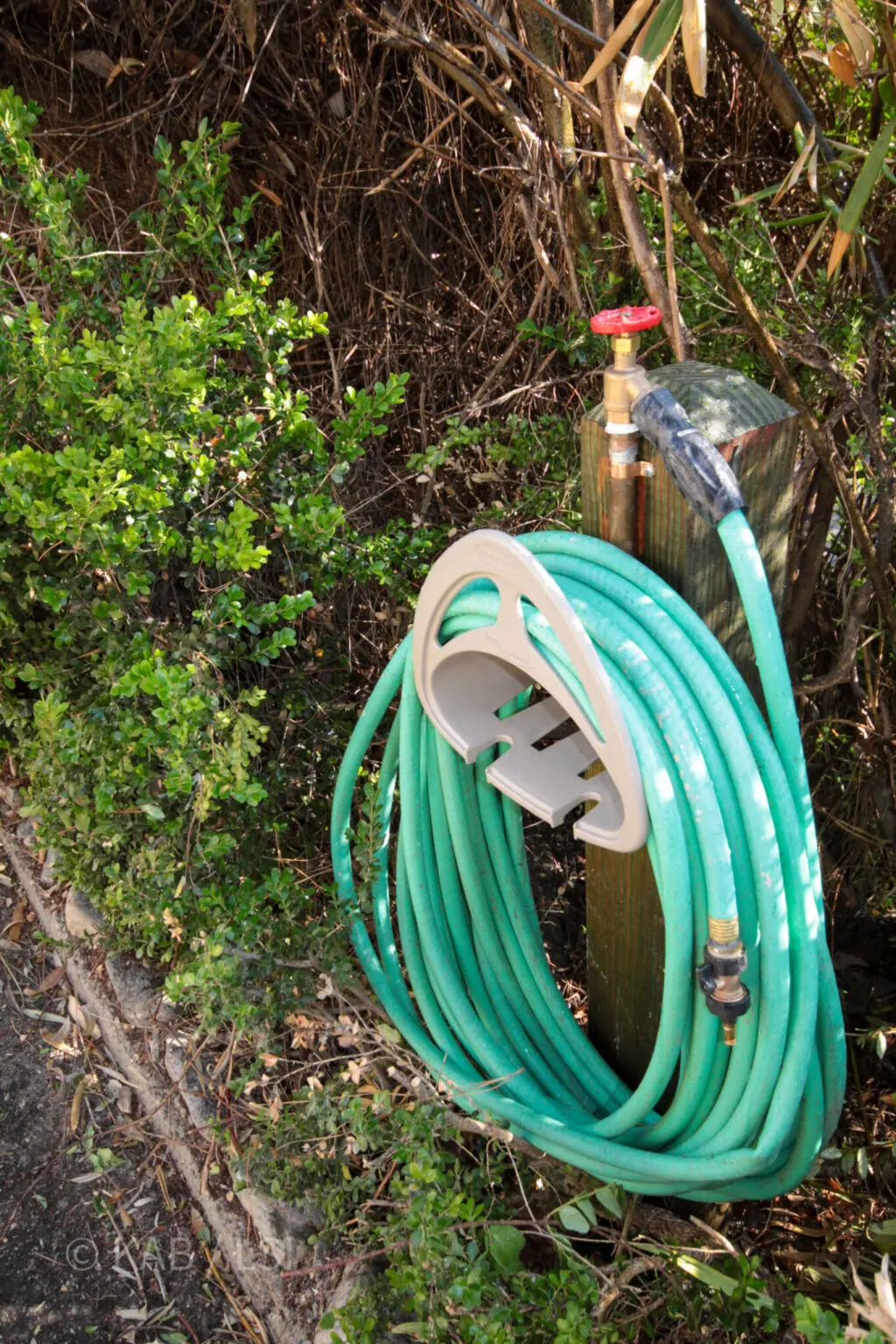
A station, not a spigot. Hose bibs placed where you would actually need them, on the pressure you actually have.
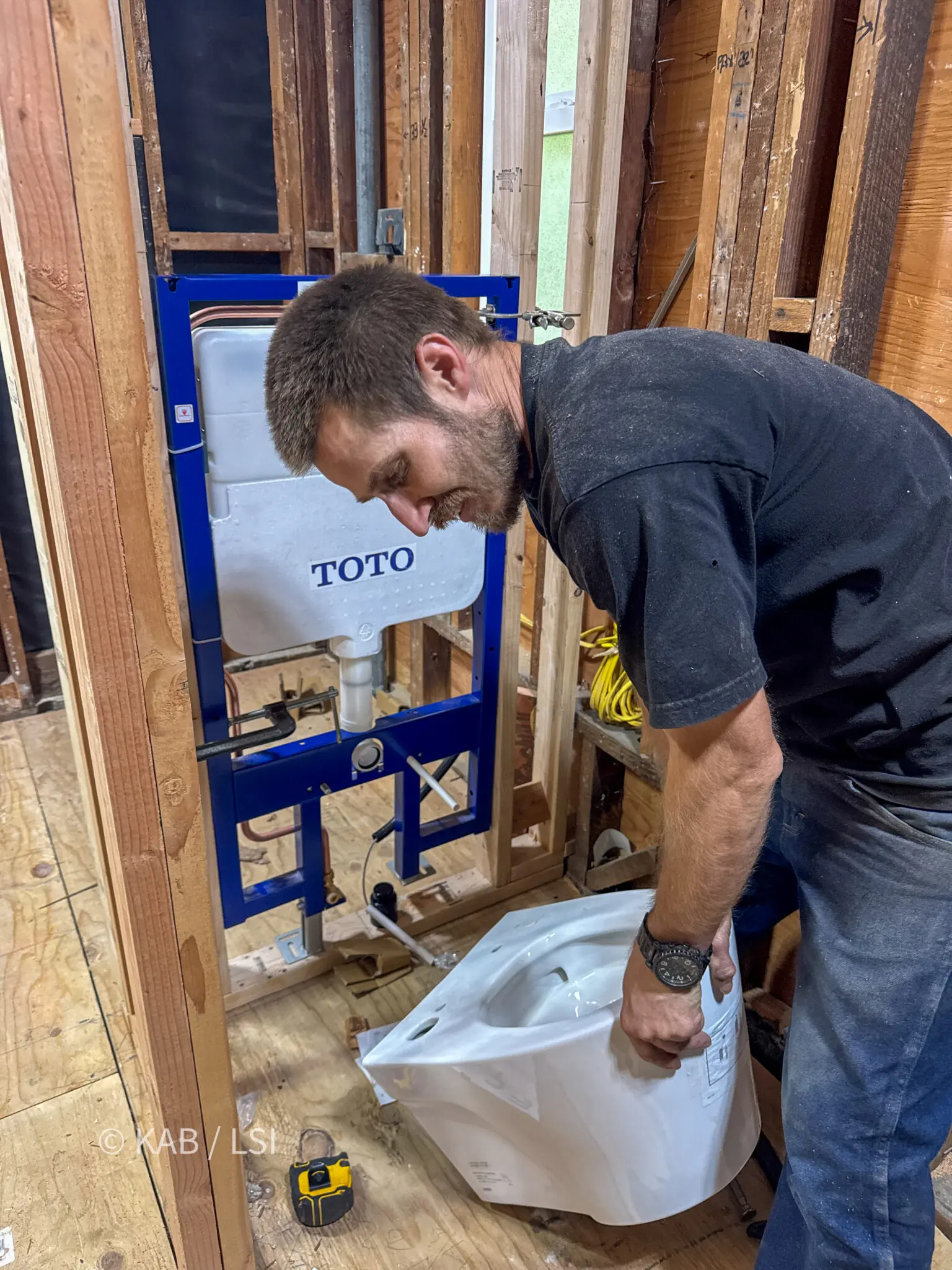
And while a wall is open, this is the hour to decide anything that has to live inside it. Afterward it is demolition.
Ours went together in one-inch PEX with brass fittings, one-inch quarter-turn valves throughout. It can be built in copper instead — press fittings rather than solder, which means no torch anywhere near a plastic filter body — and in three-quarter inch if that is the meter you have. Bigger canisters exist if your household or your water demands them. Two to three thousand dollars of parts and a tradesman’s time, against ten or twelve for the version on the radio.
One local fact worth knowing before you plan any of this: the water up here is extremely hard. Without softening somewhere in the system, you will be pulling the strainers out of your faucets and the screens out of your laundry hoses every month, and wondering why the kitchen tap has gone to a dribble.
The Hillside Network
That was one card out of forty-two.
Roofs, water, ground, structures, and the trades I would call for each one. No names are published here — introductions happen in conversation.
See the full index →