Plumbing · La Habra Heights
Cast Iron Drains and Sewer Lines
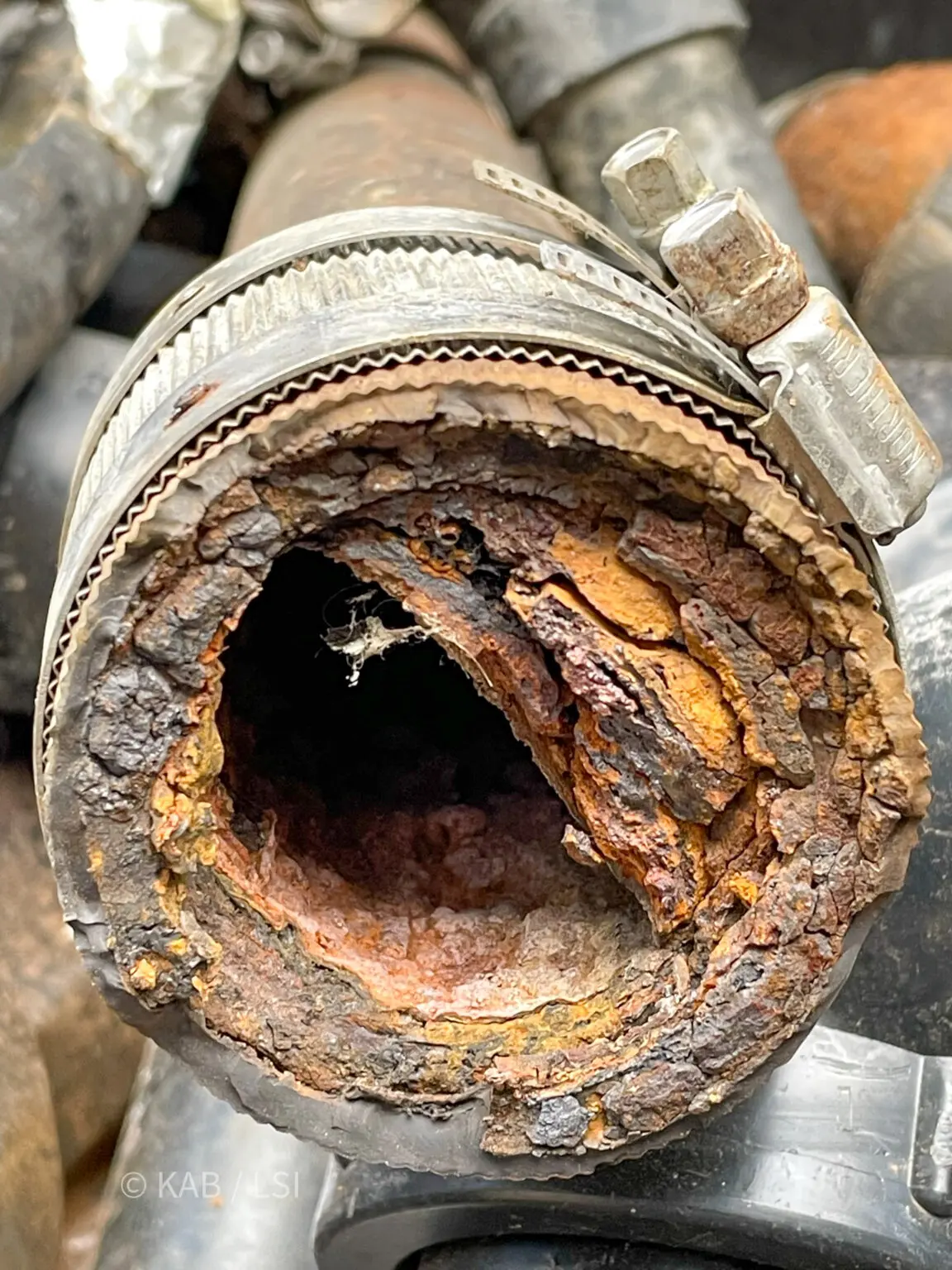
Houses up here that are fifty to a hundred years old were drained in cast iron. It rusts from the inside out, and it closes.
The half of the plumbing you never see
Cast iron does not
wear out gracefully.
It closes.
A two-inch drain with less than an inch left open inside it. That is why you cannot have ten people over for Thanksgiving.
Houses up here that are fifty to a hundred years old were drained in cast iron, because that is what was done in the forties, fifties and sixties. The hubs were poured with molten lead — a material nobody would choose to put in a house today. And cast iron rusts from the inside out.
Run your hand down the inside of an old four-inch line and it can come out bleeding. Decades of corrosion leave the bore etched and prickly, and prickly catches things. It catches paper. It catches whatever leaves the disposal. It catches what the dishwasher flushes out. Then it catches the next thing, on top of the last thing.
This is the actual reason you cannot host a holiday without something going wrong — six or seven people in the house, and by the afternoon somebody is on the phone to a drain company. It is not bad luck and it is not your guests. It is a pipe that has quietly closed to a third of its diameter over forty years.
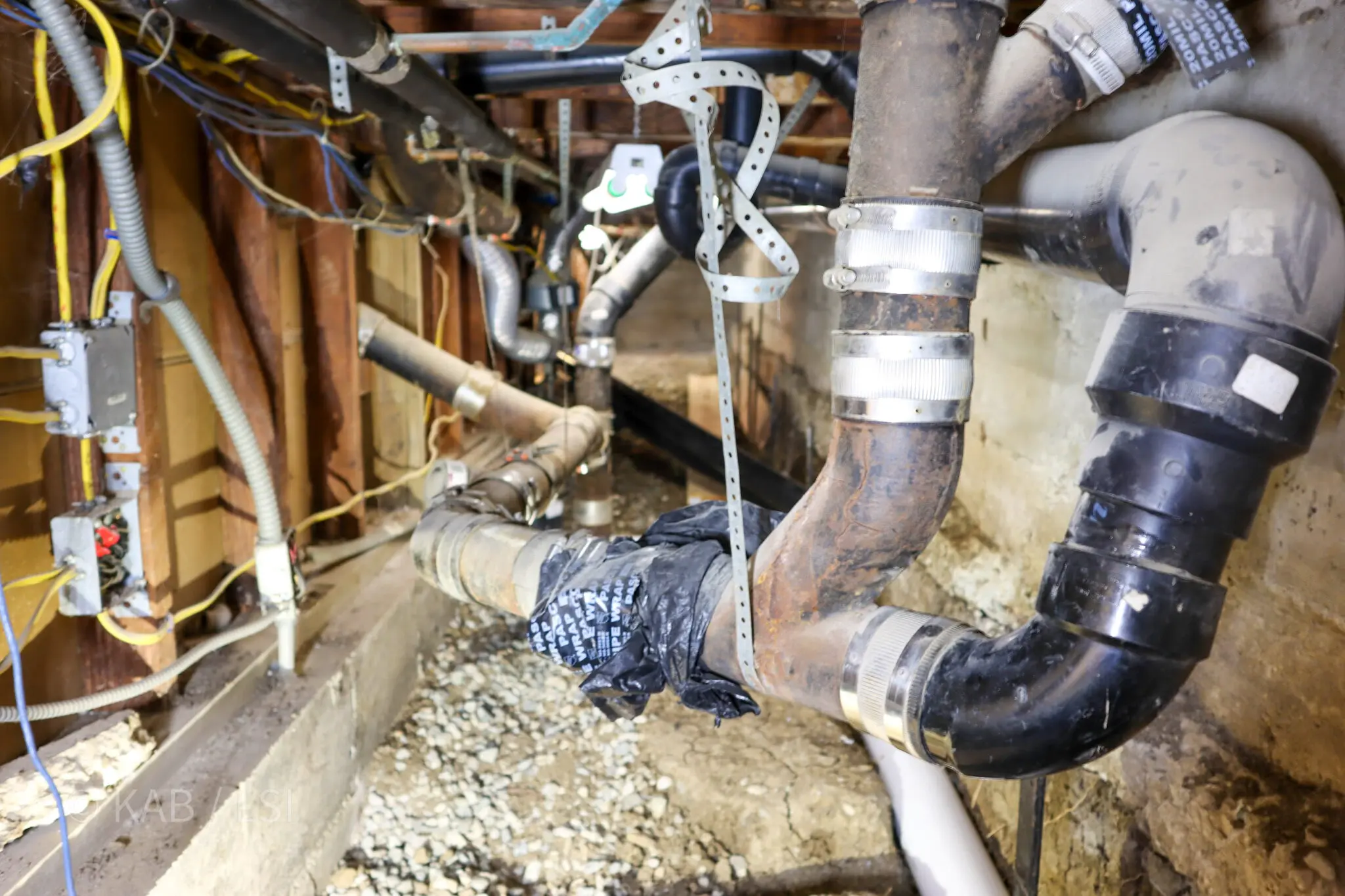
Somebody has been down here. Plastic spliced into iron, band clamps where the couplings failed, tape wrapped around what would not stop weeping. Every one of those repairs was reasonable on the day it was made.
That crawlspace was reached through an access door in the kitchen. The people who open that door are not always you. An appraiser doing a refinance or a second trust deed opens it. A buyer’s inspector opens it, takes exactly this photograph, and puts it in a report he is being paid six hundred to a thousand dollars to justify. What happens next is a renegotiation, and it can be expensive — how expensive depends entirely on the house, the buyer and what else is in the report. But it is never a small conversation, and it always happens at the worst possible moment.
Here is the part that ought to be encouraging. If the mess is only this much, it is a couple of days of work. A tradesman who knows drains can take all of it out and replace it with modern plastic, properly sloped and properly supported. And there is a useful test at the end: if it looks clean when he is done — simple, orderly, nothing improvised — he almost certainly did it right. Good drain work is legible. What is in that photograph is not.
The timing is the whole thing. Do this while the water is still going down. When a line is actually backed up on a Sunday, you are negotiating from panic, and the number you are handed reflects that — ten or twelve thousand, financing available, decide now. The same work, looked at on an ordinary Tuesday with a clear head, is a tradesman on a day rate and no salesman anywhere in it.
The Hillside Network
That was one card out of forty-two.
Roofs, water, ground, structures, and the trades I would call for each one. No names are published here — introductions happen in conversation.
See the full index →