Security & Fire · La Habra Heights
Safe Rooms and Valuables Storage
A small reinforced concrete vault built into ground you already own. Solid-filled block, steel through every cell, a poured lid — and from outside, a step you walk on without noticing.
The room nobody knows about
A concrete box
that does not burn,
and cannot be
opened quickly.
Solid-filled block, steel through every cell, a poured lid — and from the outside, a step you walk on without noticing.
Every household has a small pile of things it could not replace. The deed. Birth certificates and passports. A little cash. Photographs nobody scanned. Most of that pile currently lives in a drawer, a closet shelf, or a fire safe sitting on a wood floor inside a house made of wood.
A safe room is one more layer around it. Not a bunker and not a panic room out of a film — a small reinforced concrete vault, built into ground you already own, that is unpleasant to break into and effectively impossible to burn.
See one built, start to finishOpen the sequence →
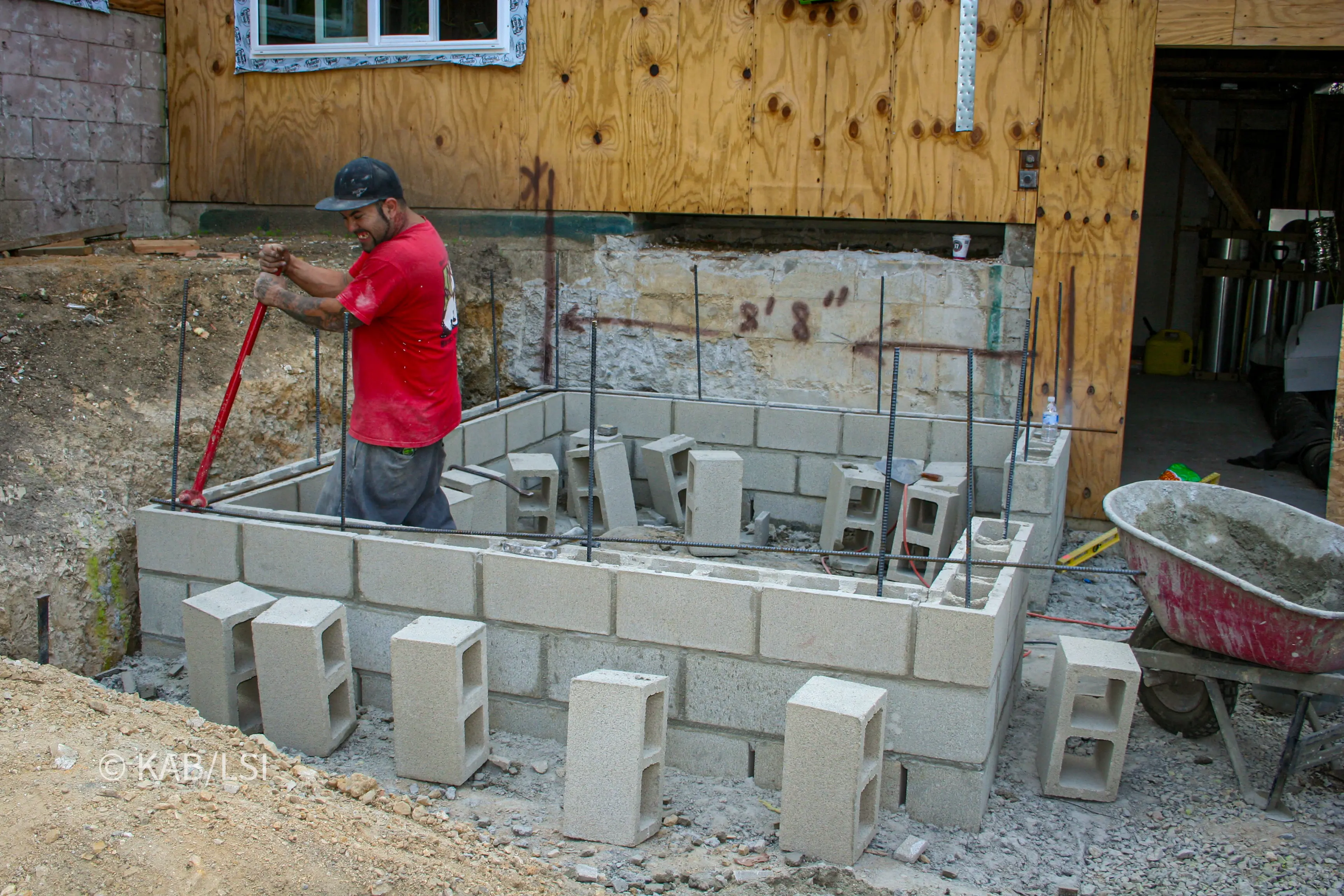
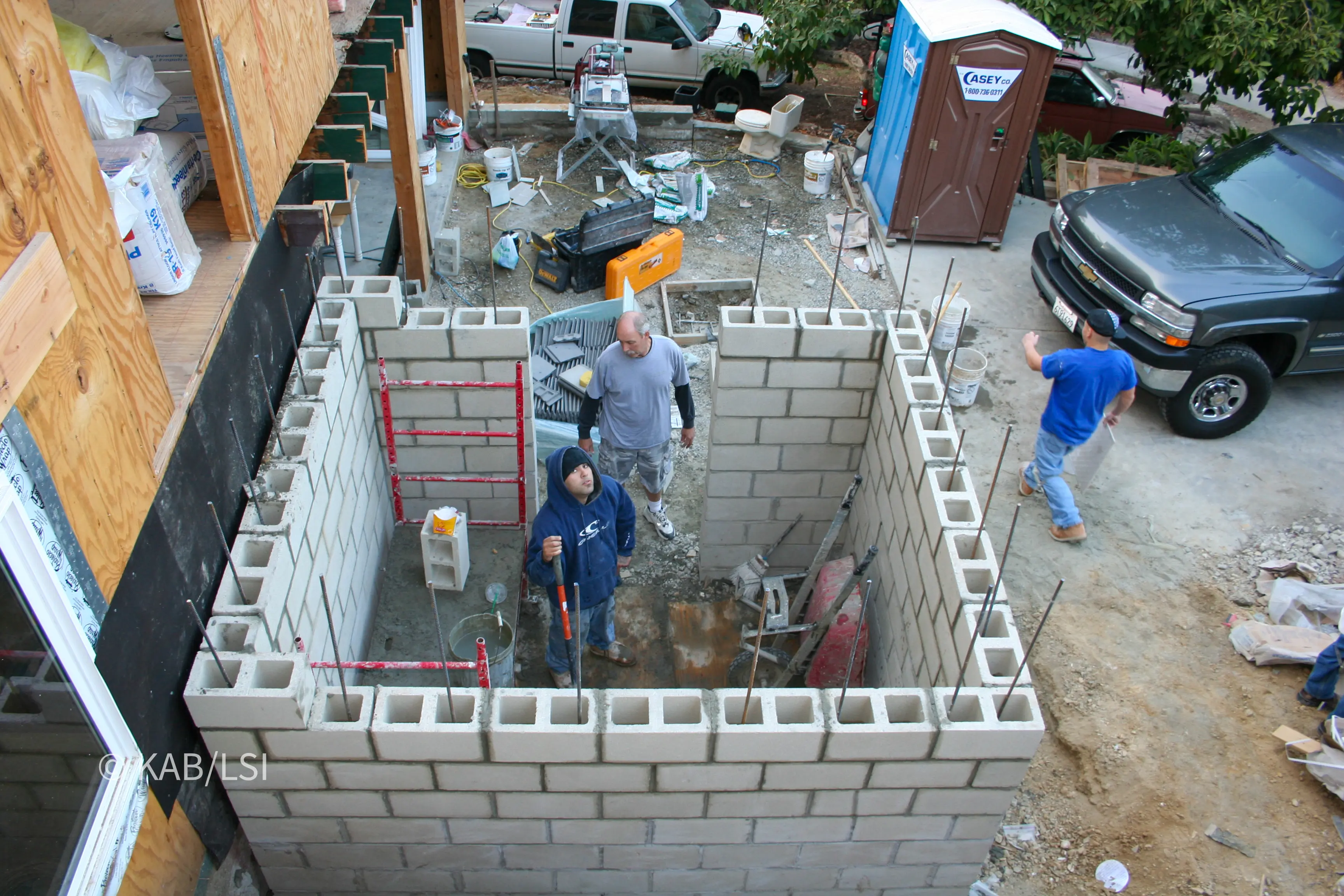
Below grade first. Every strong structure on a hillside starts under the ground.
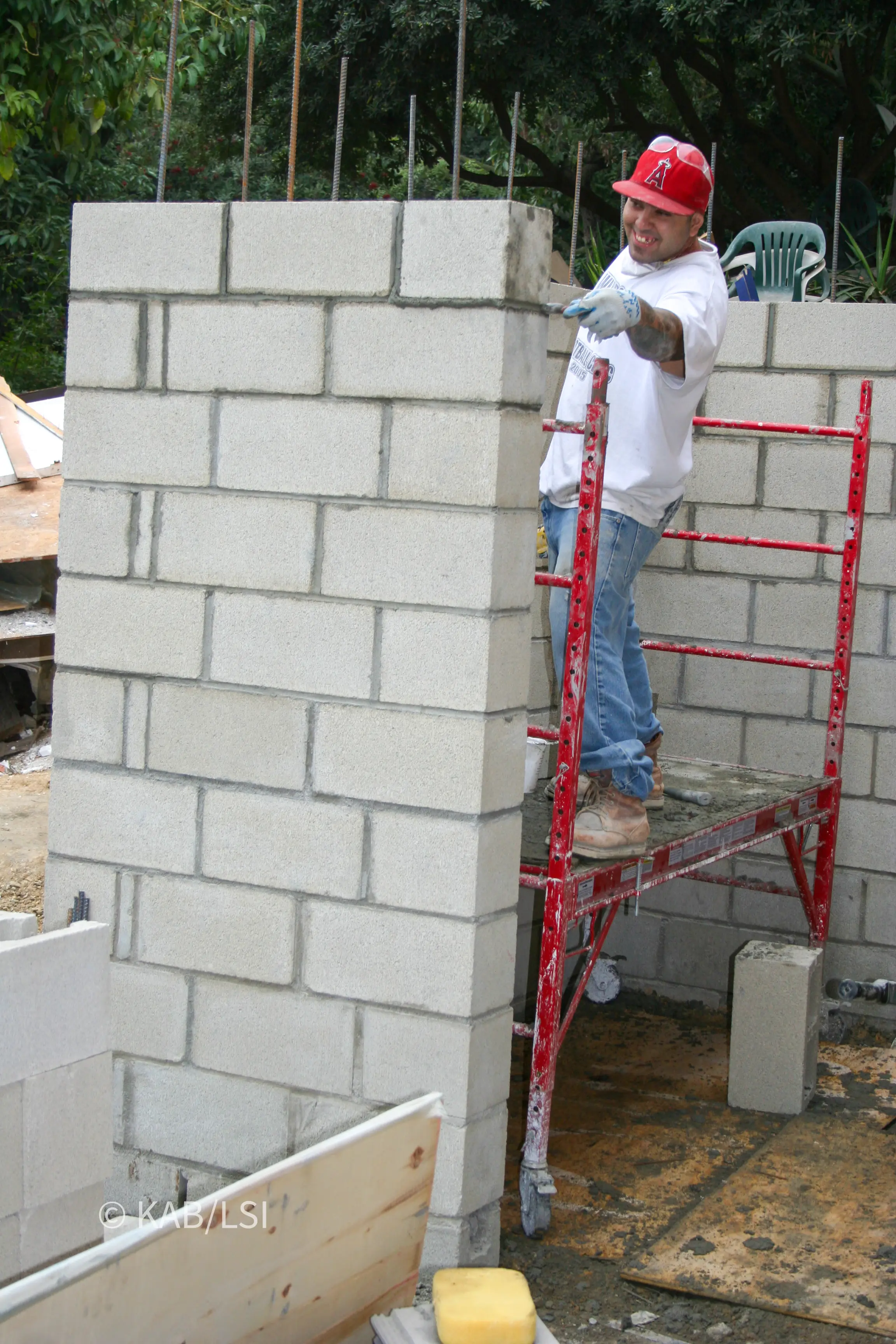
Block laid over vertical steel, every cell filled solid. There is no hollow anywhere in a wall like this.
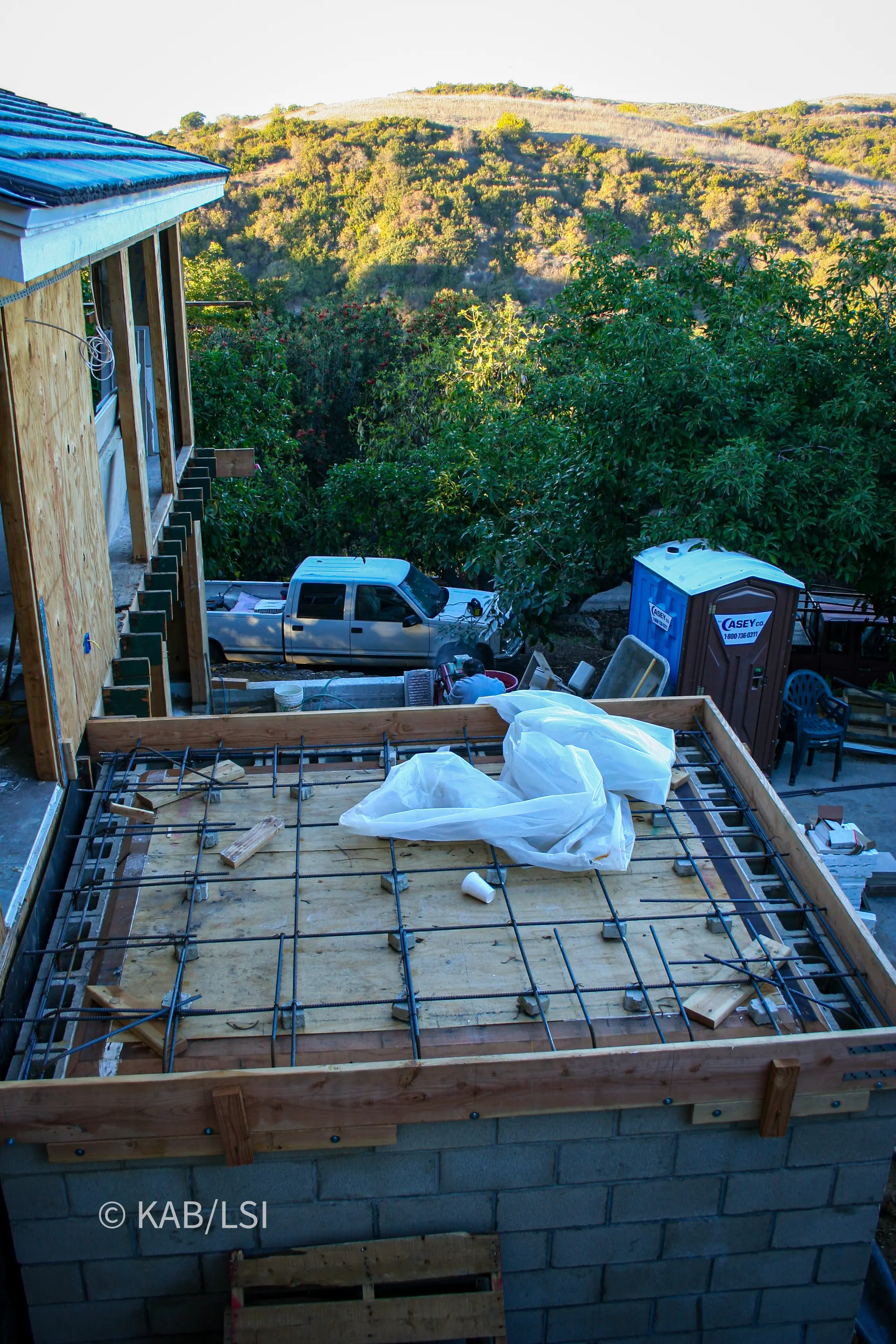
Steel for the lid. The roof is what turns four walls into a single object.
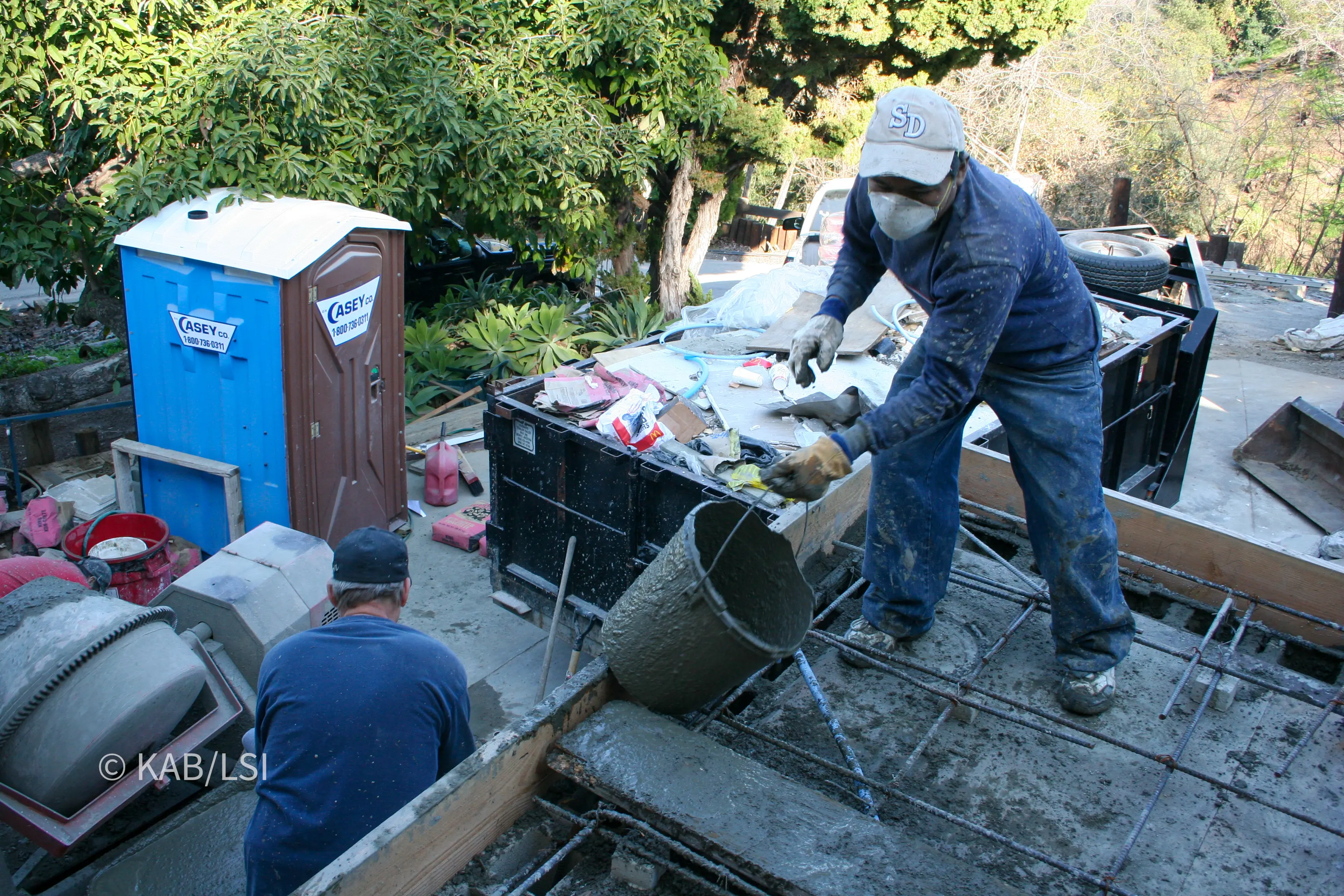
The pour. From here the walls and roof are one piece of reinforced concrete rather than parts assembled together.
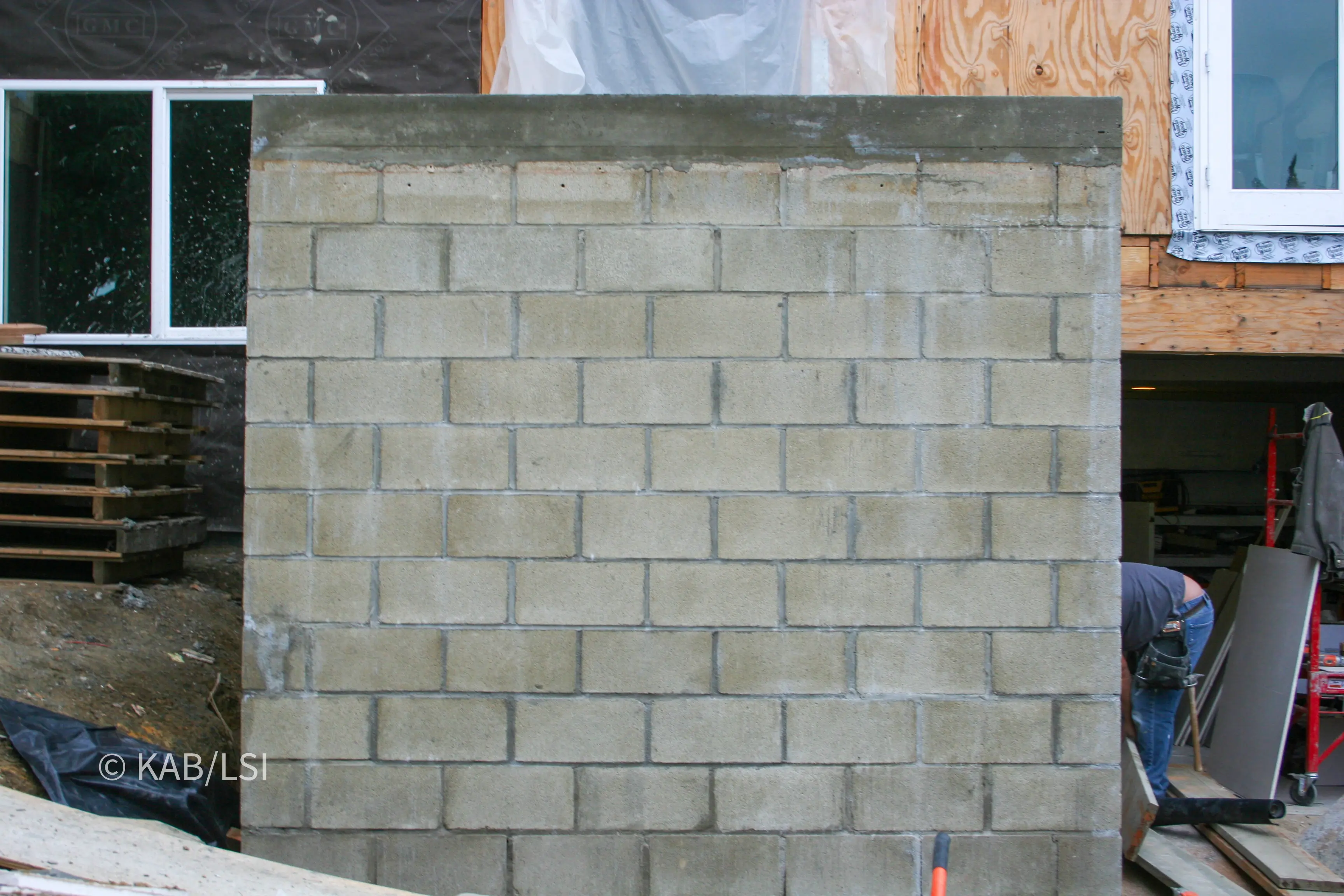
Forms stripped. Monolithic and cured. From here it is a question of what goes around it.
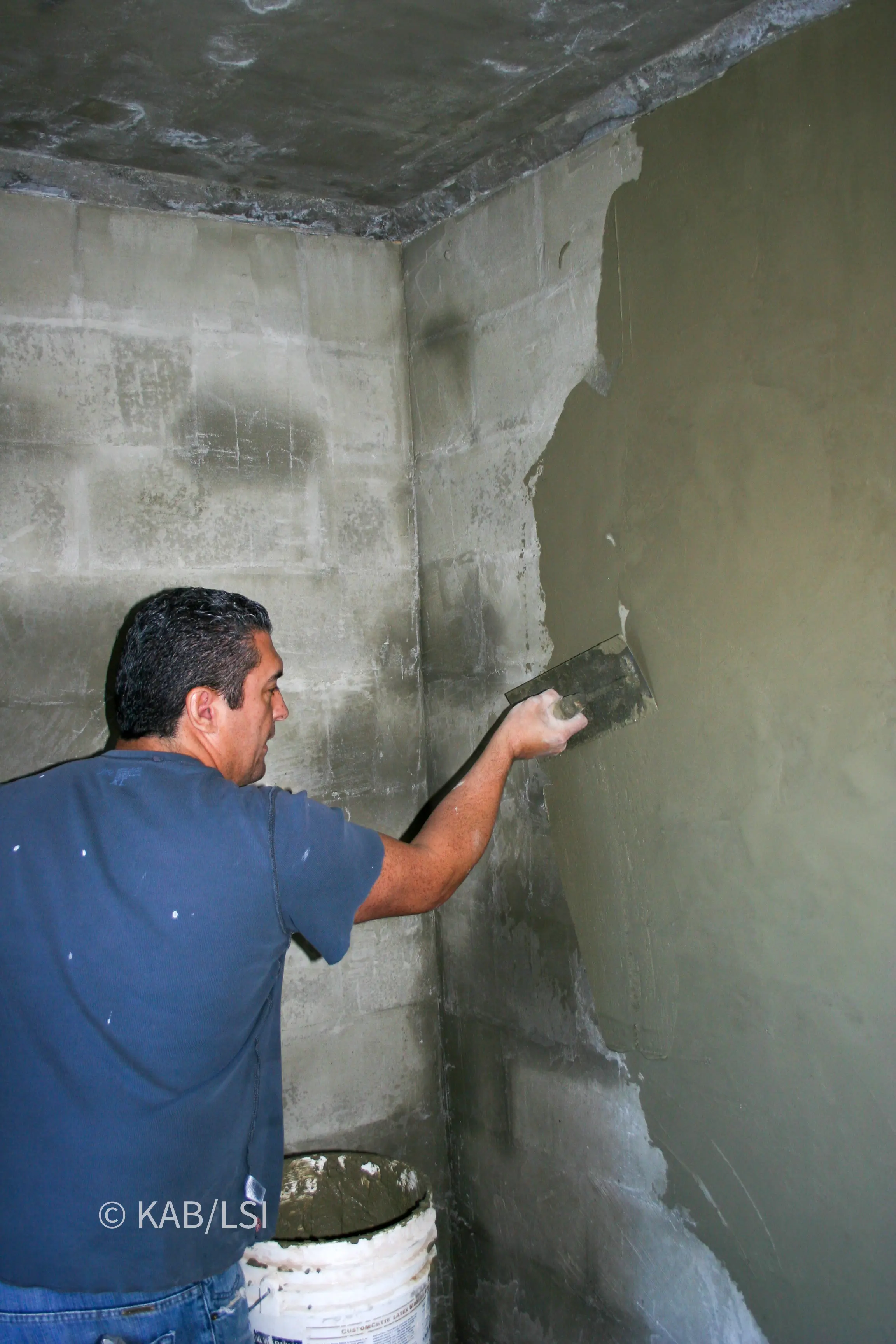
Plastered inside. It is a room, not a crawlspace — you can stand in it and find something in the dark.
The best one
is a step.
A vault that announces itself is a target and an eyesore. The good ones are simply structure doing a second job, and the family stops noticing them within a month.
On this house the entry splits — a door to the home office on the left, a broad staircase climbing to the front door on the right. The landing you stand on to ring the doorbell is the roof of the vault.
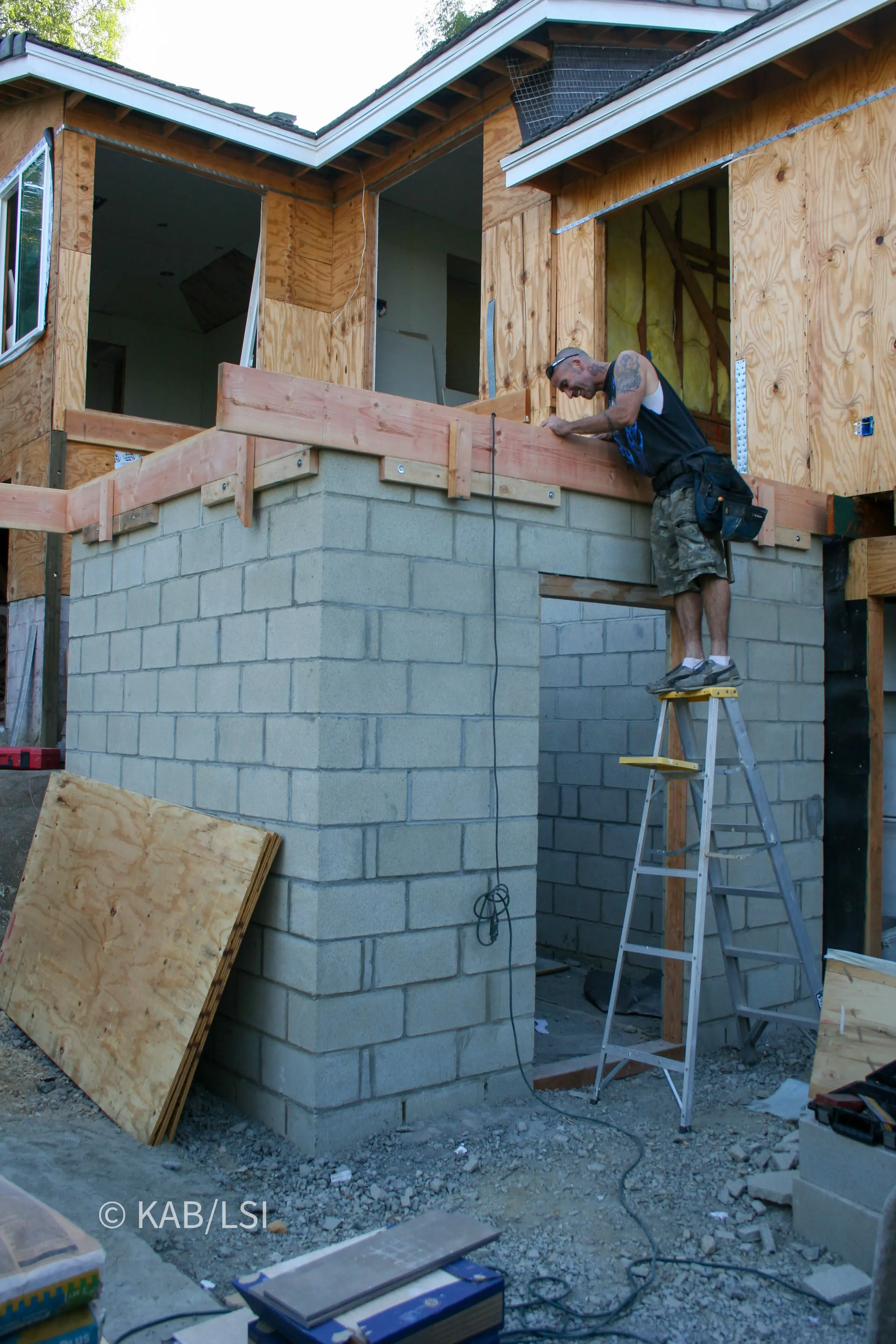
Disappearing under the entry. In a fortnight this is a landing and a planter.
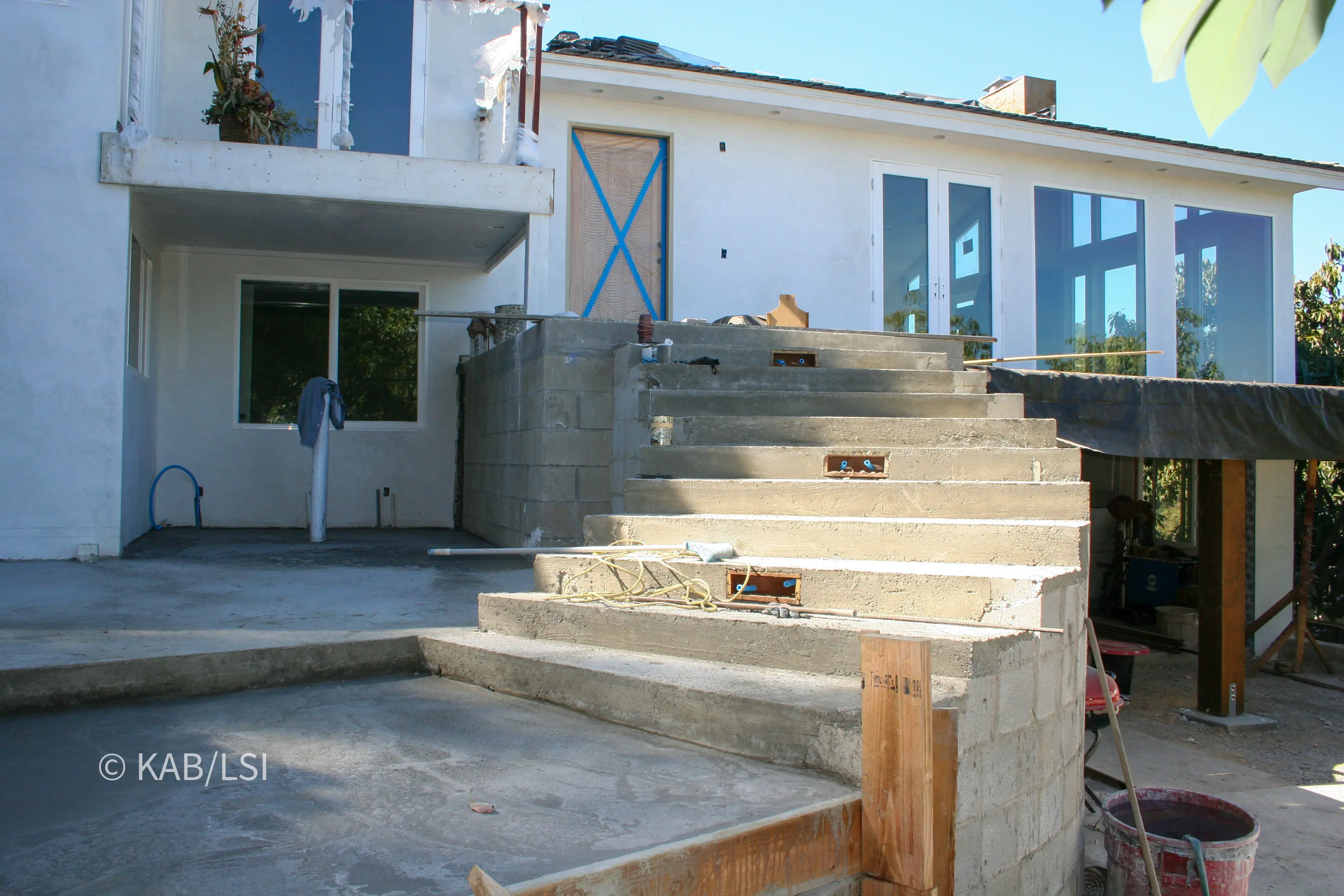
Office door left, stairs right, vault underneath. Nobody walking up has any reason to wonder.
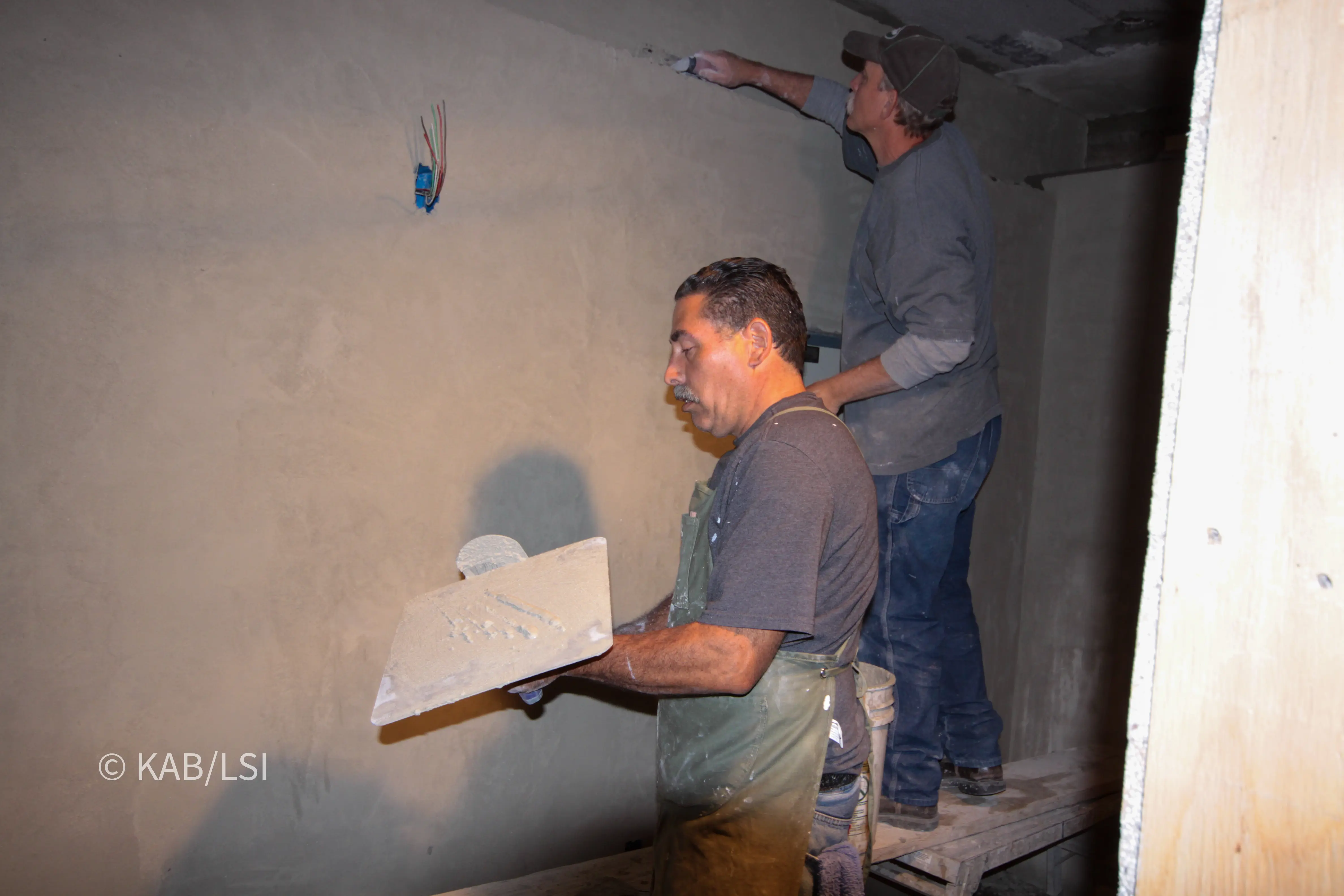
Finished inside with Italian plaster. There is no reason a room like this should feel like a cellar — and if it feels decent, it actually gets used.
Other forms work as well. A garden shed with a timber-look exterior and solid concrete underneath. A step in a retaining wall. A cellar with one wall considerably thicker than the others. Cement board reads as wood and does not burn — and nobody up here should be adding fuel to their own parcel.
Deeds, trust documents, birth certificates, passports, insurance papers. Cash, and whatever metal you keep. Photographs and the small irreplaceable things that would genuinely grieve you. Firearms — out of reach of grandchildren and out of sight of anyone who should not know they exist.
And the part people miss: put your fire safe inside the fire room. One layer is a purchase. Two layers is a strategy, and the second is what survives a structure fire hot enough to defeat the first.
There is no rule that says one. Small ones and large ones, in different places, holding different things, beats a single box everybody in the family knows about.
La Habra Heights has no police force of its own; deputies come from the county when called. The fire risk needs no introduction to anyone who has read a non-renewal letter.
Reinforced concrete below grade with earth on most sides is one of the very few places on a residential property genuinely indifferent to both. It does not care that the power is out, it does not care what the wind is doing, and it cannot be carried away.
If you are already opening ground for something else — a foundation, a retaining wall, an entry, a pad — that is the moment this costs the least it ever will. The excavation is the expensive part and you are paying for it anyway.
Worth a conversation before it is worth a quote. See the concrete work this comes out of →
The Hillside Network
That was one card out of forty-two.
Roofs, water, ground, structures, and the trades I would call for each one. No names are published here — introductions happen in conversation.
See the full index →