Septic · La Habra Heights
Septic Tank and Leach Field Replacement
Every house on this hill is on septic. Most owners could not point to their tank, do not know its age, and have never seen the lid.
No sewers up here
The tank rarely
fails first.
The line to it does.
A seventy-five-year-old design, a scrap of plywood over the opening, and nothing on the surface to tell you.
Every house on this hill is on septic. Most owners could not point to their tank, do not know its age, and have never seen the lid. That is normal, and it is also the reason a septic failure arrives as an emergency instead of a maintenance item.
The tank in these photographs was poured around 1950. The design has not changed much since — two chambers, a dividing wall, a lid you are not meant to stand on. What has changed is everything upstream of it: dishwashers, laundry, second bathrooms, more people, more water, all arriving at a vessel sized for how a household used water when Truman was president.
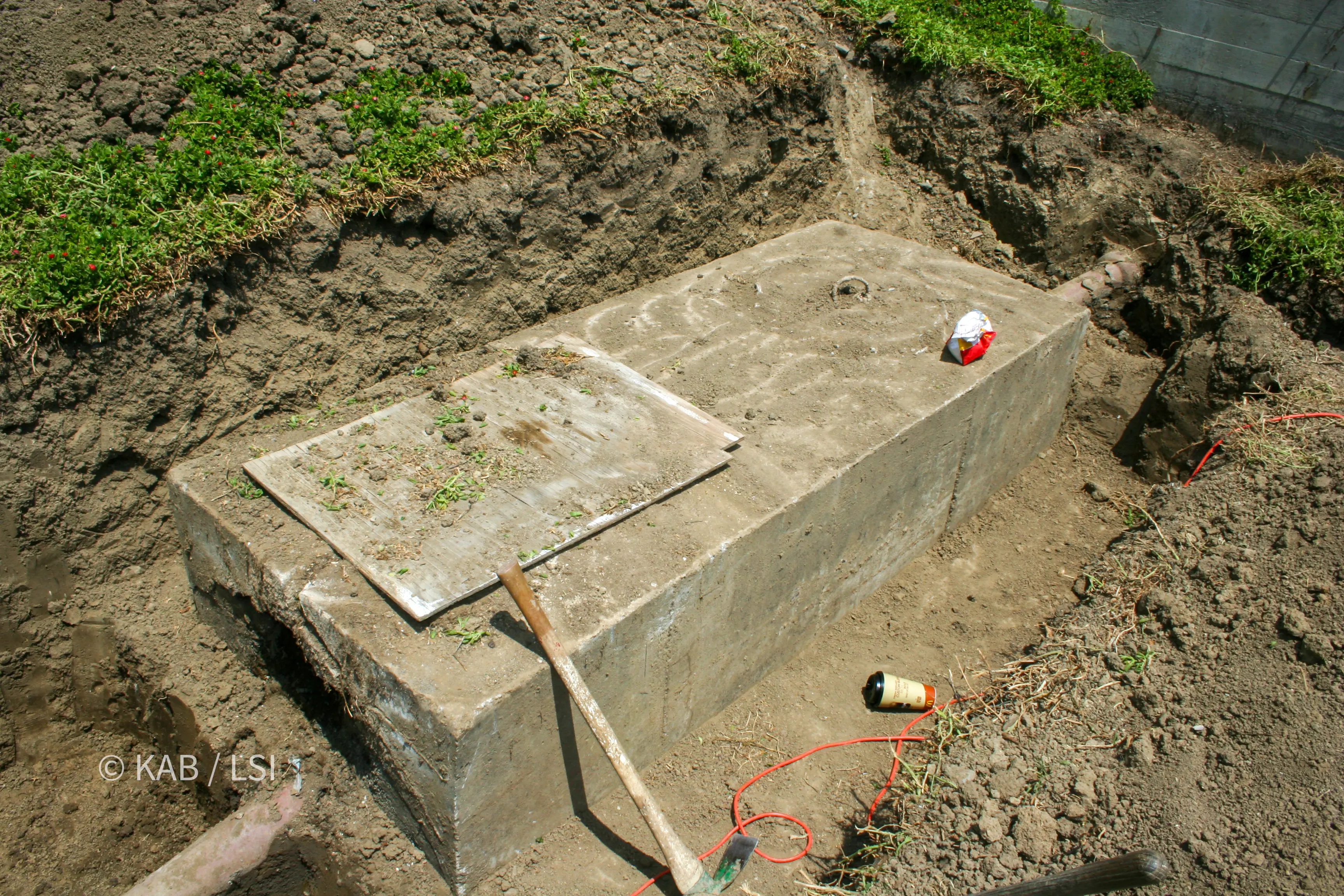
The tank rarely fails first. The line running to it does — short interlocking clay sections, a joint every few feet, and roots find every one of them.
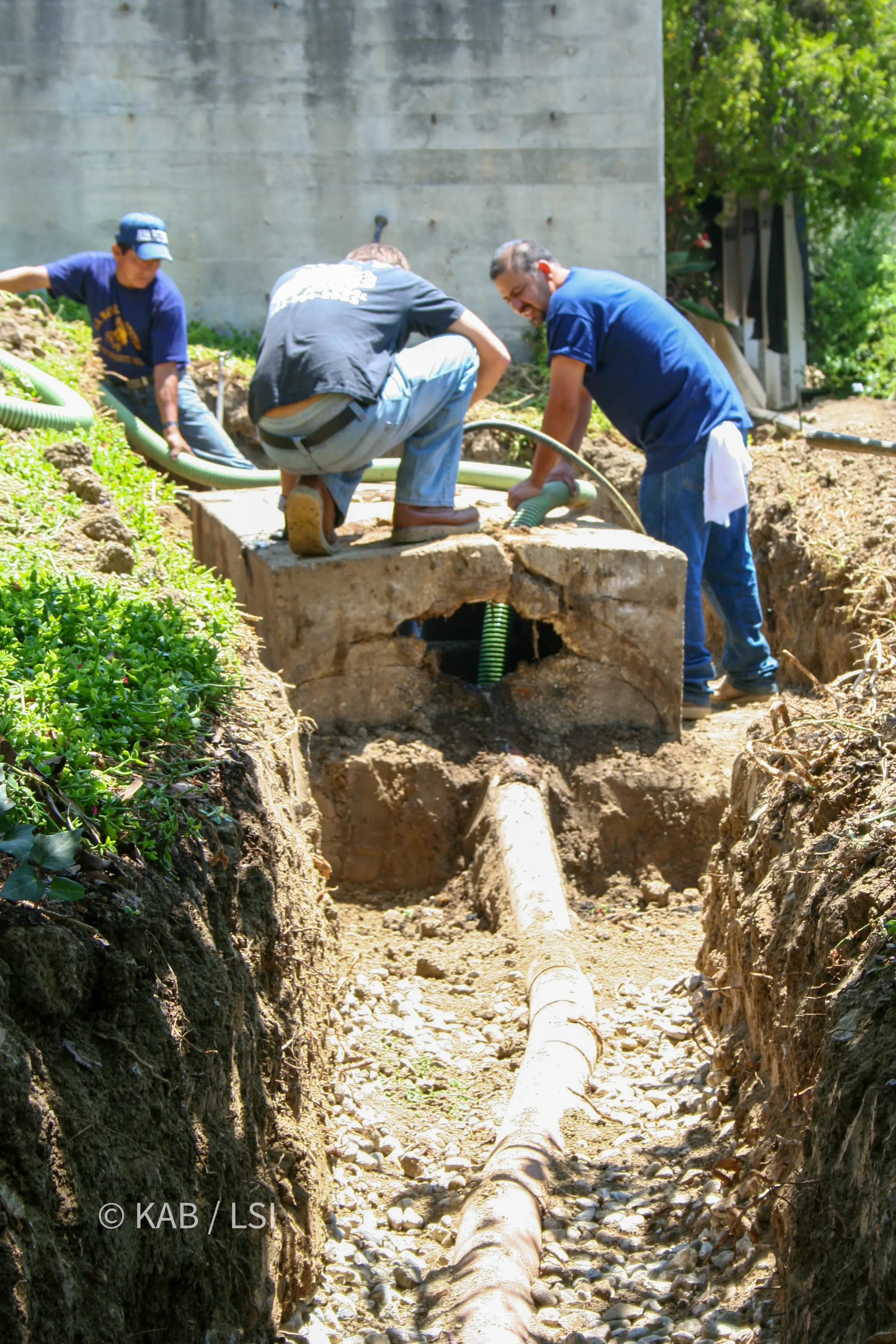
An undersized field of open-jointed clay. It was sized for how a house used water in 1950, and it has been asked to do considerably more since.
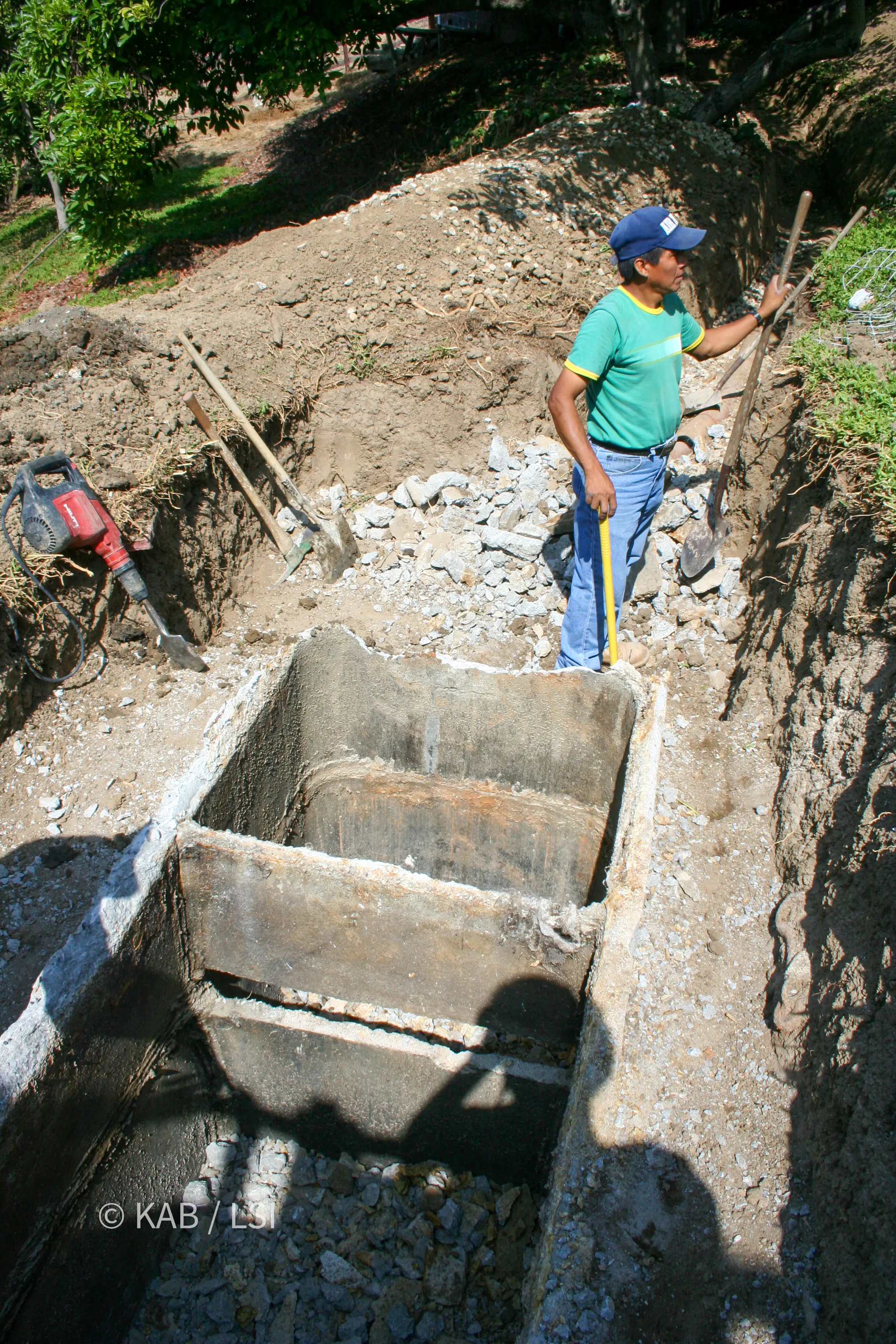
Broken open, showing the dividing wall. Seventy-five years old, and the design is the one still in use.
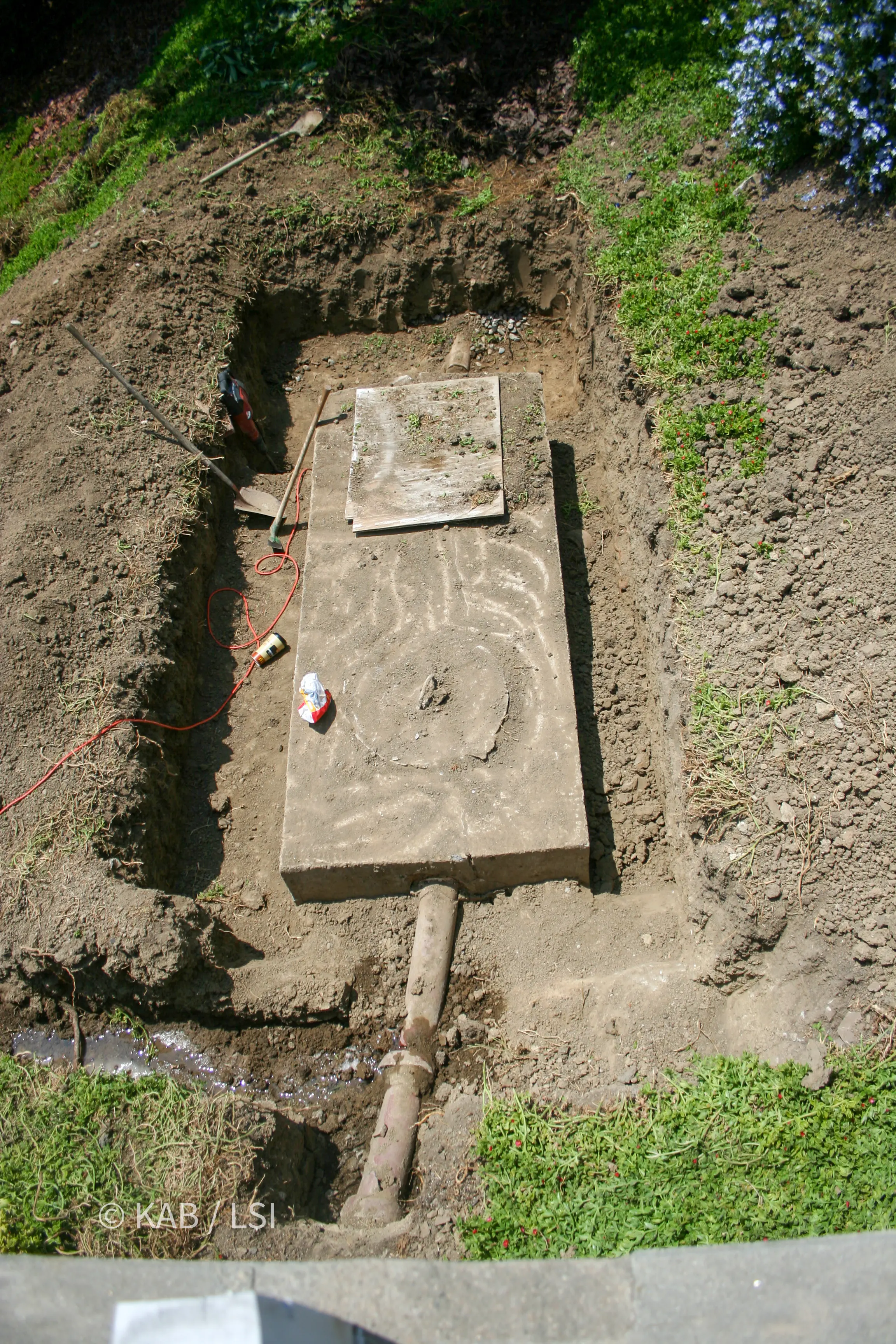
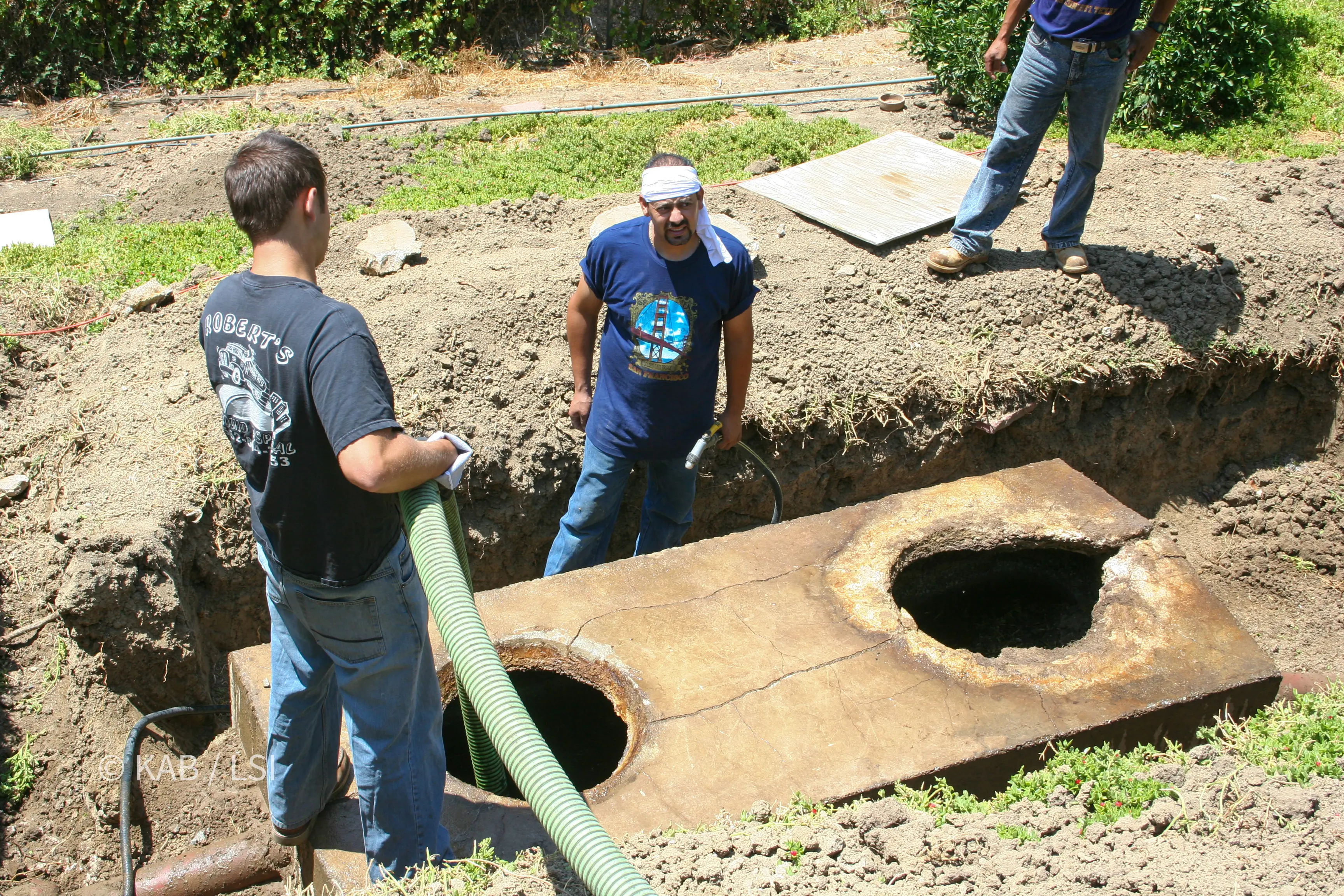
Nothing covered the opening but vegetation and a scrap of plywood. A person walking across this could have gone through it.
Pumped, washed, demolished,
and carried out by hand.
A failed tank cannot simply be abandoned in the ground. It is pumped, then pressure-washed until it is safe to be near, then broken up and taken out. Only then does anybody find out what the hole underneath actually looks like.
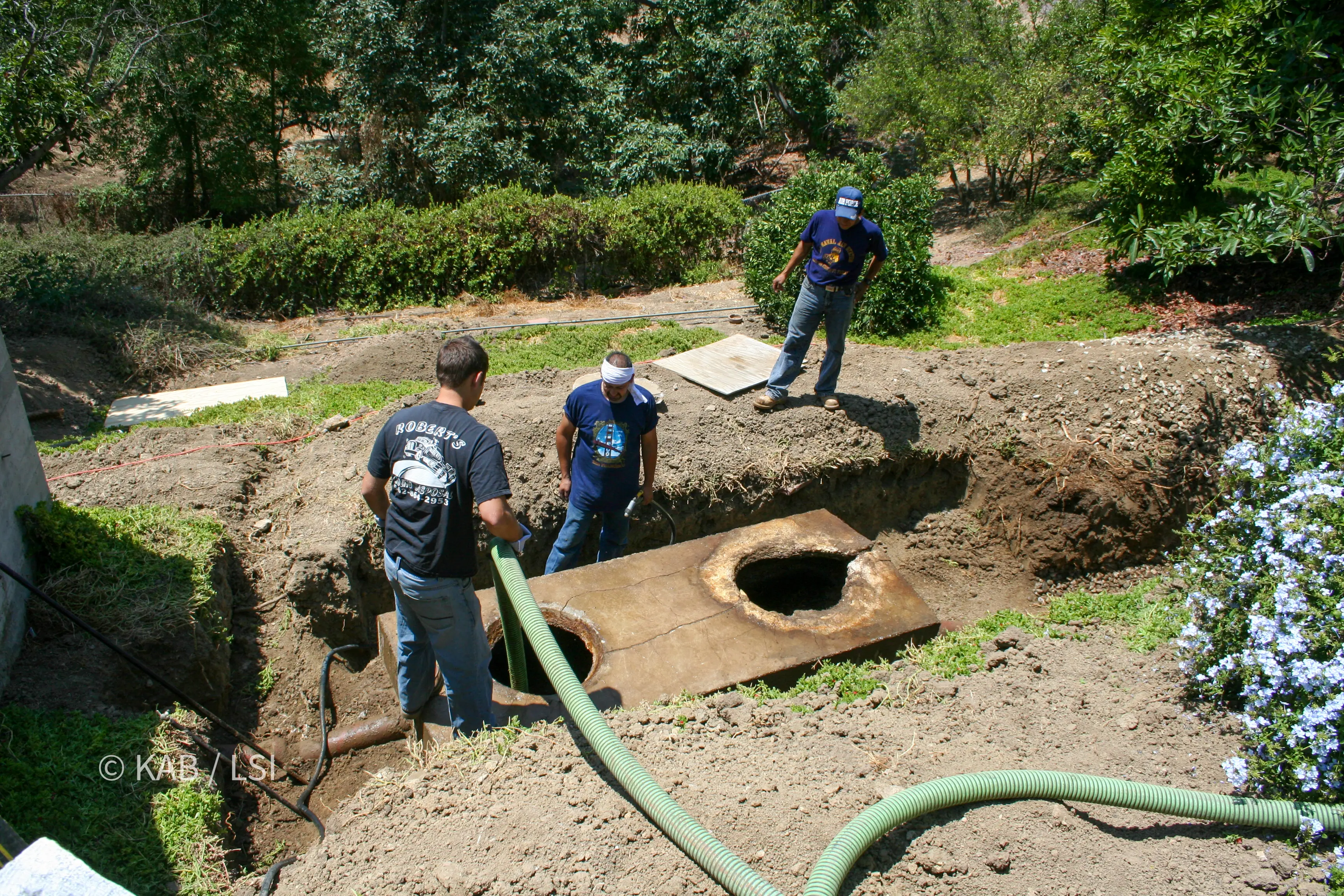
The lid over one chamber had decayed away entirely. Ground cover grew across the opening until nothing marked it — and a scrap of plywood was all that stood between a footstep and an open tank.
The replacement is a 1,000-gallon two-chamber polyethylene tank. It will not corrode, it will not crack along a mortar line, and it weighs a fraction of what the concrete did — which on a narrow hillside driveway is not a detail. It is the difference between a job that is possible and one that is not.
See the tank go inOpen the sequence →
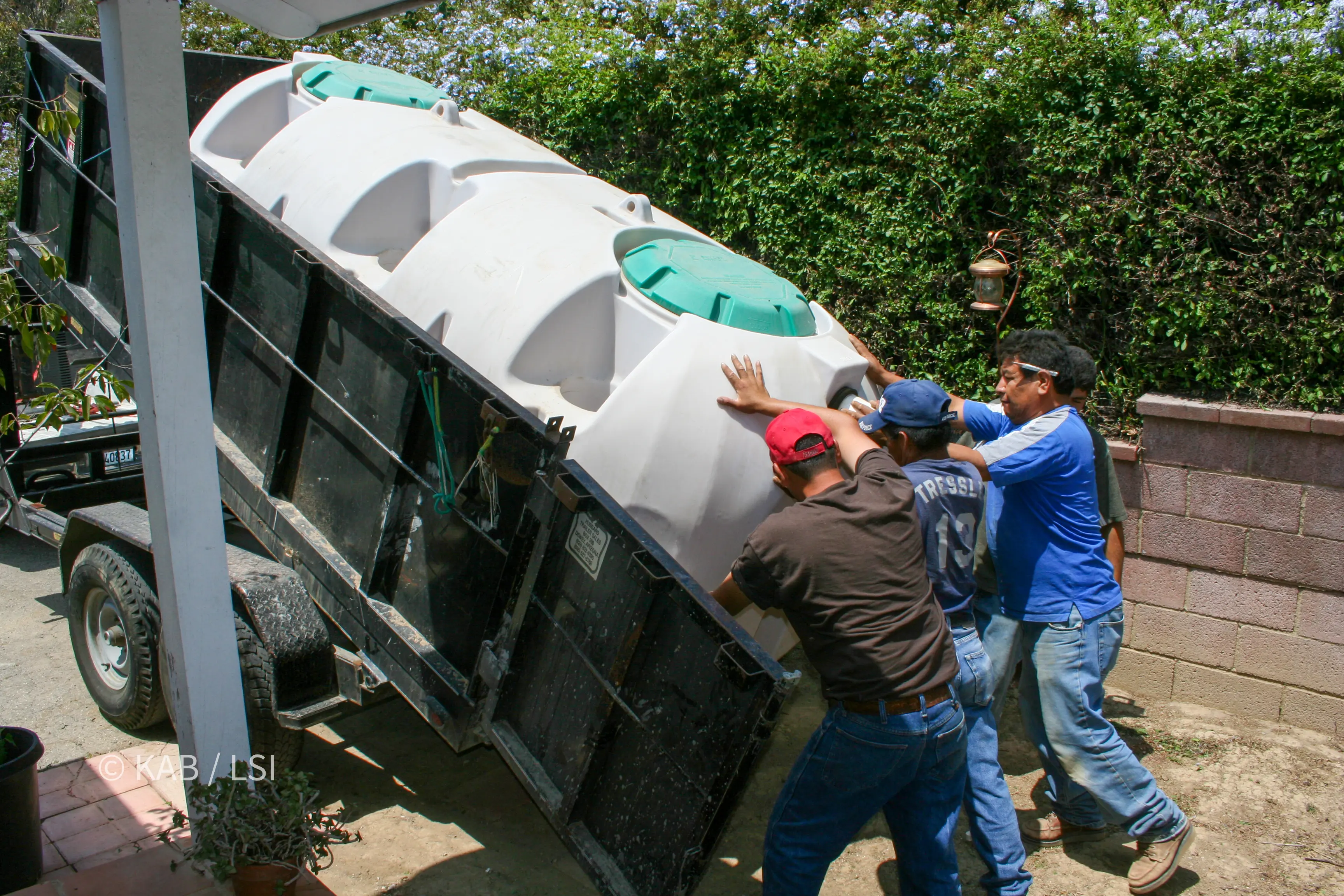
Offloaded off a tipped trailer by four men. Getting it to the back of a hillside property is its own problem, solved before anything else.
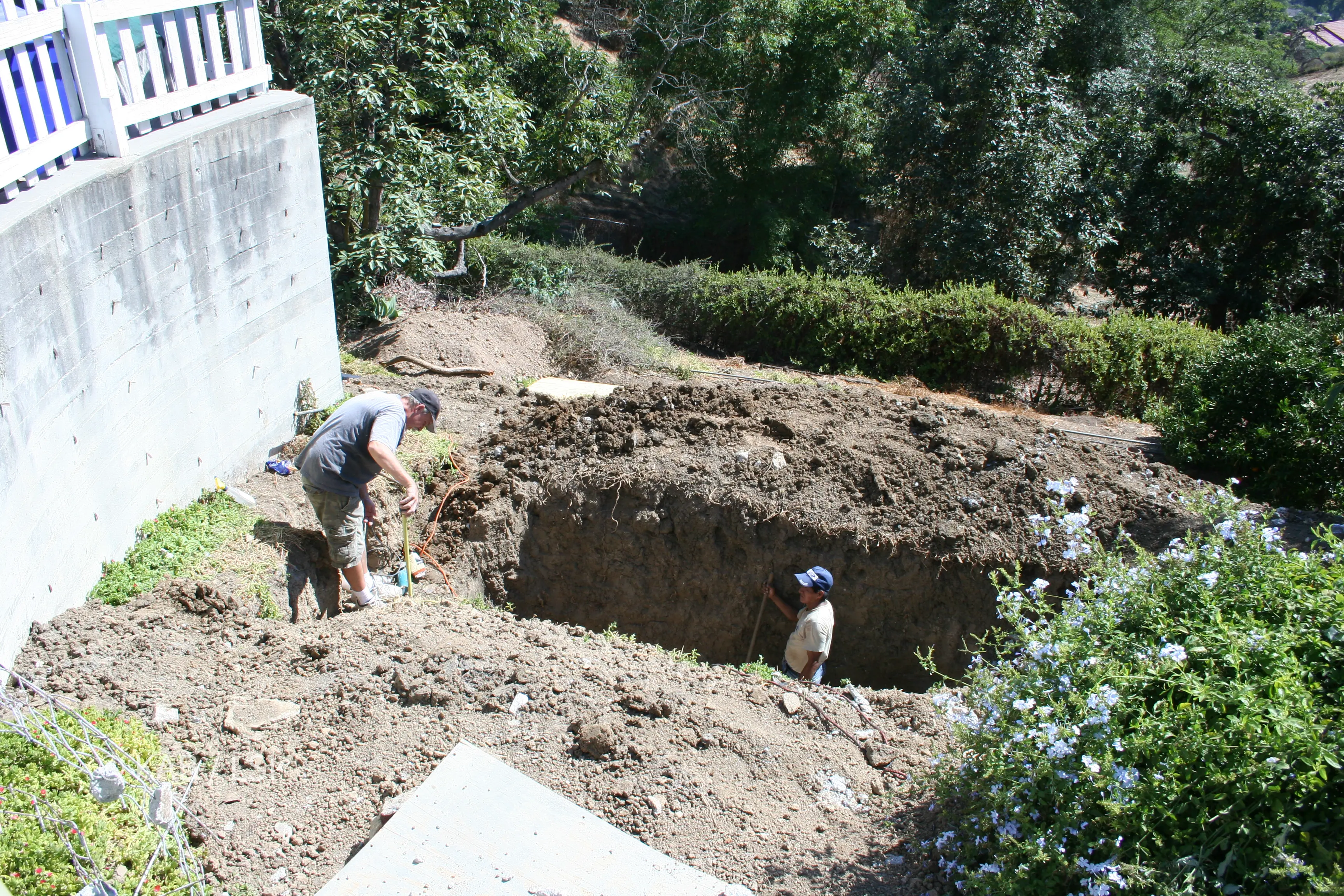
The hole, opened and taken deeper than the old one so gravel can go in the bottom and the tank can sit level.
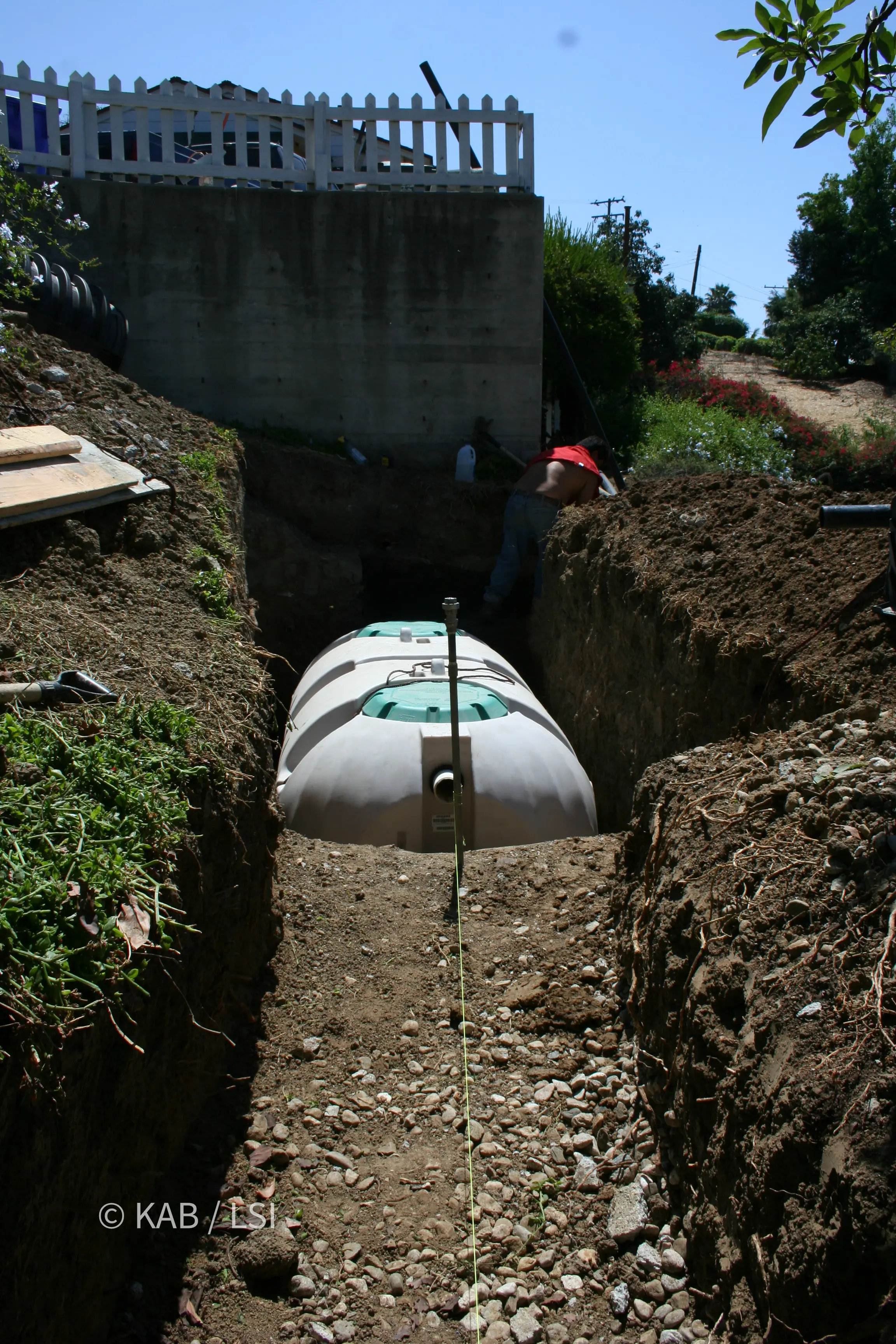
In. Set on prepared bedding rather than dropped on native clay, which is what decides whether it stays level.
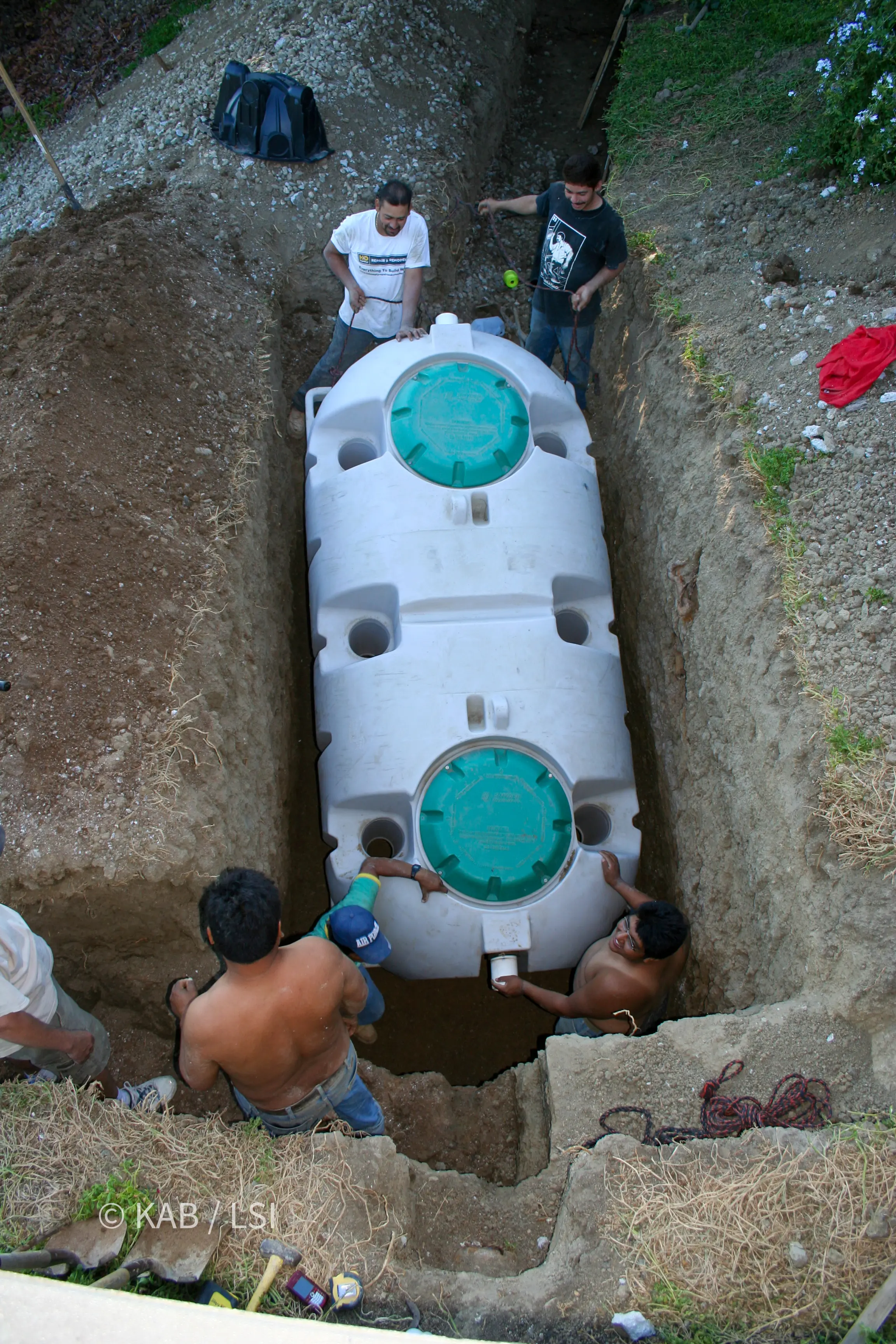
Positioned and squared. The two green lids mark the two chambers, and both stay reachable from grade.
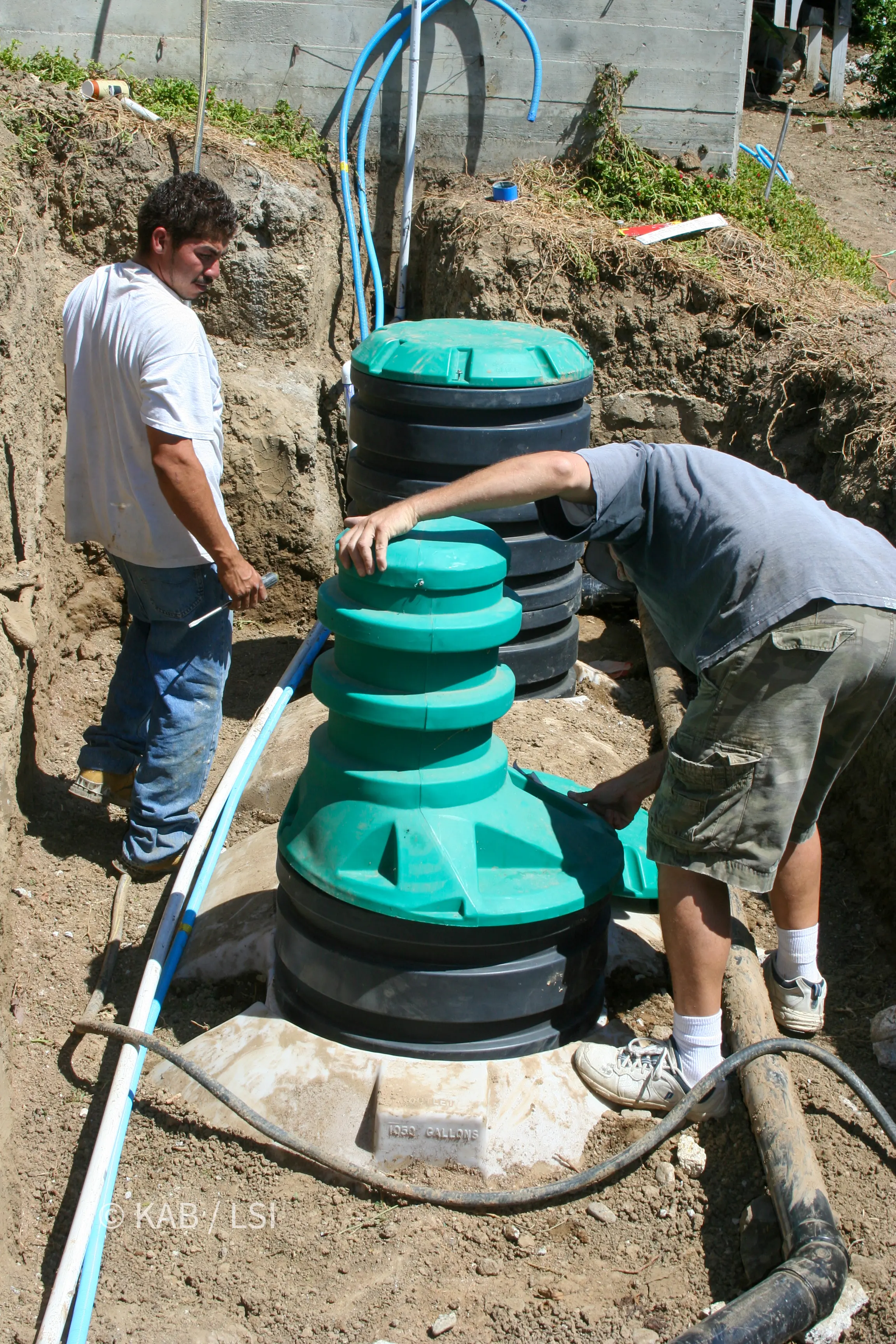
Risers stacked to bring the openings up to the surface — so the next person to service this never has to dig for it.
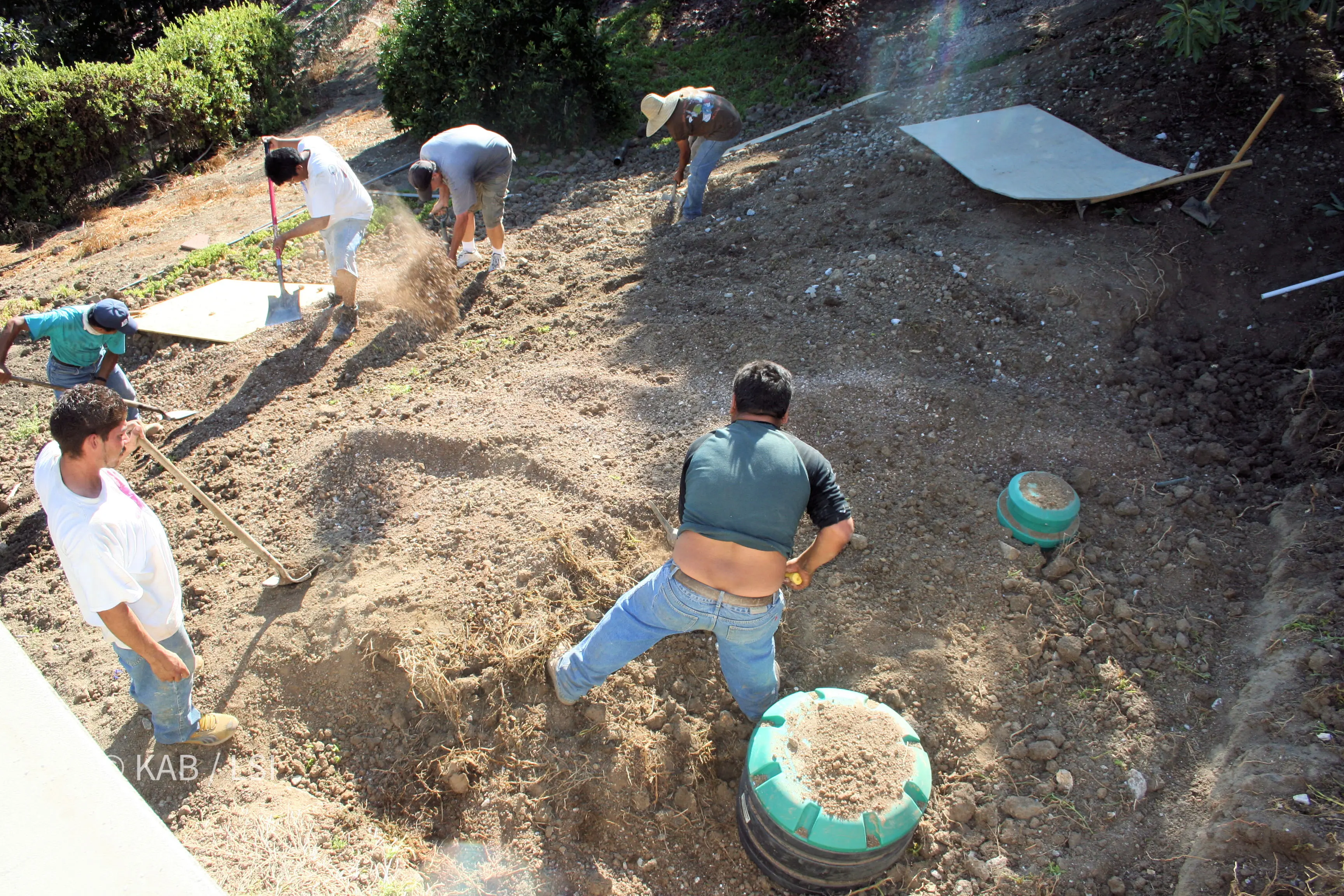
Backfilled, with the lids at grade. In a season the ground cover closes over and only the lids show.
The half nobody
budgets for.
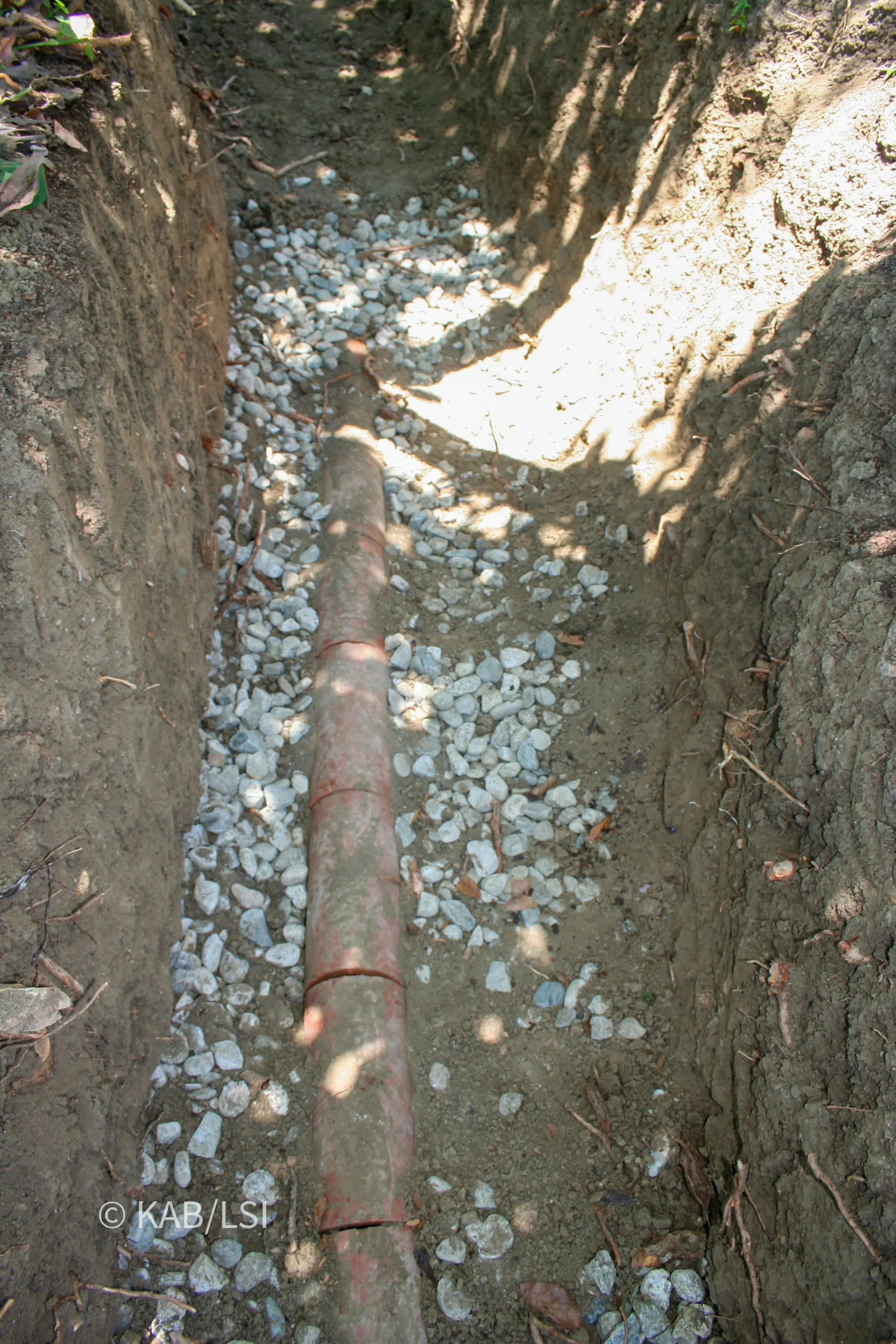
Here is the original article, seventy-six years on. Short sections of four-inch clay laid over gravel, a joint every few feet, and remarkably intact for something built in 1950 — which is exactly the problem. It still functions well enough that nobody questions it, and every one of those joints is a door.
People replace a tank and assume they are finished. The tank is the smaller half of the system. Everything the tank passes along goes to the field, and on these older properties the field is short interlocking clay pipe with an open joint every few feet — which is exactly what roots are looking for.
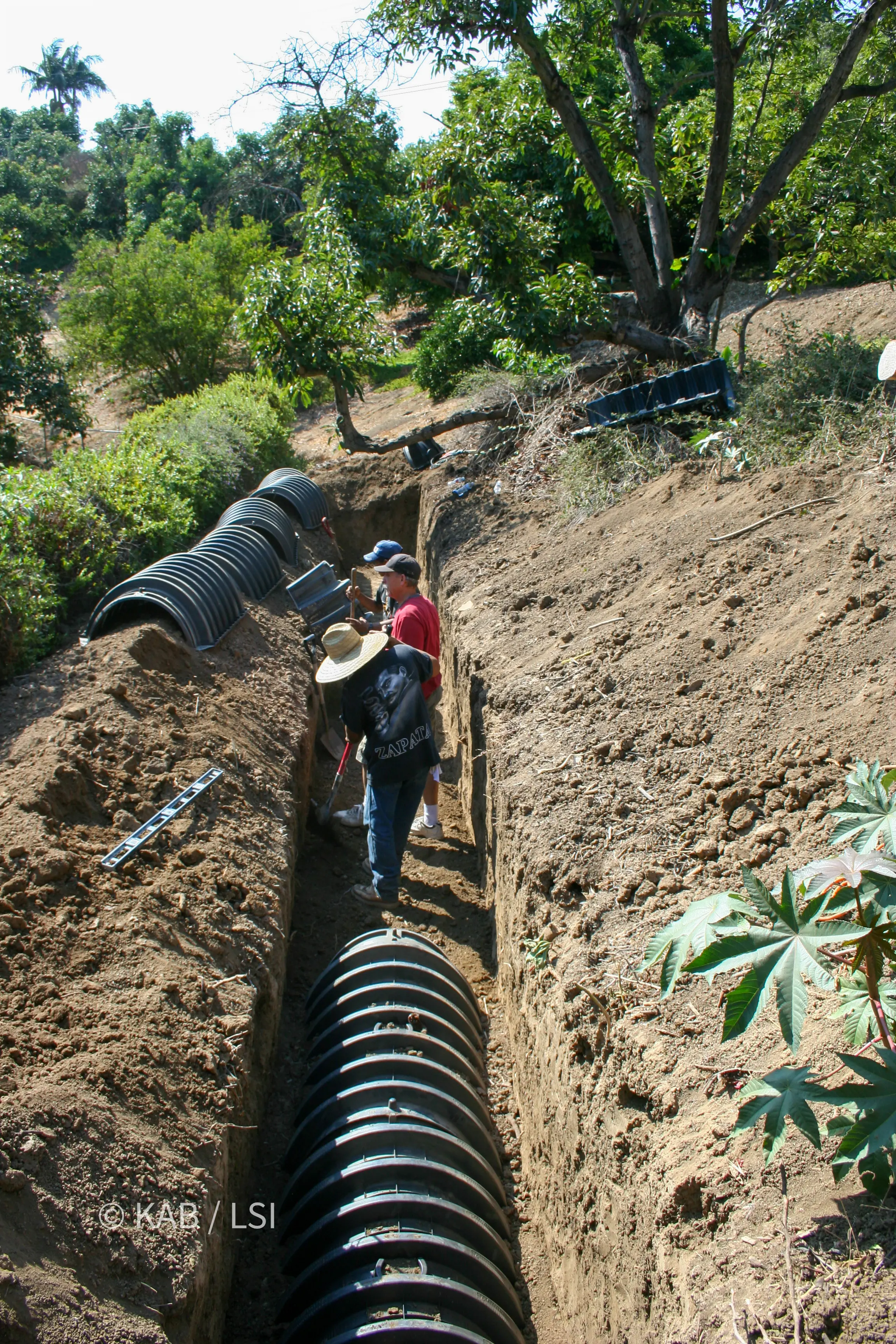
The modern answer: arched plastic chambers rather than open-jointed clay in gravel. More capacity in the same trench, and nothing for a root to find its way into.
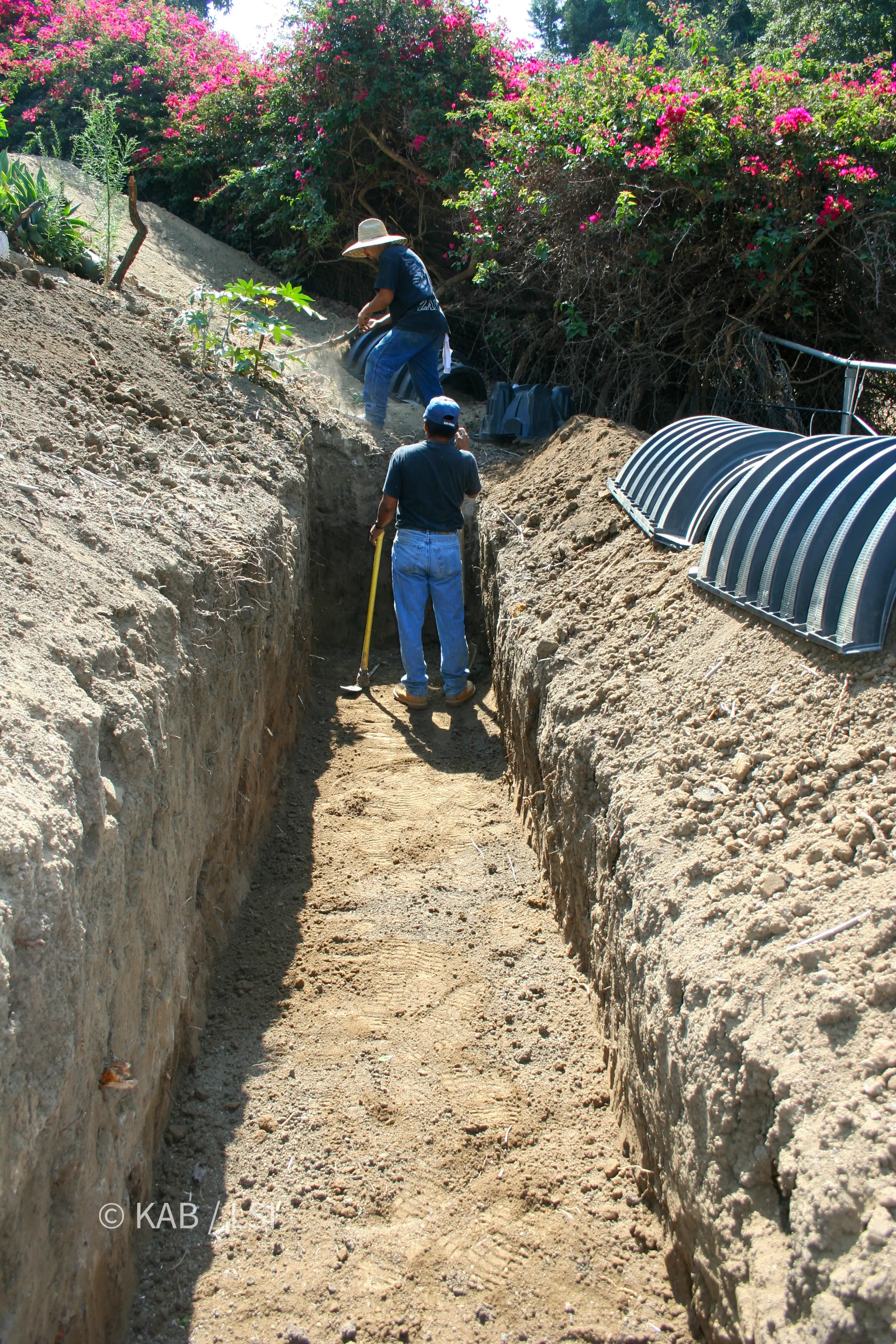
The trench prepared. On a slope, where the field goes and how level it sits is engineering, not landscaping.
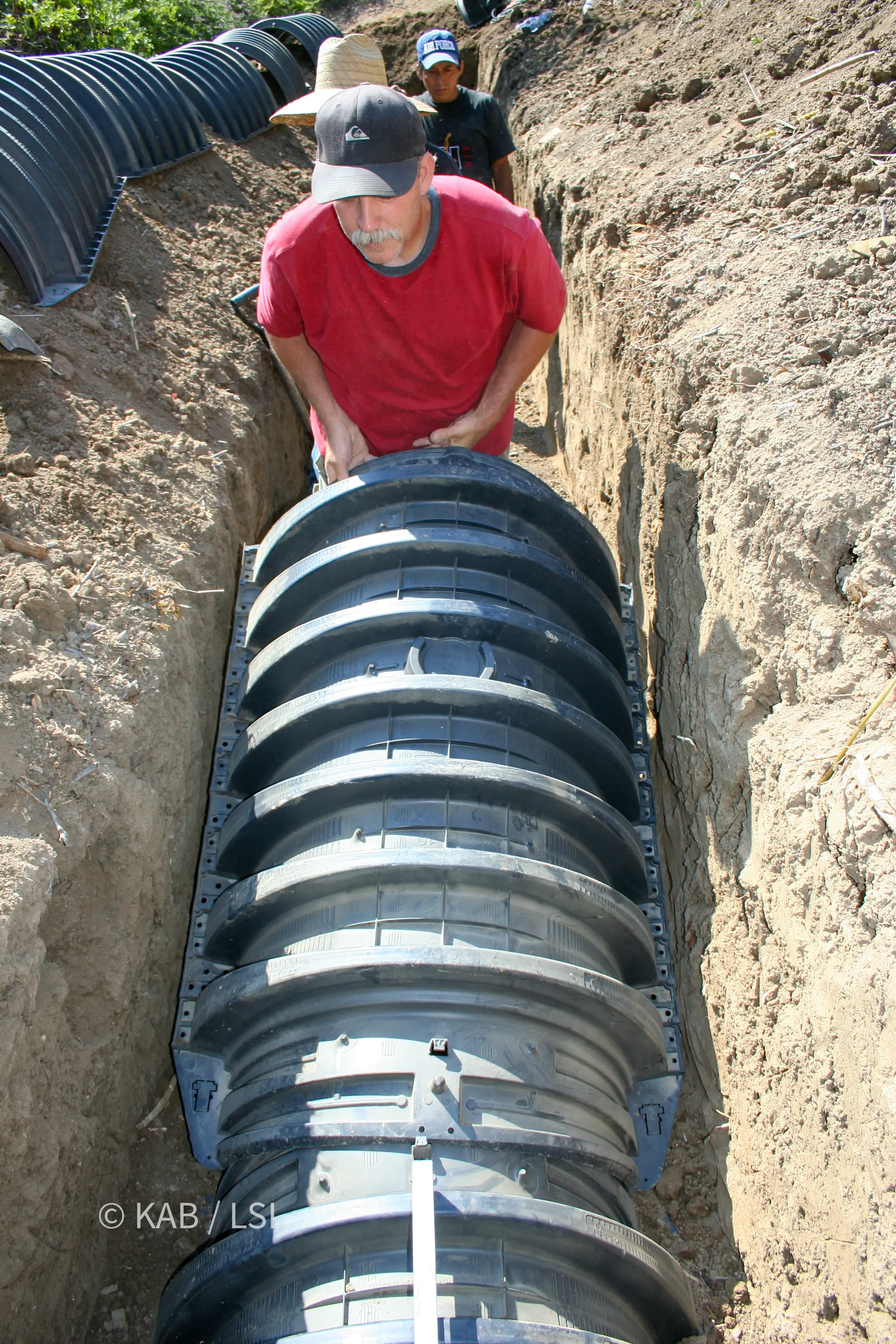
Chambers interlocked section by section. They carry the load, hold the void, and keep soil out.
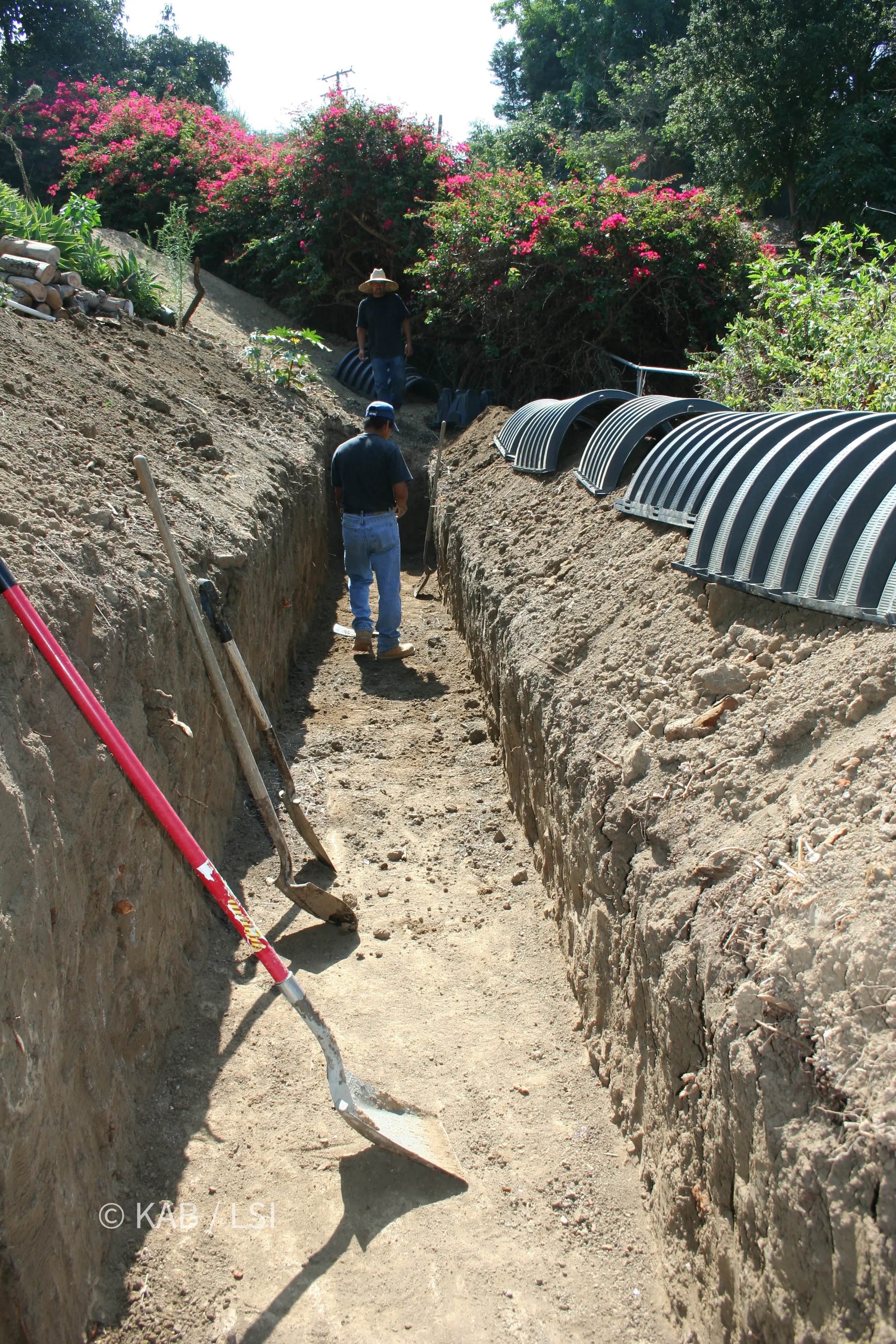
New field replacing seventy-five-year-old open-jointed clay. This is the part that decides whether you do this once or twice.
Find your lid. Walk the property and locate the access covers — and if what you find is a slab of concrete with corroded rings, or ground cover with a piece of plywood under it, you have learned something important for free. Then find out when the tank was installed. County records or the original permit will usually tell you. A tank poured in 1950 that has never been pumped is not a maintenance question, it is a schedule.
None of this is an emergency yet on most properties up here. That is the entire opportunity. A septic system replaced on an ordinary Tuesday, with a crew you chose and a price you compared, is a different transaction from the one that happens on a Sunday when it has already backed up into the house.
The Hillside Network
That was one card out of forty-two.
Roofs, water, ground, structures, and the trades I would call for each one. No names are published here — introductions happen in conversation.
See the full index →